For the past two years, the conversation around artificial intelligence has focused on a single question: How smart is the model?
Every new release is judged by benchmarks, reasoning scores, coding ability, or how human its writing sounds. Companies compare chatbots the same way people once compared smartphones: which one is faster, which one writes better emails, which one answers more questions.
But businesses are quietly discovering that intelligence is not their real concern. Their concern is reliability:
- A marketing team can’t publish an AI-generated report that includes fabricated statistics.
- A legal department can’t rely on a contract summary that misunderstood a clause.
- A customer support team can’t send instructions translated into another language that accidentally change the meaning of a safety procedure.
The issue isn’t whether AI can produce impressive answers.
The issue is whether you can trust the answer every time.
And this is where the modern AI discussion is heading in the wrong direction. We are trying to make AI smarter, when what organizations actually need is AI that is more certain.
The Single-Opinion Problem
Most people interact with AI as if it were a calculator. You ask a question, and you expect a definitive answer.
But AI systems do not actually work like calculators. They work more like experts giving opinions.
When you prompt an AI model, you are not retrieving a stored fact. You are receiving a prediction, a statistically likely sequence of words. The model is essentially saying:
“Based on patterns I’ve learned, this is probably correct.”
That works surprisingly well for casual use. Yet for business workflows, “probably correct” is a fragile foundation.
Imagine asking only one doctor to diagnose a complicated illness. Even if that doctor is highly qualified, you would still want a second opinion. Not because the doctor is unintelligent, but because important decisions should not depend on a single interpretation.
AI outputs are similar. Each response is one interpretation generated by one system trained in one way.
Fluency creates confidence. But confidence is not verification!
Why Bigger Models Didn’t Solve It?
The AI industry initially believed reliability would improve simply by building larger models. And in many ways, it did. Modern systems write more coherently and reason more convincingly than earlier ones.
However, a subtle problem remained. The errors did not disappear; they became harder to notice.
Earlier AI systems made obvious mistakes. Today’s systems make plausible mistakes. They cite nonexistent sources, misinterpret policies, or translate text in ways that are grammatically perfect but contextually wrong.
In multilingual situations, this becomes especially serious. A translation can read naturally while quietly altering intent, a legal nuance, a medical instruction, or a product specification.
The limitation is structural. A single model, regardless of size, still produces a single prediction. Increasing intelligence improves expression, not certainty.
In other words, AI’s weakness is not knowledge. It is verification!
Consensus Instead of Confidence
What if reliability does not come from making one model better, but from allowing multiple models to evaluate the same output?
- Human systems already use this approach.
- Scientific research uses peer review.
- Courts use juries.
- Medicine uses second opinions.
We trust conclusions more when independent perspectives converge.
Artificial intelligence can follow the same logic.
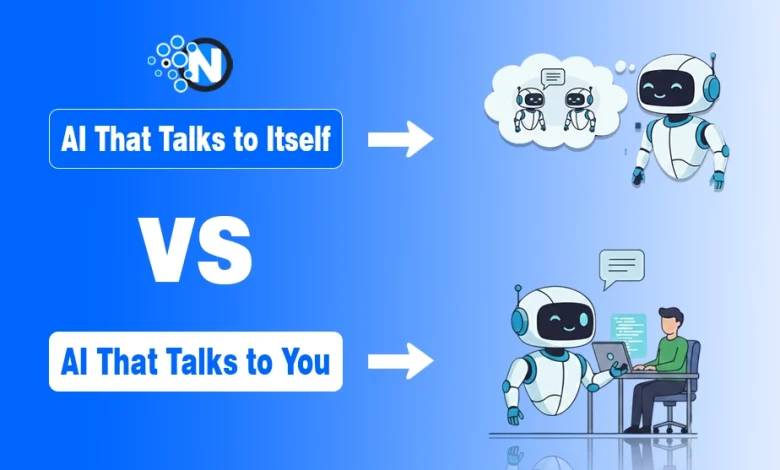
Instead of asking one AI for an answer, you ask many, each trained differently, each producing its own interpretation, and compare them. Agreement becomes a signal of accuracy. Disagreement becomes a warning that human review is needed.
AI, in a sense, begins to “talk to itself.”
When AI Reviews AI
This design philosophy is beginning to appear in language technologies, where small misunderstandings can create large consequences.
MachineTranslation.com has SMART, a technology based on the concept of “consensus” that doesn’t just translate, but verifies by comparing up to 22 AI models and selecting the translation that the majority agrees on. This ensures that no matter how the technology shifts, accuracy remains consistent.
The important idea here is architectural, not commercial.
Instead of trusting a single system’s prediction, the output is evaluated by multiple independent AI perspectives. An agreement functions like a verification layer. Disagreement signals uncertainty.
In effect, the system treats translation less like automatic generation and more like reviewed communication.
The Return of the Human Reviewer
Interestingly, another trend is emerging alongside consensus-based AI: the return of human oversight.
Fully automated AI once promised a world without manual review. In practice, organizations discovered that removing humans entirely also removed accountability. As a result, many companies are moving toward a hybrid model, automation for speed, human judgment for responsibility.
Tomedes, a global language service provider specializing in professional human translation, localization, and interpretation in over 300 languages, reflects this shift. Their free AI tools emphasize a “human-in-the-loop” approach, where AI assists but human linguists verify meaning, context, and cultural nuance.
This combination is revealing something important: reliability often comes from layered validation.
- AI can generate.
- AI can compare.
- But humans confirm.
Rather than replacing expertise, effective AI systems now resemble collaborative workflows.
Why Businesses Will Care?
At first glance, this may seem like a technical nuance. In practice, it addresses one of the biggest barriers to AI adoption inside organizations.
Many companies are not worried that AI is incapable.
They worry that it is unpredictable.
An internal policy summarized incorrectly can cause compliance issues.
A mistranslated onboarding document can confuse new employees.
A misunderstood support instruction can create customer dissatisfaction.
The risk is not dramatic failure. It is quiet inaccuracy.
Consensus-based verification combined with human oversight reduces that risk. Outputs begin to resemble reviewed documents instead of generated guesses.
Businesses do not simply want automation.
They want dependable automation.
The Future of AI Systems
We often imagine the future of AI as a single, increasingly powerful entity, one system that becomes more knowledgeable every year.
But another future is emerging.
Instead of one dominant model, AI may evolve into networks of models validating one another, with humans supervising the process at critical points. Different systems specializing in reasoning, language, analysis, and verification could collaborate, much like teams of professionals do.
The shift is subtle but important:
Early AI focused on generating answers.
Next-generation AI will focus on confirming them.
This transition moves AI from a creative assistant to a dependable infrastructure.
Conclusion: Trust Becomes the Metric When Choosing AI
Benchmarks currently measure how well AI performs tasks. Soon, organizations may measure something different: how often its output must be corrected.
Reliability, not cleverness, will determine real adoption in regulated industries, education, healthcare documentation, customer operations, and international communication.
Paradoxically, the path to trustworthy AI may not be making machines more independent. It may be making them collaborative.
- An AI that produces an answer alone can be impressive.
- An AI whose answer survives scrutiny from other AI systems, and, when necessary, human experts, becomes dependable.
The future of artificial intelligence, then, may not belong to the model that speaks the best. It may belong to systems where multiple intelligences quietly check each other before a human ever reads the result.
Because in the end, people don’t just want AI that can respond. They want AI whose answers they don’t have to second-guess.