NASA Allows Astronauts to Bring Smartphones to Space, Ending Decades of Restrictions
NASA is allowing astronauts to bring smartphones on Crew‑12 and Artemis II missions, ending decades of restrictions on personal tech and enabling them to capture spontaneous photos and videos, modernizing how space missions are documented.

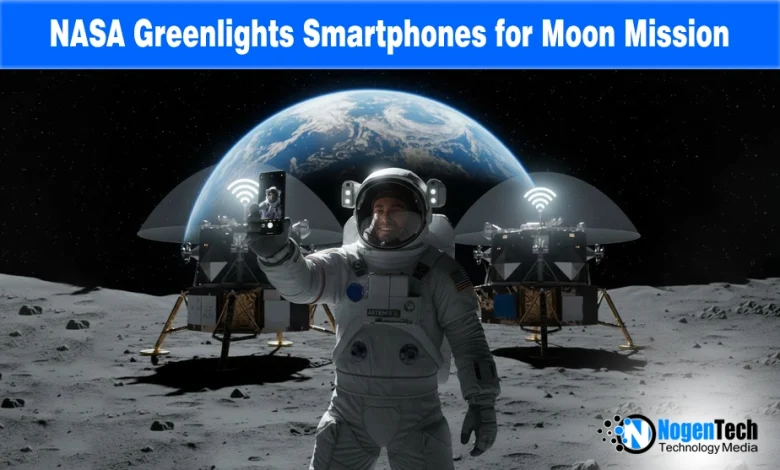
NASA Administrator Jared Isaacman officially confirmed on X that astronauts will now be permitted to bring smartphones aboard missions, including Crew‑12 (International Space Station) and Artemis II (around the Moon).
Modern Smartphones in Orbit
The announcement emphasized personal connection and public engagement: astronauts can now “capture special moments for their families and share inspiring images and video with the world.”
This policy change represents a major shift from NASA’s traditional reliance on old-generation cameras and specialized hardware.
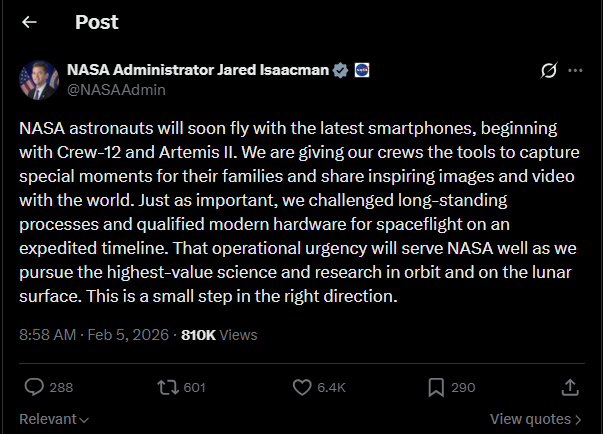
Astronauts will now carry modern smartphones, tested for safety and spaceworthiness, alongside other mission equipment. The update comes after NASA streamlined hardware approvals to allow consumer devices that meet operational standards.
Documenting Space Differently
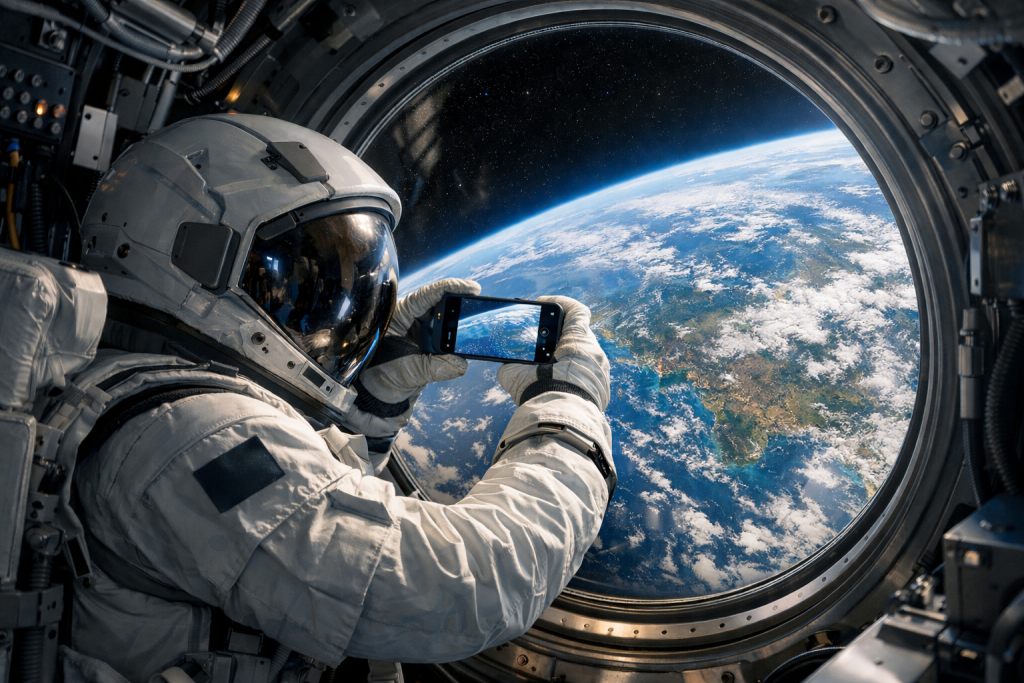
TechCrunch frames the decision as a game-changer for mission storytelling. Astronauts can capture spontaneous and high-quality media in ways that older cameras cannot.
The report highlights the potential for richer public engagement through photos, videos, and even interactive content shared in near real-time. For Artemis II, NASA’s first crewed lunar flight since Apollo 11, this could reshape how people experience space missions digitally.
TechCrunch also emphasizes cultural impact: smartphones make space missions more relatable, bridging the gap between astronauts and the general public.
Tech Meets Space Exploration
Bloomberg situates the decision in the broader context of consumer technology in space. The report from the news outlet covers Apple’s satellite connectivity initiatives, illustrating how smartphones increasingly intersect with space infrastructure.
The move signals NASA’s openness to integrating modern, commercial devices for mission documentation, real-time communications, and operational support, aligning with broader trends of technology convergence in aerospace.
A New Era for Space Imagery
NASA allowing the smartphone-aboard permissions marks a symbolic and practical modernization of human spaceflight.
Astronauts can now document missions in ways that are relatable, immediate, and visually rich, potentially reshaping public engagement with space exploration.
From selfies to stunning lunar shots, the move bridges consumer technology and advanced exploration, offering a fresh lens on humanity’s journey beyond Earth.
Source: NASA astronauts will soon fly