- AI financial tools are fast, affordable, and scalable.
- Human advisors provide context, trust, and expertise.
- AI is best for simple and automated financial tasks.
- Humans are essential for complex financial planning.
- The future is hybrid: AI + human collaboration.
The way people manage money has fundamentally shifted.
Just a few years ago, financial advice meant sitting across from a human advisor. Today, millions of users rely on AI-powered tools, robo-advisors, and even conversational AI to guide their financial decisions.
But here’s the reality:
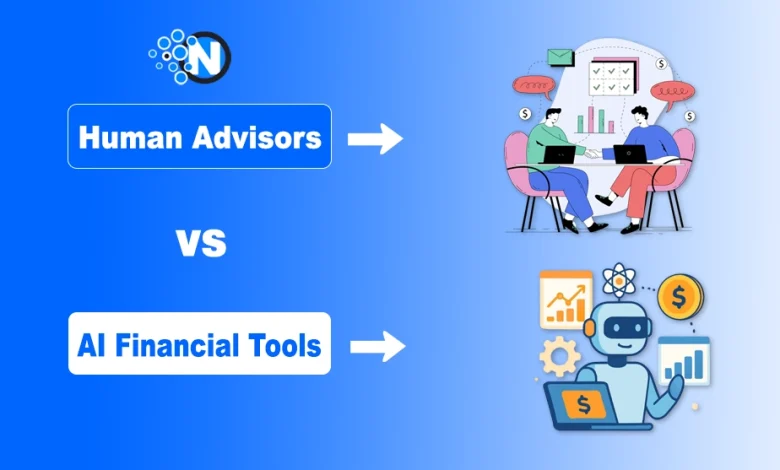
The debate is no longer AI vs human financial advisors, it’s when to use each and how to combine them effectively
AI tools now handle everything from portfolio management to tax optimization, while human advisors still dominate in complex, high-stakes financial planning.
In this blog post, you will find a comparison of human advisors vs AI financial tools and their impact on the future of wealth management.

What Are AI Financial Tools?
AI financial tools are digital platforms that use artificial intelligence, machine learning (ML), and advanced data analytics to automate, optimize, and improve financial decision-making.
One example is using a stock screener. With a stock screener, investors can filter thousands of stocks in seconds based on criteria like price, growth potential, dividends, and other metrics.
At their core, these tools are designed to analyze large volumes of financial data, identify patterns, and deliver actionable insights, often faster and more efficiently than traditional methods.
They are commonly used for:
- Investment portfolio management (automated asset allocation and rebalancing)
- Budgeting and expense tracking (real-time categorization and spending insights)
- Retirement planning simulations (forecasting long-term financial outcomes)
- Tax optimization strategies (identifying savings opportunities and efficiencies)
How AI Financial Tools Work?
AI tools continuously process data from multiple sources, including:
- Market trends and historical performance
- User behavior and spending patterns
- Economic indicators and risk signals
Using this data, they can:
- Recommend investment strategies
- Adjust portfolios automatically
- Detect unusual transactions or risks
- Provide predictive financial insights
What Do Human Financial Advisors Do?
Human financial advisors are professionals who provide personalized, goal-based financial guidance tailored to an individual’s unique life situation, priorities, and long-term objectives.
Unlike AI tools, which rely primarily on data inputs, human advisors combine technical expertise with real-world experience, judgment, and emotional intelligence to guide financial decisions.
How Human Advisors Approach Financial Planning?
Human advisors take a holistic view of your financial life by considering:
- Your short-term and long-term goals (e.g., buying a home, retirement)
- Your risk tolerance and investment mindset
- Your family responsibilities and lifestyle needs
- Your income sources, business interests, and financial complexity
This allows them to create strategies that go beyond numbers and reflect your real-life circumstances.
Where Humans Still Have the Edge
Humans understand client emotions better than algorithms. Everyone values advisors’ empathy during market dips, which is something AI currently lacks. This human element builds confidence during uncertain times. This connection builds loyalty, and this emotional support is irreplaceable in wealth management.
They handle intricate situations like estate planning or divorce. I have also seen advisors navigate family disputes where AI falls short due to a lack of context. This expertise ensures healthy solutions. This depth addresses unique challenges, and the personalized strategy outshines automated options.
Advisors also ensure compliance with evolving laws. This oversight protects long-term interests and reputation. Most people take this guidance to reduce risks. Human judgment adds a layer AI can’t replicate.
Turning Financial Challenges into Opportunities
AI predicts trends and humans strategize responses. You can turn volatility into gains by utilizing this duo. This approach creates profitable opportunities. This provides you with the ability to adjust portfolios by using AI insights.
Human oversight ensures ethical AI use. I have protected my data by building trust with secure practices. This balance turns privacy fears into strengths. You can also opt for encrypted tools with human checks. This assurance enhances security.
AI monitors laws and advisors apply them strategically. This adaptability embraces innovation in planning. Many users use AI alerts with human interpretation. This collaborative approach turns challenges into growth. The forward-thinking keeps you ahead.
Investors looking to strengthen their financial position can learn more about strategies to turn financial challenges into opportunities and optimize their investment planning.
AI Financial Tools vs Human Advisors (Quick Comparison Table)
| Feature | AI Financial Tools | Human Advisors |
|---|---|---|
| Cost | Low | High |
| Availability | 24/7 | Limited |
| Speed | Instant | Slower |
| Personalization | Data-based | Deep & contextual |
| Emotional Support | None | Strong |
| Complex Planning | Limited | Advanced |
| Scalability | High | Limited |
Benefits of Combining Human Advisors and AI Tools
Combining AI data with human insights improves choices and decisions. You can use AI analytics alongside your advisor’s expertise for balanced strategies. This cooperation maximizes returns with informed risks.
AI reduces fees for routine tasks such as rebalancing. You can save your portfolio management while keeping human oversight. This blend offers value for money.
AI handles data, and humans add personalization. You can enjoy customized plans with AI scalability, which is suitable for growing needs. This combination scales with my wealth and supports long-term planning.
Key Considerations When Choosing AI Tools
Choose financial tools that sync seamlessly with your current setups. I have integrated AI with my advisor’s platform for smooth operations. This compatibility is essential for efficiency. I have tested numerous APIs to ensure their compatibility status. This ease reduces transition costs and the integration enhances the workflow.
You have to prioritize tools with strong encryption and compliance. You should select GDPR-compliant ones because they also help in safeguarding information. This security builds confidence among clients.
Keep in mind that you always have to opt for intuitive designs to minimize learning curves. I have chosen some easy-to-use tools to enhance adoption. This simplicity suits all users. You can also explore tutorials for quick mastery. This accessibility boosts usage and the interface drives effective tool utilization.
Conclusion: It’s Not AI vs Human—It’s Strategy
The future of wealth management relies on the collaboration between human financial advisors and AI tools. While human advisors provide personalized, empathetic support and adaptability in complex situations, AI tools enhance efficiency, reduce costs, and offer valuable data insights.
You can have a lot of benefits by combining the strengths of both. You can navigate financial challenges, maximize returns, and achieve long-term goals. Embracing this collaborative approach ensures a balanced strategy for successful wealth management in an evolving landscape.
People Also Ask
Not always. AI is better for automation and cost efficiency, while humans are better for complex and personalized financial decisions.
No. AI can assist, but it lacks emotional intelligence, accountability, and deep contextual understanding.
It is safe for general guidance, but sensitive decisions should involve a qualified professional.
A hybrid model combining AI tools and human advisors offers the best results.