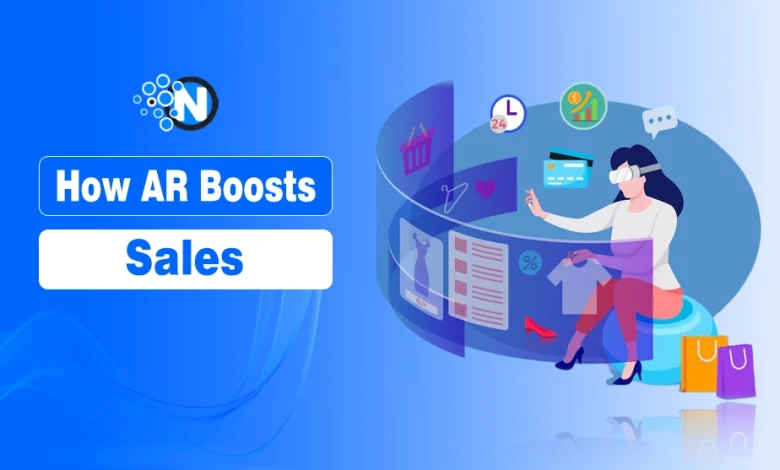
- Augmented Reality (AR) helps customers visualize products in real-world settings, reducing buying uncertainty.
- AR significantly increases conversion rates by improving customer confidence.
- Interactive AR experiences lead to higher engagement and stronger brand recall.
- AR is effective in both B2C (retail, fashion, furniture) and B2B (machinery, complex products).
- Data from AR interactions enables better personalization and targeted marketing.
Modern customers don’t just want to see products anymore. They want to experience them before buying.
That’s where Augmented Reality (AR) steps in as a game-changer.
Instead of guessing whether a product fits, looks good, or works as expected, customers can now try it virtually—in real time. And that single shift is transforming how businesses sell.
From virtual try-ons to 3D product previews, AR is no longer just a “cool feature.” It’s becoming a serious sales driver.
In this blog post, you will learn how AR boosts sales. It also includes real-world examples.
What Is Augmented Reality (AR)?
Augmented Reality (AR) is a technology that overlays digital elements—like images, animations, or 3D objects—onto the real world using a smartphone or device.
AR lets users interact with digital products as if they exist in their real environment.
AR vs Virtual Reality (VR)
- AR: Enhances the real world
- VR: Replaces the real world completely
The key difference is that the latter operates in an entirely computerized setting, while professionals incorporate high-quality digital elements of Augmented Reality into real-life settings.
That’s why AR works better for sales—it keeps users grounded while helping them visualize products.
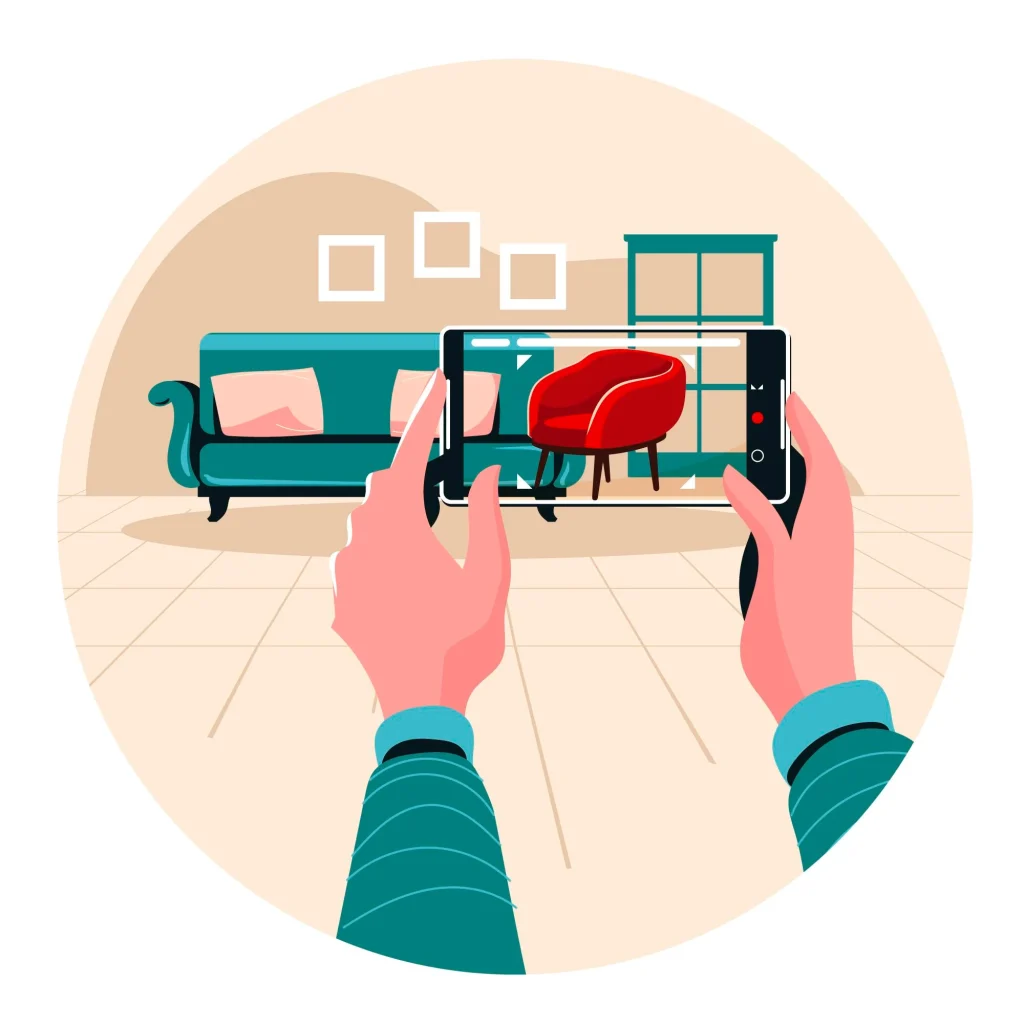
AR in Retail: Real-Life Use Cases
Beyond gaming, retail is a sector that has prioritized a wider AR application. It significantly bolsters customer experiences and promotional campaigns. Here are real-life solutions in retail that envisage the winning AR application:
Envisioning the product use
It’s one of the most difficult parts of the sales process, centered around convincing a buyer that a considered product can be the right fit. AR can act as the most persuasive evidence of such fit, sometimes even without the need to involve professional sales assistants or with their minimal involvement only.
AR will give a potential buyer a three-dimensional view of the specific product, demonstrating the value and fit immediately. No lengthy or irritating sales pitches, only sales to the point.
Better presentations
Traditional decks and presentations look ordinary, if not boring. In any case, they most often fail to impress visitors compared with the options that envisage interactive, visual storytelling. Consultants can show potential buyers even those products that are not displayed at that time.
Customers may assess the real-life shape, size, and color of the offered products. A high-quality visual presentation actually speaks volumes, showcasing the real-life value a considered product can deliver.
Accelerates sales cycles
AR solutions encourage alignment between the sales and marketing teams, enhancing the overall sales enablement. When AR solutions are integrated into meetings with buyers, including online meetings, they most often don’t require any active involvement from sales representatives.
Apart from that, marketing teams may easily analyze customer data, including their behavior and the aspects they have paid most attention to. This information may help approach each buyer with the most personalized offers later to encourage the follow-up purchase.
Convenience of use
Modern AR technologies work perfectly even when potential customers use smartphones. It means that in some cases companies may even focus on ensuring most sales via smartphones since the latter are most often used to review the products.
AR technologies leave a very positive first impression, resembling or mimicking social media platforms like TikTok and Instagram. An emotional connection often encourages customers to come back and proceed with sales.
B2B marketing upgrades
While nowadays AR is most often associated with B2C segments, it can also be successfully used in the B2B sector as well. It’s especially helpful when brands manufacture some complex, large equipment or technologies.
These companies may leverage AR technologies to demonstrate their complex products in greater detail and showcase their benefits to potential buyers. Beyond the mere convenience for both sides, applying the AR technology also greatly reduces the costs previously spent on shipping and handling, especially for heavy machinery.
Enhanced content
AR is now merely used to make more interactive content. Any content will become more engaging and memorable when some unrealistic, fantastic, and other digital elements are placed in the real-life world surrounding a buyer. Gamification will also be another competitive, convincing advantage.
Overall, AR is a great opportunity for marketing professionals to make any content more engaging. informative, and interactive.
Increases foot traffic and online conversions
Most often, when potential buyers are engaged, they become more attached to the brand. When making sales online after AR demonstrations, potential buyers maximize the chance to make a real bargain. Since they are better informed about the product and its benefits, they are more likely to proceed with the sale.
Thus, the conversion rate almost certainly will increase once a business integrates AR. The same applies to foot traffic. If a specific purchase involves a personal meeting, the likelihood of that meeting is higher when potential buyers have reviewed the product’s benefits using AR capabilities.
Is AR Worth It for Sales in 2026?
Absolutely yes. AR is no longer optional—it’s becoming a standard expectation in many industries.
Customers now expect:
- Interactive experiences
- Real-time previews
- Personalized journeys
Businesses that adopt AR early gain a massive advantage.
AR Turns Browsers into Buyers
Augmented Reality is changing how customers interact with products—and how businesses sell them. It removes doubt, builds confidence, and creates experiences that traditional marketing simply can’t match.
In a world where attention is short and competition is high, AR gives you something powerful: certainty and engagement at the same time.
If your goal is to increase conversions, reduce returns, and stand out, AR isn’t just a trend; it should be your next growth strategy.