Hitachi and MOL To Launch Offshore AI Data Centers on Repurposed Ships
The maritime industry is adapting to growing AI infrastructure demands by repurposing aging vessels into offshore data centers and next-generation computing platforms.

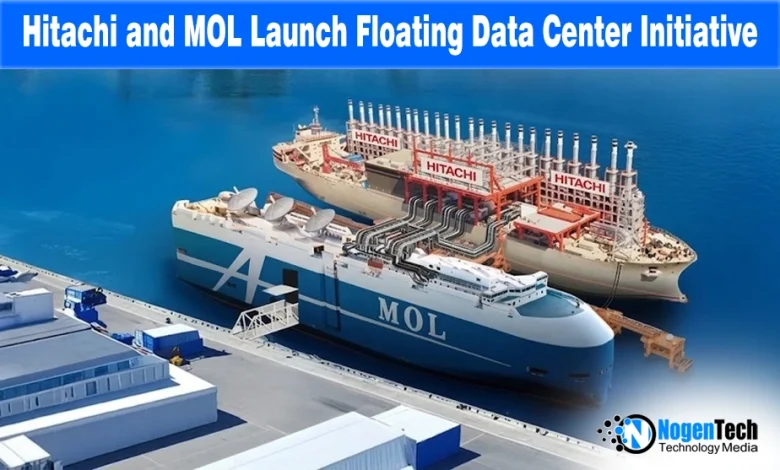
Hitachi and Mitsui O.S.K. Lines (MOL) announced on March 30, 2026, a collaboration to address growing AI infrastructure demands. Under a Memorandum of Understanding, the companies plan to repurpose aging ships into mobile, offshore data centers.
The initiative targets high-demand regions such as Japan and the United States, where land and power constraints limit data center expansion.
By using existing vessels, the partnership aims to deploy water-cooled infrastructure more quickly, helping address generative AI demand and ongoing RAM constraints while easing pressure on traditional data center capacity.
Second-Hand Ships Become Hitachi Infrastructure
Under the newly signed agreement, as MOL’s official news release notes, the company will provide the maritime assets, specifically by converting existing hulls, such as car carriers, into functional data hubs.
According to a newsroom statement, the formalized initiative between the two entities prioritizes the reuse of aging vessels to bypass the lengthy timelines required for traditional land-based construction.
Hitachi Systems will lead the integration of IT and energy management systems, transforming these floating platforms into “AI factories” capable of handling intensive workloads.
The conversion process is estimated to take only one year, which is a major reduction compared to the four-year lead times often seen in land-based projects.
Solving Power Constraints via MOL Assets
The primary driver for moving infrastructure offshore is rising demand for power and cooling in the AI era, as reflected in broader industry efforts, including Big Tech and White House–backed data center energy efficiency initiatives.
As noted by Data Center Dynamics, reports that these floating data centers can operate independently of local land-based power grids when paired with floating power plants or “powerships.”
By drawing directly from seawater or river water for cooling, the units eliminate the need for massive amounts of potable water, a growing concern for land-based data centers.
MOL highlights that a single car carrier provides around 54,000 square meters of floor space, which is similar in capacity to Japan’s largest conventional data centers, like Hokkaido Tomakomai, while still maintaining a smaller environmental footprint.
Market Analysis On Hitachi-MOL Initiative
Industry observers suggest that this maritime shift is a practical response to the shortage of available land in suburban areas.
TradeWinds indicates that the project is currently in its early development stages, with the companies focusing on feasibility studies and design standardization. The outlet emphasizes that this approach allows for high mobility, enabling operators to relocate data capacity to different ports as regional demand shifts.
While the technology is innovative, experts cited by TradeWinds remind stakeholders that large-scale deployment timelines remain tentative. This is due to the companies having to navigate complex regulatory and permitting requirements in international waters.
Global Demand Impacts Hitachi Strategy
The collaboration aligns with a broader shift in how global conglomerates, large companies with multiple businesses, are rethinking infrastructure.
According to MarketScreener, the project will initially focus on Japan, Malaysia, and the United States, regions where the Hitachi Group already maintains significant operational experience.
By integrating Hitachi’s digital engineering with MOL’s logistics expertise, the companies are positioning themselves to capture a niche in the edge computing and offshore infrastructure markets.
This move reflects a “speed-to-power” strategy designed to bypass the bureaucratic delays of land-based permitting that often stall large hyperscale AI projects.
Future Deployment of MOL Platforms
Looking toward 2027, the success of the initiative depends on the successful commercialization of the first pilot vessels. While floating data centers are not entirely new, with Microsoft’s Project Natick exploring offshore cooling concepts, the scale proposed by the Hitachi-MOL partnership is unmatched.
Future iterations may include modular configurations, allowing expansion from 20 MW up to 73 MW of capacity.
As generative AI continues to strain global power grids, these ship-based solutions offer a circular economy model by giving a second life to maritime assets. At the same time, they provide the high-density compute power needed for next-generation digital services.
Source: MOL and Hitachi Launch Initiativ