Networking is evolving at lightning speed. With the explosion of cloud computing, streaming, AI, and 5G, businesses and service providers are facing a simple but daunting challenge: how do you move more data, faster, without constantly laying new fiber? The answer lies in fiber wavelength systems.
This blog post will help you understand the Fiber Wavelength systems and how they are improving the networking in different ways.
What Are Fiber Wavelength Systems?
Fiber wavelength systems are telecommunication technologies that use Wavelength Division Multiplexing (WDM) to transmit data through optical fiber cables.
Fiber wavelength systems are revolutionizing the creation and maintenance of connections. Across different fields, these systems bring more speed and efficiency to data transfer. People and organizations now expect higher performance from their networks.
With fiber wavelength technology, meeting these demands becomes easier and more reliable. Understanding the features and benefits of these systems can help users make better choices for future-proof connectivity.
Why They Matter for the Future of Networking
Expanding Network Capabilities
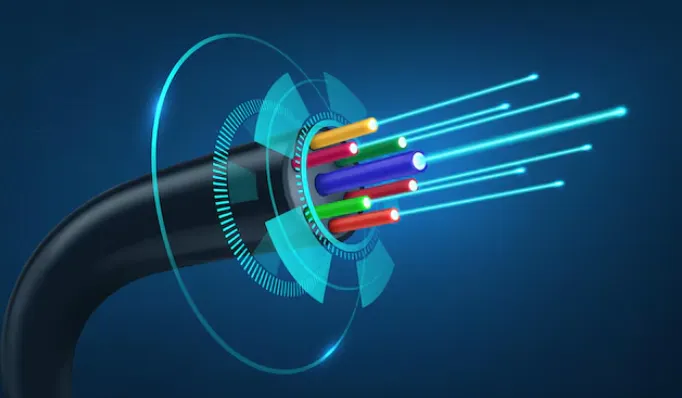
Moving with time, higher bandwidth and better reliability are in demand for networks. Fiber wavelength systems facilitate these requirements by allowing multiple signals over a single optical fiber. It allows greater data throughput without having to construct new physical infrastructure.
This will allow businesses and homes to make use of quicker connection speeds with fewer disruptions. These enhancements ease the transition for users as data sets grow larger. Advanced fiber wavelength services empower businesses to future-proof networks and drive sustainable growth in competitive markets.
Enabling Rapid Data Transmission
But in modern communication networks, the speed of information collection and transmission comes first. Fiber wavelength systems serve large volumes of data without much delay, resulting in high data transfer speeds.
Such systems communicate data with light waves, travelling at higher speeds than standard copper cables. This feature makes it easier to stream videos, play video games, and use different forms of video conferencing and other communication platforms.
Supporting Scalability
The user base emerges, and the network has to expand. Wavelength systems based on fiber are easier to scale out. Networks can scale without requiring giant refreshes by having light divided into different channels, sending separate data streams.
This flexibility lets service providers allocate additional capacity when necessary. They help companies to meet customer expectations without making large additional investments.
Improving Reliability and Security
When the networks are up, operations run. Third, fiber wavelength systems are immune to electrical interference or harsh environments. Communication is also more private because light signals are more difficult to intercept than electrical ones.
This additional layer of security is critical for organizations that work with sensitive data. A system that assures users that their information is not at risk earns more trust.
Reducing Operational Costs
Maintaining wavelength systems is cheaper when upgrading to fiber. Because one fiber can carry multiple signals, fewer cables are necessary. It lowers installation and upkeep expenses in the long run. Due to newer technologies and less power required for optical systems, energy consumption is also lower.
The result means that companies no longer need to cut corners on the network and that savings can be allocated elsewhere in the business.
Preparing for Future Technologies
Connectedness is only going to be more demanding with new applications and devices. Fiber wavelength systems provide the capability that will be the basis for future innovations. Faster networks will become essential as artificial intelligence and smart devices proliferate.
Fiber-oriented solutions are easily adjustable for such a transformation. Invest in this technology now to anticipate future requirements.
Enhancing User Experience
End users immediately see the effects of improved network technology. These high speeds, fewer delays, and lower outages contribute to increased satisfaction. People connecting for work, study, or entertainment all expect dependable links.
To consistently deliver on these expectations, fiber wavelength systems help. Satisfied users are likely to stick around and recommend the service to others.
Promoting Sustainable Growth
Many organizations are now giving serious consideration to sustainability. Fibers’ wavelengths lower their energy consumption and the amount of materials needed. They have a longer service life, and you won’t have to do frequent replacements.
Businesses can achieve both operational and environmental targets by supporting greener practices. Such a choice reveals a dedication to sustainable scale.
What’s Next?
- AI-Driven Networking: 43% of organizations already recognize the transformative impact of generative AI on connectivity strategies. Fiber wavelength systems will be the backbone of AI-powered networks.
- 5G & Beyond: As 5G matures and 6G looms, fiber wavelength systems will handle the exponential traffic growth.
- Global Connectivity: Expect wavelength systems to play a key role in bridging digital divides, enabling faster internet in underserved regions.
Conclusion
Wavelength systems on fiber are a significant networking step up. They raise the standard for speed, reliability, and security. Such systems not only suit the current requirements but also the future ones, as they offer easy scaling at a lower cost. With connectivity becoming an inseparable part of our daily lives, this fiber wavelength technology investment will set us on course to keep networks robust and reliable for everyone.