
I’ve been using MacBooks for years, starting with models like my 15-inch MacBook Pro 2017 with Touch Bar. And today I also have Lenovo and HP Pavilion laptops, so I’m familiar with using both macOS and Windows.
What I’ve learned is that MacBooks have some genuinely useful advantages, but they aren’t the right choice for everyone. The display, trackpad, and everyday performance are appealing, while hardware upgrades, software compatibility, and price can be frustrating.
You can simply take it like this: because it is from Apple does not mean it is going to be the best always. Here are the pros and cons of MacBooks I think are worth considering before buying one today.
| Feature | Pros | Cons |
| Display | Sharp Retina screens and advanced Pro display options | Higher-end displays cost more |
| Performance | Efficient processors and responsive everyday use | Capability varies considerably by model |
| Battery Life | Excellent efficiency on modern models | Real-world runtime depends on workload and battery condition |
| Design | Premium build and portable options | Limited form factors |
| macOS | Clean interface and useful productivity features | Some Windows-only applications aren’t supported |
| Cooling | Quiet, fanless MacBook Air | Fanless models can slow down under sustained loads |
| Gaming | Growing library of compatible games | Windows offers broader gaming compatibility |
| Ecosystem | Convenient integration with iPhone and iPad | Less useful without other Apple devices |
| Upgrades | Configurable memory and storage when ordering | Modern models generally aren’t user-upgradeable |
The MacBook Pros I've Personally Appreciated Over the Years
1. The Display and Trackpad Make Everyday Work Easier
One thing I appreciated about my MacBook Pro 2017 was its Retina display and large trackpad. Writing, website management, and working with multiple browser tabs felt comfortable on that machine.
Display quality remains a strength. PCMag’s 2026 MacBook testing highlights strong screens even in Apple’s more affordable models.
That said, I’d choose a MacBook Air for everyday work rather than paying for an advanced Pro display I wouldn’t fully use.
2. Performance and Battery Life Work Well Together
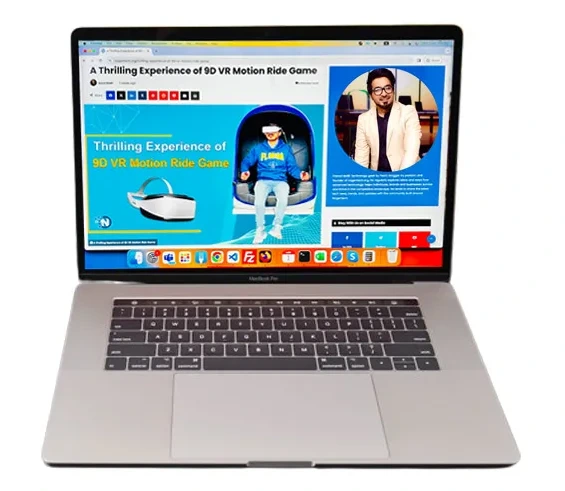
My older Intel MacBook handled WordPress, documents, and multitasking comfortably, although demanding tasks could make its fans noticeably louder.
Modern Apple silicon is considerably more efficient. In its 2026 MacBook Air review, UltrabookReview particularly values portability, battery life, and stable everyday performance. Apple also rates the M6 MacBook Pro for up to 24 hours of battery life under specified test conditions.
Real-world runtime is lower with demanding work, though. A MacBook can also get hot, and fanless Air models may reduce performance during sustained workloads.
3. macOS Becomes Convenient Once You Learn It
Are MacBooks easy to use? I’d say yes, once you get familiar with Finder, the Command key, trackpad gestures, and Spotlight.
The learning curve is real for Windows users. Laptop Mag’s Windows-to-MacBook experience makes this clear: the writer liked Spotlight and the trackpad but struggled with familiar Windows shortcuts.
I also see value in Apple’s device integration. Features like AirDrop and Handoff make a MacBook especially convenient when you use an iPhone or iPad.
4. There’s a MacBook for Different Types of Work
Not everyone needs a MacBook Pro. Consumer Reports’ 2026 buying guide distinguishes the Neo for simpler tasks, the Air for everyday use, and the Pro for demanding professional work.
That matches how I’d approach buying one. For browsing, studying, writing, and website management, an Air can be sufficient. For intensive editing or development, the Pro’s extra performance and cooling capabilities become more useful.
The MacBook Cons I'd Consider Before Spending Money
1. Choosing Too Little RAM or Storage Can Be Expensive
This is one of the biggest disadvantages of modern MacBooks.
Apple Silicon models generally don’t allow normal RAM or internal SSD upgrades after purchase. If you underestimate your future requirements, replacing the laptop may be your only practical option.
The same concern appears in Laptop Mag’s firsthand comparison, where an 8GB MacBook Air became restrictive for heavier multitasking.
Interestingly, EveryMac’s historical MacBook guide lists easy upgrades as an advantage of older white and black MacBooks. That’s no longer true for modern Apple silicon models.
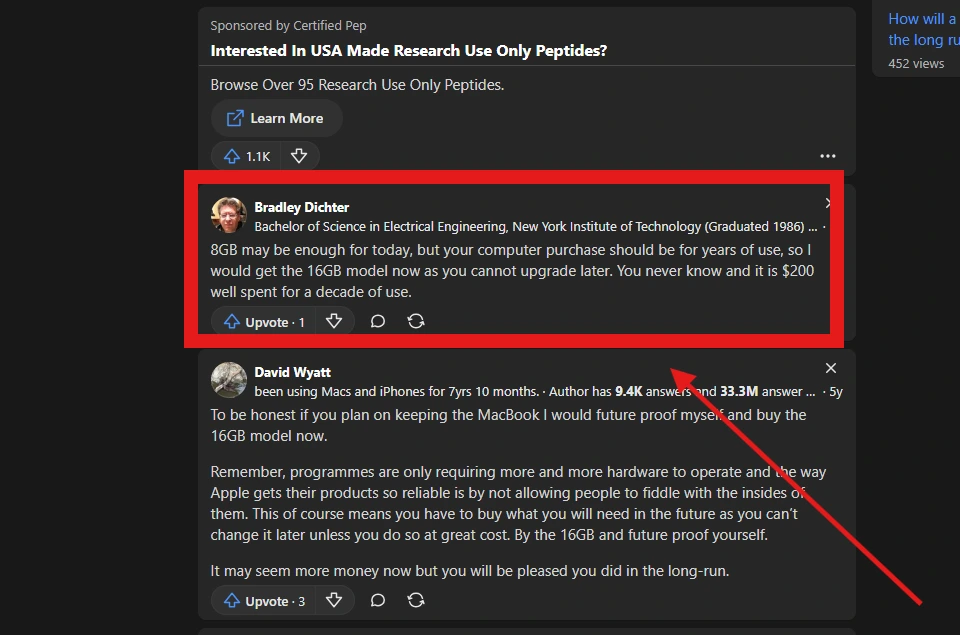
This concern also comes up in a Quora discussion about 8GB vs. 16GB MacBook RAM. Contributor Bradley Dichter recommends considering future memory needs because MacBook RAM cannot be upgraded later.
2. Windows Still Has Better Compatibility for Certain Tasks
MacBooks support plenty of games, but Windows has a larger PC gaming library. Some specialized business and engineering applications also remain Windows-only.
Deel’s Mac vs. PC comparison identifies software compatibility as a significant Windows advantage, particularly for businesses using legacy applications.
This is one of the practical reasons I’d keep Windows laptops in consideration. If a specific program or game is essential, check whether it works on macOS before buying.
3. The Starting Price Can Be Misleading
Apple now offers a lower-cost MacBook Neo, but choosing more storage, memory, or a Pro model can raise the bill substantially.
In his MacBook Neo hands-on review, Basic Apple Guy praises its build quality while noting compromises such as limited ports and no backlit keyboard.
Those trade-offs matter more than the Apple logo. A cheaper MacBook isn’t automatically better value, and an expensive one isn’t automatically excessive.
I’d compare the full configuration against a similarly priced Windows laptop.
4. Ports, Repairs, and Hardware Freedom Are Limited
MacBook Air models typically offer fewer connections than MacBook Pros, so external monitors and older accessories may require adapters.
Repairs and hardware changes can also be less straightforward. As MakeUseOf’s MacBook disadvantages guide discusses, limited upgradeability and connectivity are recurring concerns, although its older specifications shouldn’t be applied to current models.
Windows laptops provide more hardware variety, but that doesn’t mean every Lenovo or HP model is easily upgradeable.
MacBook vs. Lenovo and HP Pavilion: What Matters Most?
Using MacBooks alongside Windows laptops has reinforced one point for me: the better laptop depends on the work, not the operating system alone.
| Your Priority | Better Starting Point |
| Writing, studying, office work | MacBook Air or a suitable Windows laptop |
| Portable work and battery efficiency | MacBook Air |
| Heavy creative workloads | MacBook Pro or a capable Windows workstation |
| PC gaming | Windows laptop |
| Windows-only applications | Windows laptop |
| Replaceable RAM and SSD | A Windows model that specifically supports upgrades |
| iPhone and iPad integration | MacBook |
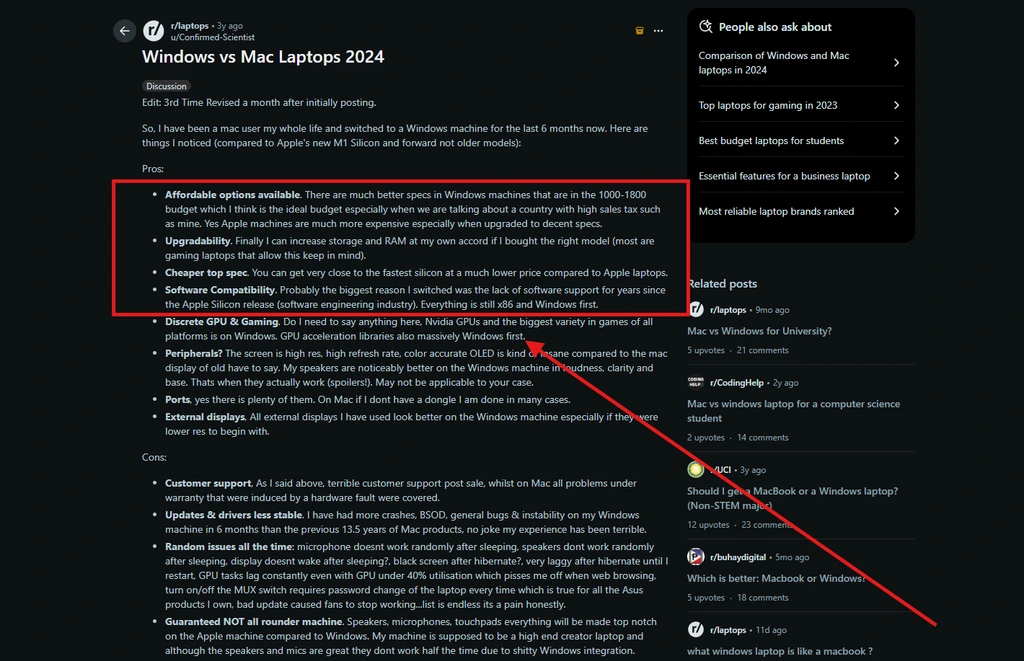
Actual buyers face similar trade-offs. In one 2-year-old Reddit discussion on Windows vs Mac Laptops, users compare portability, battery life, software compatibility, pricing, and hardware flexibility.
Would I Buy a MacBook Again? Final Thoughts
Yes, I’d consider a MacBook again for the work it handles well: writing, website management, everyday productivity, and compatible creative applications.
But I’d pay more attention to RAM, storage, software requirements, and repair costs before purchasing.
For most people, a MacBook Air is a practical starting point. A MacBook Pro makes sense when you genuinely need its extra capabilities. And if gaming, Windows-only programs, or hardware flexibility matter more, I’d choose a suitable Windows laptop instead.
A good laptop isn’t the one without drawbacks. It’s the one whose drawbacks won’t affect your work.