- AI agent platforms in 2026 go beyond chatbots by handling multi-step workflows, decision-making, and tool integrations.
- Enterprise solutions like Microsoft Copilot Studio and ServiceNow AI Agents are best for complex, large-scale operations.
- Tools like Zapier AI Agents and Make offer quick, affordable automation for SMEs with low setup complexity.
- Developer-focused platforms such as AutoGen and LangChain provide maximum customization but require technical expertise.
- Choosing the right platform depends on your existing tech stack, team skills, and specific workflow needs.
Automation isn’t some future plan anymore for Dutch businesses—it’s already reshaping how businesses operate day to day. Across industries, companies are moving beyond basic chatbots and adopting AI agents that can actually think through tasks, make decisions, and handle multi-step workflows.
In 2026, AI agent platforms are becoming part of the core business stack, as in 2025, enterprises around the globe had 28.6 million active AI agents. They can manage operations, support customers, and even collaborate with your existing tools. The real challenge isn’t whether to use them—it’s figuring out which platform fits your business without overcomplicating things.
In this blog post, I have listed the best AI agents that businesses can deploy in 2026. These are reviewed for three consistent factors: pricing model, primary use case, and setup complexity.
What Makes an AI Agent Platform Worth Using?
Before looking at specific platforms, it helps to clarify what sets a true AI agent platform apart from a standard automation tool. An AI agent can:
- Interpret ambiguous instructions and adapt its approach
- Chain multiple tasks together without human input at each step
- Connect to external APIs, databases and communication tools
- Learn from feedback over time within a defined scope
For Dutch businesses in sectors such as logistics, financial services, retail, and healthcare, those capabilities can translate into real efficiency gains.
12 Enterprise-Ready AI Agent Platforms
These platforms are built for scale. They’re powerful, but they usually require more setup and technical involvement.
1. Microsoft Copilot Studio
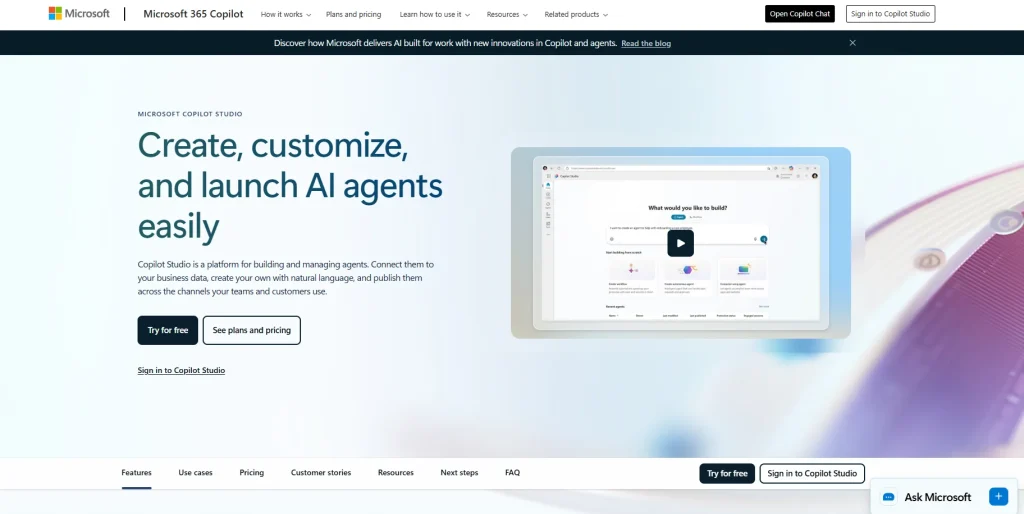
Microsoft Copilot Studio sits firmly at the enterprise end of the market, with pricing starting at around €200 per month for small teams and scaling with usage. It integrates directly with Microsoft 365 tools like Teams and SharePoint, making it a natural fit for organisations already working within that ecosystem. Setup is moderately complex, but teams familiar with Power Platform will find adoption relatively smooth.
Key Features:
- Native integration with Microsoft 365 (Teams, SharePoint)
- Low-code agent development via Power Platform
- Enterprise-grade security and compliance
- Workflow automation across internal systems
- Scalable pricing based on usage
2. Salesforce Agentforce
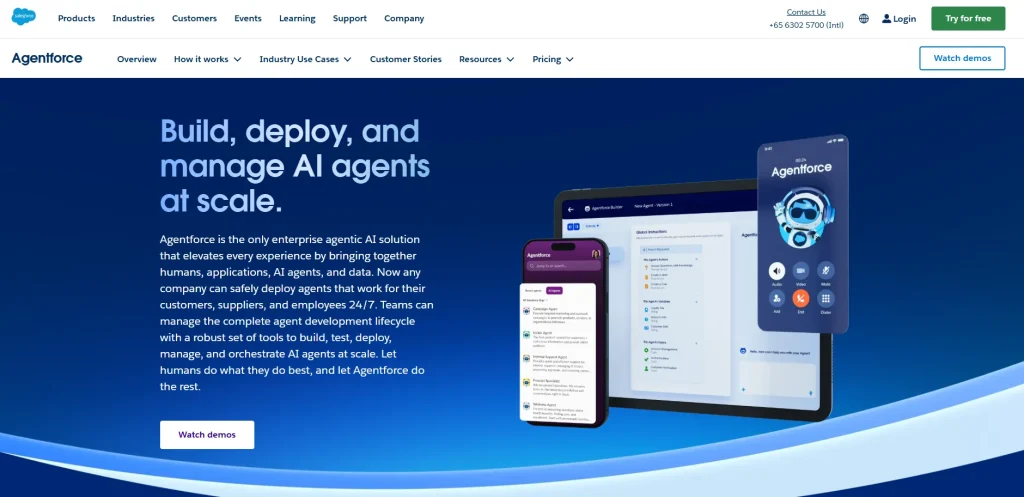
Salesforce Agentforce is focused on customer-facing workflows, particularly in sales and support environments. Its pricing is consumption-based, typically starting at around $2 per conversation. It excels at managing sales pipelines and automating customer interactions, but setup requires familiarity with Salesforce CRM, placing it in the medium-to-high complexity range.
Key Features:
- Deep integration with Salesforce CRM
- AI-powered sales pipeline management
- Automated customer support workflows
- Real-time data-driven responses
- Usage-based pricing model
3. ServiceNow AI Agents
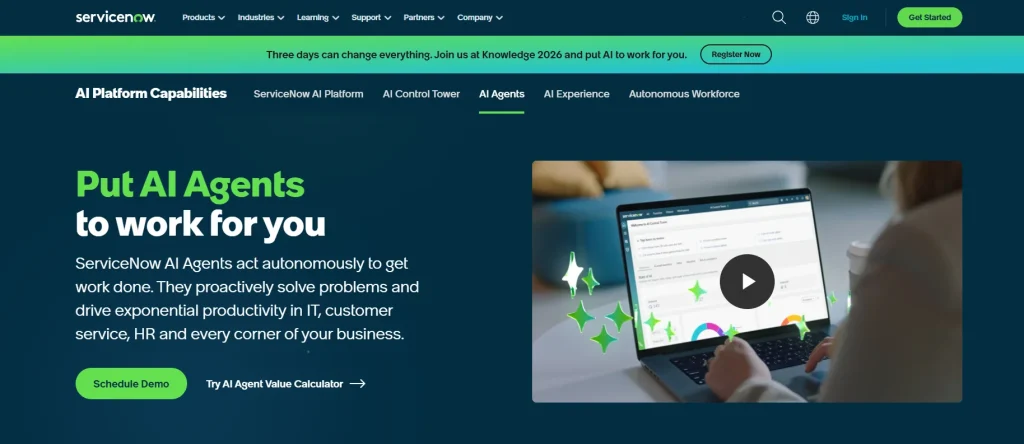
ServiceNow AI Agents are designed for IT service management and broader enterprise operations. Pricing is typically negotiated at the enterprise level. These agents are especially useful for organisations handling complex internal ticketing systems and compliance-heavy workflows. Setup is demanding, but the return on investment can be significant for businesses with dedicated IT teams.
Key Features:
- Advanced IT service and workflow automation
- Intelligent ticket routing and resolution
- Built-in compliance and governance tools
- Integration with enterprise systems
- Designed for large-scale internal operations
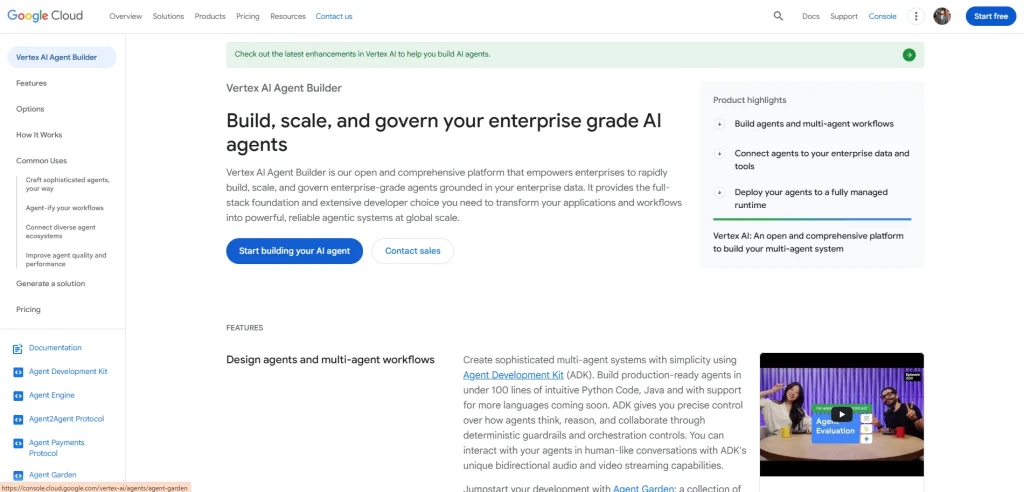
4. Google Vertex AI Agent Builder
Google Vertex AI Agent Builder offers strong natural language capabilities and works particularly well within Google Cloud environments. Pricing follows a consumption-based model similar to other Google Cloud services. It’s a strong fit for data-intensive industries like insurance and banking, although effective deployment usually requires developer support.
Key Features:
- Advanced natural language processing
- Deep integration with Google Cloud
- Scalable, consumption-based pricing
- Strong data processing and analytics
- Customisable agent workflows
Mid-Market and SME-Friendly Platforms
These options are more accessible, quicker to deploy, and better suited for small to mid-sized businesses.
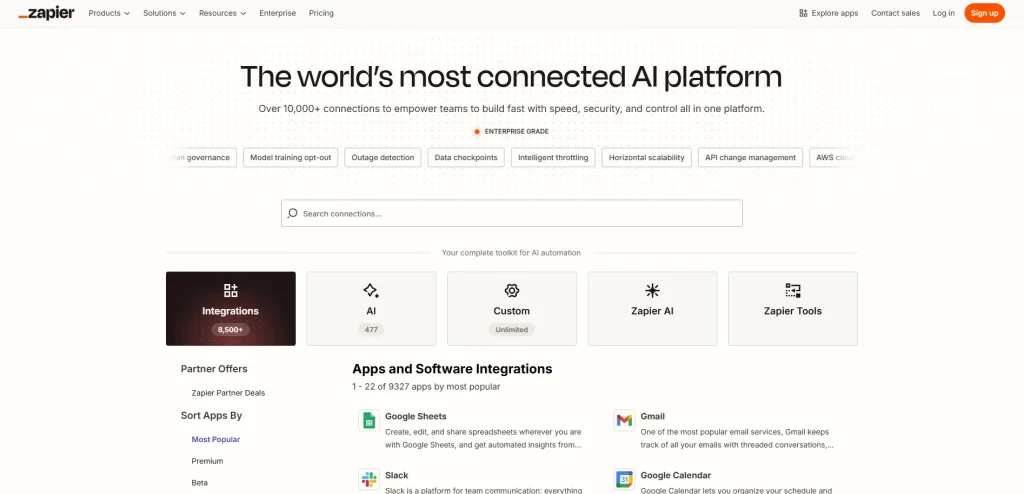
5. Zapier AI Agents
Zapier AI Agents extend Zapier’s automation ecosystem by adding agent-style decision-making. Pricing starts at around $20 per month, making it one of the most accessible options for SMEs. It works especially well for marketing and operations teams managing repetitive tasks across multiple tools. Setup is simple and requires little technical knowledge.
Key Features:
- Connects with thousands of apps
- No-code automation builder
- AI-powered task chaining
- Quick setup for non-technical users
- Ideal for repetitive business workflows
6. Make (formerly Integromat)
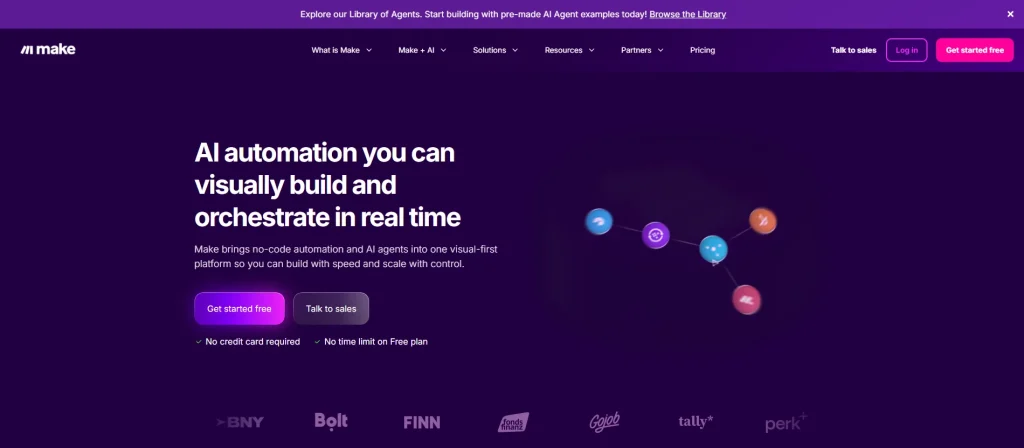
Make remains a popular choice among digital agencies due to its flexibility. It supports multi-step automation with conditional logic and AI modules. Pricing starts at €9 per month, and setup falls into the medium complexity range. There is also strong community documentation available, including resources in Dutch.
Key Features:
- Visual workflow builder with advanced logic
- Multi-step automation scenarios
- AI-supported decision-making
- Affordable pricing
- Strong community support
7. Relevance AI
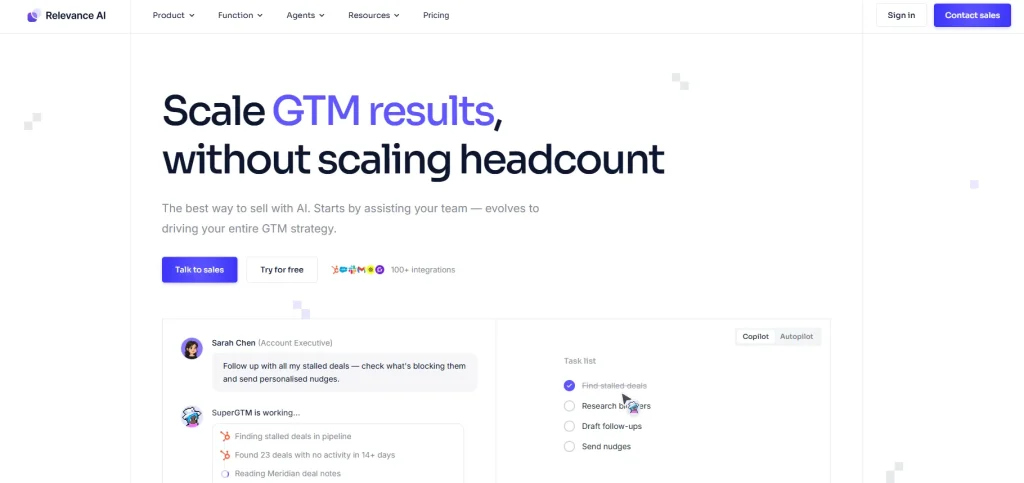
Relevance AI is designed for building internal tools like research assistants and document-processing agents. Pricing starts at $19 per month, and setup is generally low to medium in complexity, even for non-technical teams. It’s increasingly being adopted by professional services firms.
Key Features:
- Document processing and data extraction
- AI-powered research assistants
- Easy setup for internal tools
- Integration with structured and unstructured data
- Suitable for non-technical teams
8. Lindy AI
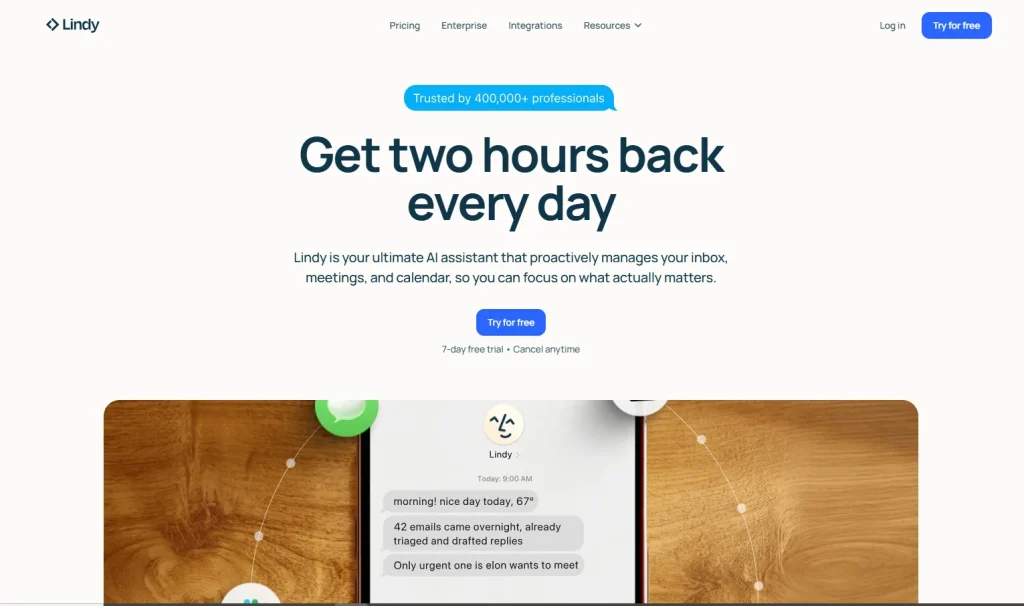
Lindy AI focuses on productivity and workflow automation for small teams. With pricing starting at around $49 per month, it handles tasks like calendar management, email drafting, and CRM updates with minimal oversight. Setup is simple, making it ideal for teams looking for quick efficiency gains.
Key Features:
- Email and communication automation
- Calendar and scheduling management
- CRM updates and task handling
- Personal assistant-style workflows
- Low setup complexity
Developer-Focused AI Agent Platforms
These platforms offer maximum flexibility but require technical expertise to implement effectively.
9. AutoGen (Microsoft Research)
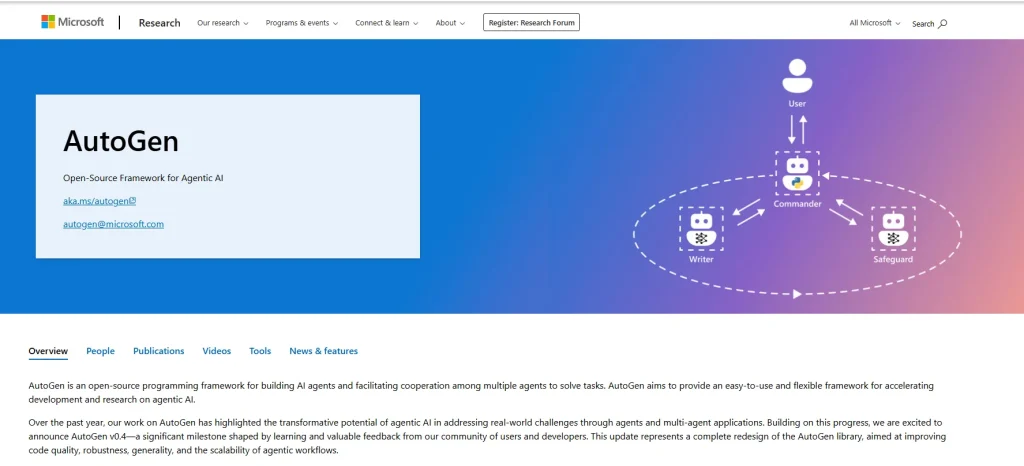
AutoGen is an open-source framework designed for building multi-agent systems where different agents collaborate on tasks. It is free to use, although infrastructure costs apply. Setup is highly complex and typically requires Python knowledge. AutoGen’s documentation offers extensive guidance for teams exploring multi-agent architectures.
Key Features:
- Multi-agent collaboration systems
- Open-source and highly customizable
- Designed for complex workflows
- Extensive developer documentation
- Requires Python proficiency
10. CrewAI
CrewAI allows businesses to create collaborative teams of AI agents with defined roles and goals. It is open-source, with paid cloud options starting at $29 per month. It’s particularly useful for content production, research workflows, and data analysis. Setup is moderately complex for teams with basic Python knowledge.
Key Features:
- Role-based multi-agent collaboration
- Task delegation between agents
- Flexible workflow design
- Open-source with cloud deployment options
- Ideal for research and content workflows
11. LangChain
LangChain is one of the core frameworks behind many custom AI agent deployments. It is free and open-source, but building production-ready solutions requires significant development effort. It’s best suited for teams that want full control over how their agents behave.
Key Features:
- Modular framework for AI applications
- Integration with multiple models and tools
- Memory and context handling
- Highly customizable pipelines
- Large developer ecosystem
12. Botpress
Botpress focuses on conversational AI, with agent capabilities layered on top. It offers a free tier, with paid plans starting at $89 per month. It’s particularly well-suited for e-commerce and customer service teams. Setup ranges from low to medium difficulty, and its visual builder reduces the need for heavy development work.
Key Features:
- Visual bot and agent builder
- Omnichannel support
- AI-driven conversations
- Custom workflows and integrations
- Scalable for growing teams
How AI Agents Are Being Used Across Industries
It is also worth paying attention to how quickly AI agent technology is spreading across industries. Retail, logistics, healthcare, and financial services are all bringing agent platforms into core workflows.
Entertainment and digital platform businesses are doing the same. New online casinos operating in the Dutch market are among the digital platforms already using AI-driven tools for personalisation, fraud detection, and customer support automation.
That reflects a broader shift in which AI agents are becoming part of the underlying infrastructure rather than a standalone competitive advantage — showing up across sectors from banking to leisure.
Organisations using AI agents in customer-facing workflows are reporting meaningful reductions in handling time alongside better satisfaction scores, a pattern visible across industries as AI adoption accelerates globally.
Choosing the Right Platform
There’s no single platform that works for everyone. In most cases, the decision comes down to three things: your current software stack, your team’s technical capability, and where your biggest workflow bottleneck is.
For SMEs, platforms like Zapier AI Agents or Botpress offer the fastest path to deployment. Enterprises already using Microsoft tools will find Copilot Studio the most natural fit. Developer-led teams with more complex needs are better suited to AutoGen or LangChain.
Final Thoughts
AI agent platforms are evolving quickly, and businesses that start experimenting now will be in a much stronger position moving forward.
The smartest approach isn’t to automate everything at once—it’s to start small, focus on real workflows, and scale as you go.