TCL Introduced RayNeo Air 4 Pro Smart Glasses at CES 2026
TCL unveils RayNeo Air 4 Pro at CES 2026, the world’s first HDR10 AR smart glasses, featuring a Micro-OLED display, Bang & Olufsen audio, and a disruptive $299 launch price.

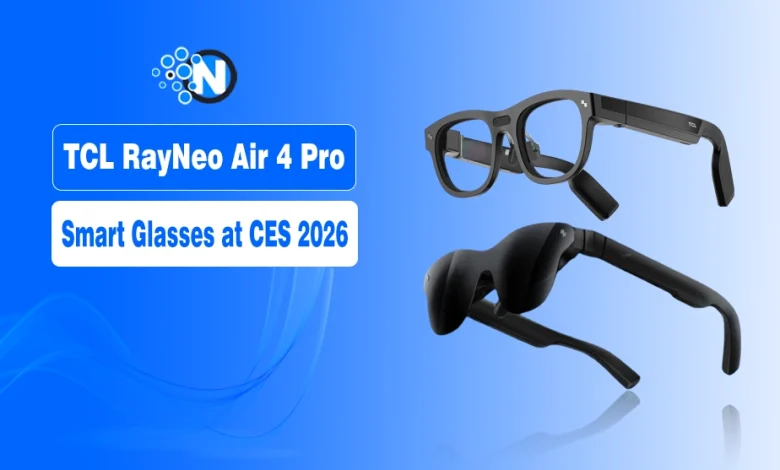
At CES 2026, smart glasses are everywhere, but TCL may have just stolen the spotlight with the RayNeo Air 4 Pro.
Priced at just $299 and launching on January 25, 2026, these new AR glasses combine a genuinely impressive HDR display with a price point that undercuts much of the competition.
What is RayNeo Air 4 Pro?
The RayNeo Air 4 Pro is a next-generation augmented reality (AR) smart glasses product from TCL’s RayNeo brand that was unveiled at CES 2026.
It’s designed to bring a private, large-screen viewing experience to users by projecting virtual displays directly in front of the wearer’s eyes. These things make it feel like you’re watching on a giant screen, even while on the go.
Key Highlights of RayNeo Air 4 Pro
- HDR10 Micro-OLED Display – World’s first HDR10 AR glasses with bright, vivid visuals.
- Smooth Performance – Vision 4000 chip, 60–120Hz refresh rate, up to 1,200 nits brightness.
- Premium Audio – Bang & Olufsen–tuned speakers with minimal sound leakage.
- USB-C Connectivity – Works with phones, laptops, tablets, and gaming consoles.
- Lightweight Design – Just 76g for comfortable long use.
- Affordable Price – Launches Jan 25, 2026, for $299.
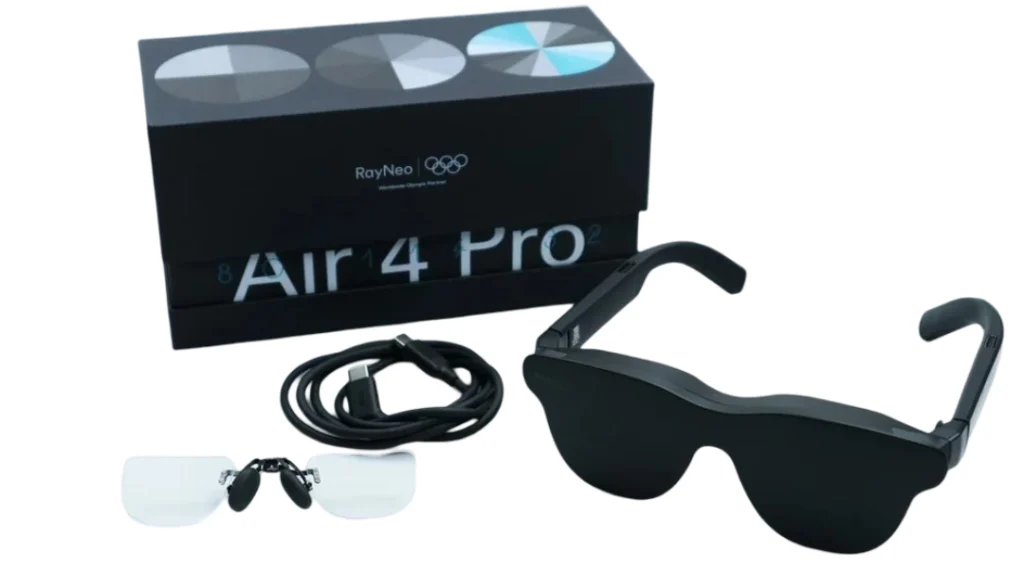
RayNeo Air 4 Pro Display That Redefines Expectations
The headline feature is the Air 4 Pro’s HDR10-enabled Micro-OLED display, making it the world’s first HDR10 AR glasses. During hands-on demos, the visuals were immediately striking, bright, sharp, and richly saturated.
Compared side by side with rivals like Xreal, the RayNeo Air 4 Pro stood out for sheer brightness, reaching up to 1,200 nits, and covering 98% of the DCI-P3 color gamut. TCL’s use of a 0.6-inch SeeYa Micro-OLED panel paired with a Vision 4000 processor results in a floating virtual screen that feels closer to a portable cinema than a tech demo.
HDR highlights pop, darker scenes retain detail, and the experience remains smooth thanks to a 60–120Hz refresh rate.
Audio and Comfort: More Than Just Visuals
Audio is another surprise strength. The built-in speakers are tuned in collaboration with Bang & Olufsen, delivering surprisingly immersive sound for open-ear glasses with minimal leakage. While features like AI-powered 2D-to-3D video conversion couldn’t be fully tested during the demo, the promise adds to the product’s long-term appeal.
Despite packing premium components, the Air 4 Pro remains lightweight at just 76 grams, which makes it comfortable for extended viewing sessions. Adjustable nose pads and balanced weight distribution help it feel less like a gadget and more like everyday eyewear.
How It Works, and Who It’s For
Like most AR display glasses today, the RayNeo Air 4 Pro requires a USB-C connection to a compatible smartphone, laptop, tablet, or gaming console. Once connected, it projects a massive virtual screen up to a 201-inch equivalent at 6 meters, ideal for movies, gaming, or productivity on the go.
For users who want true independence, TCL also teased the RayNeo X3 Pro Project eSIM, a prototype concept with built-in 4G connectivity. However, with the standard X3 Pro priced at $1,299, the Air 4 Pro clearly targets mainstream consumers rather than early adopters with deep pockets.
Verdict: A Disruptive Entry in AR Glasses
The RayNeo Air 4 Pro feels less like an incremental update and more like a disruption. By delivering HDR visuals, strong audio, and solid comfort at $299, TCL has positioned RayNeo as a serious contender in the smart glasses market, one that could make established players nervous.
If CES 2026 is any indication, the era of affordable, high-quality AR displays may finally be here, and the RayNeo Air 4 Pro is leading the charge.

![Top Tech Stories of 6th week [2026]](https://www.nogentech.org/wp-content/uploads/2026/02/Top-Tech-Stories-of-7th-Week-2026-390x220.webp)

![Top Tech Stories of 4th week [2026]](https://www.nogentech.org/wp-content/uploads/2026/01/Top-Tech-Stories-of-4th-Week-2026-390x220.webp)