Free Movie Sites VS Paid Streaming Services: Which One Is Actually Worth Your Time?

I’ll be honest with you. A couple of months ago, I was paying for Netflix, and Amazon Prime Video simultaneously, and still finding myself opening up BFlix or 1MoviesHD on a random Tuesday night because the one film I actually wanted to watch wasn’t available on any of those three.
I was spending dollors on streaming services and still defaulting to free platforms. That experience is exactly what pushed me to research this topic properly, and now I want to share everything I’ve learned.
So by realizing this now I’m going to break down 10 streaming platforms I’ve personally explored, five lightweight, five full-featured, and give you a clear, honest picture of what each one actually costs, what it actually offers, and who it’s actually built for.
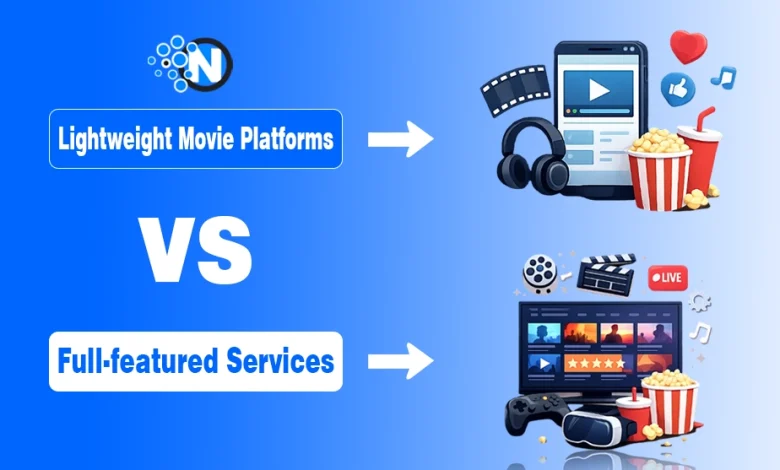
Difference Between Lightweight Movie Platform & Full-Featured OTT
Before I dive into individual platforms, I want to be clear about what I mean when I say “lightweight” versus “full-featured,” because these terms get thrown around loosely.
A lightweight movie platform is a browser-based service that requires no signup or subscription. You simply search and play content with minimal interface and no advanced features like recommendations or offline downloads.
While a full-featured OTT streaming service is a licensed product with pricing, apps, customer support, and studio agreements. It offers features such as recommendations, watchlists, offline viewing, and profiles. You pay for reliability and features, gaining a structured service with accountability.
Both have a place in the streaming world. The question is which one belongs to you.
The Lightweight Side: Five Streaming Platforms I’ve Explored
1. 1MoviesHD — Fast, Familiar, But No Guarantees
1MoviesHD is probably the most well-known name among free movie sites. The appeal is obvious, no account, no payment, and a broad library that covers everything from new releases to classic films.
What I don’t love about it is the unpredictability. A film I watched last month might be gone today. There’s no watchlist, no history, and no way to pick up where you left off. And because it operates in a legal grey area, it doesn’t have a customer support channel you can actually contact if something doesn’t work.
2. BFlix — The Cleaner Free Experience
Out of all the free lightweight platforms I’ve tested, BFlix has one of the cleaner user experiences. The ad density is lower than most comparable sites, which makes the actual viewing experience less frustrating.
But like every lightweight platform, BFlix lacks the infrastructure that makes streaming comfortable long-term. No profiles, no downloads, no app for your Smart TV, and no content licensing you can verify. If BFlix stops working overnight, I’ve got a full list of safe BFlix alternatives already tested.
3. BMovies — Simple HD Streaming, Nothing More
BMovies does exactly what its name suggests. It gives you access to movies in reasonable HD quality without any fuss. I’ve tested it on both desktop and mobile browsers, and the performance is consistent enough for casual use.
For someone who already knows exactly what they want to watch and just needs a free way to watch it, BMovies gets the job done. You can also check my dedicated list of BMovies alternatives for backup options.
4. DoraWatch — The Niche Pick for Anime and K-Drama Fans
I have a soft spot for DoraWatch purely because I actually ran a full DoraWatch vs Boredflix comparison if you want to go deeper on that niche so it serves a very specific audience extremely well.
If you’re into anime or Korean dramas, two of the fastest-growing content categories in global streaming, according to multiple industry observers, DoraWatch delivers a focused library that’s hard to find elsewhere for free.
The platform is lightweight in every sense of the word. No login required, no subscription, and a simple layout that puts content browsing front and center. For its target audience, it genuinely works.
5. Nites TV — The Aggregator Approach
Nites TV works differently from the others. Rather than hosting content directly, it aggregates streams from various sources and presents them in a single interface. Think of it as a free content directory.
The advantage is breadth — there’s a lot on it. The disadvantage is inconsistency. Stream quality varies wildly depending on the source, and uptime is never guaranteed. For when Nites TV is unreliable, I’ve listed 10 working alternatives from my own testing.
Feature Comparison: What Each Platform Actually Gives You
| Platform | Offline DL | 4K Support | Multi-Profile | Legal Standing | Device Apps |
| Netflix | Yes (paid) | Yes (Premium) | Yes | Fully Legal | All major |
| Amazon Prime | Yes | Yes | Yes | Fully Legal | All major |
| Hulu | Yes (No Ads) | Limited | Yes | Fully Legal | All major |
| Tubi | No | No | No | Fully Legal | All major |
| Plex | Yes (Pass) | Yes (Pass) | Yes | Fully Legal | All major |
| 1MoviesHD | No | Some | No | Grey Area | Browser only |
| BFlix | No | No | No | Grey Area | Browser only |
| BMovies | No | Some | No | Grey Area | Browser only |
| DoraWatch | No | No | No | Grey Area | Browser only |
| Nites TV | No | No | No | Grey Area | Browser only |
The Full-Featured Side: Five OTT Streaming Services Worth Your Money
1. Netflix — The Standard Everyone Else Is Measured Against
Let me start with pricing, because Netflix has raised its rates seven times since 2014 and it’s now genuinely expensive. One thing I think people underestimate is the value of Netflix’s regional originals.
Content produced in South Korea, Spain, and Brazil has found massive global audiences on Netflix — and that diversity of storytelling is something no lightweight platform can touch. If you’re a heavy viewer, Netflix Premium at $24.99 is actually reasonable when split across four screens.
2. Amazon Prime Video — Underrated and Underpriced
Amazon Prime Video is, in my opinion, the most underrated service in this comparison. If you already have an Amazon Prime membership, priced at $14.99 per month or $139 per year as of 2026, Prime Video is included at no extra cost.
The one criticism I’d make is the interface. Amazon’s recommendation algorithm sometimes feels more like a shopping catalog than a curated viewing experience. But at $8.99 per month as a standalone, it’s one of the most affordable legal streaming options on this list.
3. Hulu — The Best Option for TV Lovers
Hulu occupies a unique position in the full-featured landscape. It’s the only major service that gives you same-day or next-day access to episodes from ABC, NBC, FOX, and FX, which is a huge advantage if you watch a lot of current-season TV. I used Hulu heavily during award season, and the convenience of watching The Bear or Shogun the day after air is genuinely valuable.
4. Tubi — The Best Free Legal Option on This List
Tubi is the platform I recommend most often to people who ask me how to stream for free without getting into legal grey areas. It’s free, legal, and owned by Fox Corporation, which means it has real content licensing agreements with real studios.
You don’t need an account to browse, though creating one lets you save content to a watchlist.
The ad experience is manageable — shorter and less frequent than traditional TV. Tubi has dedicated apps for Smart TVs, Roku, Fire TV, Apple TV, Android, and gaming consoles.
5. Plex — The Power User’s Streaming Hub
Plex is the most technically interesting platform on this list, and also the one that requires the most setup to get full value from. At its core, Plex is a personal media server, you can organize your own locally stored movies, TV shows, and music, and stream them to any device. The free tier of Plex also includes a growing catalog of ad-supported free content, similar to Tubi.
For the average user, Plex’s free tier is a legitimate Tubi alternative. For power users, Plex Pass is one of the most customizable streaming experiences available at any price point.
2026 Pricing Of Streaming Platforms at a Glance: All 10 Platforms Compared
I pulled these figures from official platform pages and verified industry sources. Prices are in USD and reflect publicly listed rates as of early 2026. Always check the platform’s official website for the most current pricing before subscribing.
| Platform | Type | Starting Price | Top Tier |
| Netflix | Full-Featured | $7.99/mo (with ads) | $24.99/mo (Premium 4K) |
| Amazon Prime Video | Full-Featured | $8.99/mo (standalone) | Included with Prime $14.99/mo |
| Hulu | Full-Featured | $12.99/mo (with ads) | $18.99/mo (No Ads) |
| Tubi | Full-Featured (Free) | $0 — Ad-supported | $0 — Always Free |
| Plex | Hybrid Free+Paid | $0 (free tier) | $6.99/mo (Plex Pass) |
| 1MoviesHD | Lightweight | $0 — Free | $0 — No tiers |
| BFlix | Lightweight | $0 — Free | $0 — No tiers |
| BMovies | Lightweight | $0 — Free | $0 — No tiers |
| DoraWatch | Lightweight | $0 — Free | $0 — No tiers |
| Nites TV | Lightweight | $0 — Free | $0 — No tiers |
Streaming Misconceptions I Keep Seeing And the Real Answers
“All OTT platforms have the same content”
This is one of the most common things I hear, and it’s simply not accurate. Content licensing is studio-specific and region-specific.
A film available on Netflix US may be on Amazon Prime in the UK and completely unavailable in India. Streaming platforms spend billions competing for exclusive rights, which is precisely why they all feel necessary and why switching between them can be so frustrating.
“Ad-supported plans give you everything the paid plans do”
They don’t. Netflix’s ad tier excludes offline downloads and some licensed content. Hulu’s ad plan requires ads that cannot be skipped on some network content even when you’re on the no-ads tier, due to specific licensing restrictions. Amazon’s base Prime Video tier now includes ads by default, you pay an extra $3 per month to remove them. Always read what’s excluded before choosing the lower tier.
“Free platforms are always illegal”
This is a misconception worth correcting, because it drives people toward grey-area platforms unnecessarily. Tubi is completely free and completely legal, it’s ad-supported and operates with full studio licensing agreements. Plex’s free tier is also fully legal. The distinction isn’t free vs. paid; it’s licensed vs. unlicensed.
“Lightweight platforms are reliable enough for daily use”
They’re not, in my experience. Domain names change. Streams go down. Content disappears without notice. And there’s no customer support, no account history, and no way to pick up where you left off. For occasional use, lightweight platforms are functional. As a daily streaming solution, they will frustrate you.