Key Influencer Marketing Facts Everyone Needs to know in 2026
Influencer marketing in 2026 is a performance-driven, trust-based strategy where creators, data, and long-term partnerships drive real business growth.

Scroll past an ad today, and you won’t even notice you did it. Consumers have trained their thumbs to ignore banners, skip pre-rolls, and mentally block branded messaging.
In fact, 69% of consumers say they trust influencers and are influenced by them, making a purchase at least once a year. That single number explains why influencer marketing isn’t just growing in 2026; it’s replacing traditional persuasion.
Influencer marketing now sits at the intersection of trust, culture, and commerce. It works not because creators are louder, but because they feel human in a digital world overloaded with corporate noise. As there is always another face of a single coin, many marketers are saying that influencer marketing is dead.
Is it true?
Being a marketing professional with over 14 years of experience, I’ve compiled a guide on key influencer marketing facts that will provide the answer to your complications.
What is Influencer Marketing?
Influencer marketing is a digital marketing strategy where brands partner with individuals who have an established audience and credibility on platforms like social media, blogs, or video channels to promote products, services, or ideas.
Instead of brands speaking to consumers through ads, influencer marketing works by having trusted creators speak to their audience in an authentic, relatable way.
How Influencer Marketing Works
- A brand collaborates with an influencer whose audience matches its target market
- The influencer creates content (posts, reels, videos, stories, reviews, livestreams, etc.)
- The recommendation feels organic rather than promotional
- Audiences are more likely to engage, trust, and take action
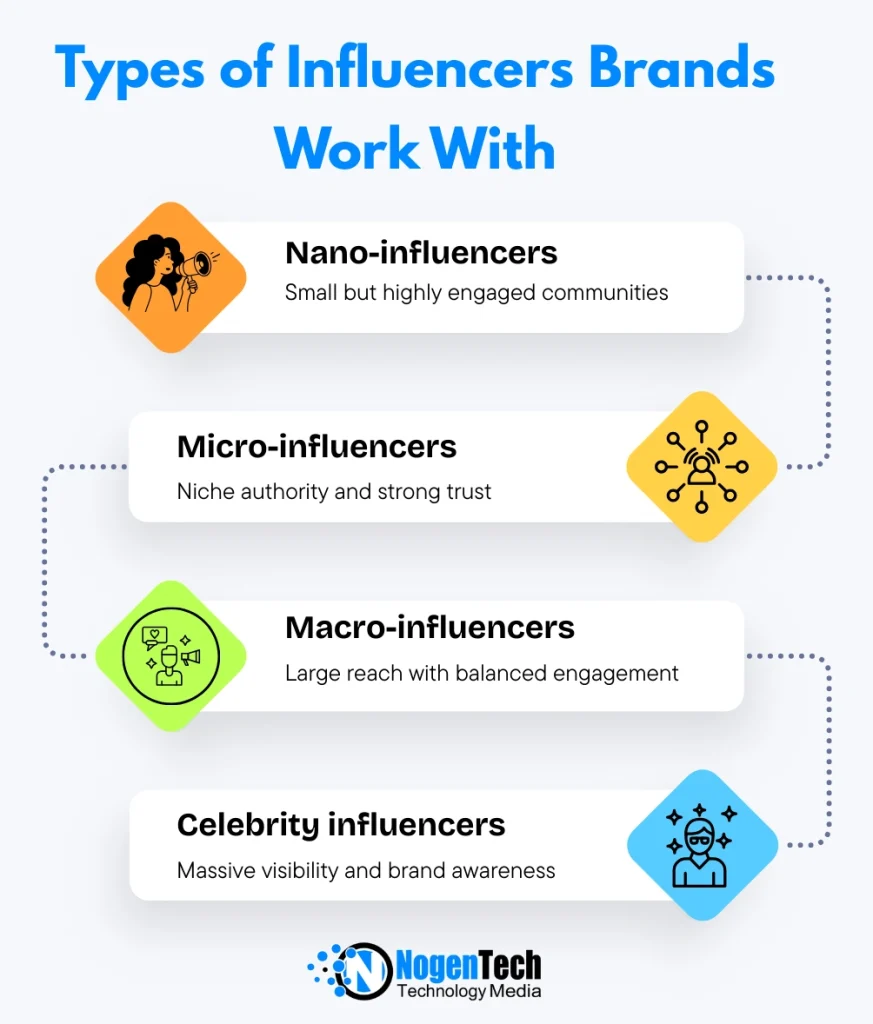
Types of Influencers Brands Work With
- Nano-influencers: Small but highly engaged communities
- Micro-influencers: Niche authority and strong trust
- Macro-influencers: Large reach with balanced engagement
- Celebrity influencers: Massive visibility and brand awareness
Is Influencer Marketing Really Dead?
No, influencer marketing is not dead, but it is evolving into its advanced form, where content consumers trained their brains to dodge marketing tactics.
The idea that influencer marketing has “died” usually comes from outdated expectations, thinking it’s only about flashy celebrity posts or paying for reach without strategy. But in 2026, influencer marketing remains very much alive and increasingly impactful, driven by new formats and deeper audience connections.
Here are the myths paired with one-line realities that will give you a reality check on influencer marketing:
- Myth: Influencers no longer drive sales
- Reality: Influencers drive measurable conversions when campaigns focus on relevance and audience fit.
- Myth: Audiences don’t trust influencers anymore
- Reality: Audiences distrust ads, not creators who consistently provide value and transparency.
- Myth: Sponsored content never performs well
- Reality: Sponsored content performs when it feels authentic and aligned with the creator’s voice.
- Myth: Influencer marketing is too expensive
- Reality: Micro and nano influencers often deliver higher ROI at a lower cost.
- Myth: Social media algorithms killed influencer reach
- Reality: Algorithms reward engagement and relevance, which strong creator content still earns.
Top Influencer Marketing Facts Brands Can’t Ignore
These are some facts based on studies and market research that indicate influencer marketing is still effective:
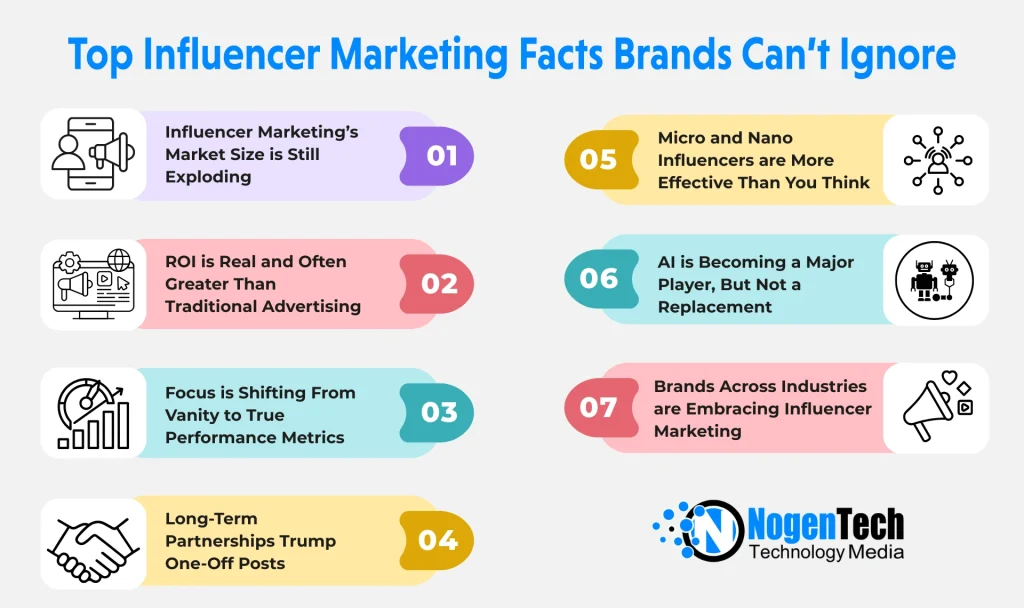
1. Influencer Marketing’s Market Size is Still Exploding
From humble beginnings, the influencer marketing industry has grown into a $24 billion-dollar global powerhouse.
- As of 2025, the global market was projected to surpass $24 billion, showing sustained exponential growth year over year.
- Other industry forecasts anticipate that influencer marketing platforms alone could grow to nearly $98 billion by 2030, thanks to advancing tech and analytics.
What this means for you:
Influencer marketing isn’t a short-lived trend, but a major channel in the marketing mix. Whether you’re a startup or a global brand, which ignores this market today could mean losing ground to competitors who embrace it.
2. ROI is Real and Often Greater Than Traditional Advertising
One of the biggest misconceptions is that influencer marketing is “expensive and unpredictable.” The truth? Smart campaigns deliver measurable returns to this day.
Many studies show that for every $1 spent, brands often earn around $5.78 in return from influencer campaigns, outperforming many traditional digital advertising channels.
This kind of ROI is why more marketers are:
- prioritizing influencer budgets
- moving beyond superficial metrics
- optimizing for real outcomes like conversions and sales
3. Focus is Shifting From Vanity to True Performance Metrics
In 2026, likes and views are no longer the gold standard. Brands are increasingly focused on:
- Conversion rates
- Click-through rates
- Cost per acquisition
- Direct sales attribution
According to recent insights, modern influencer strategies now treat creator campaigns with the same disciplined performance goals as paid search or programmatic ads, a major evolution in industry maturity.
Marketers who get this right now will beat the competition by knowing which content truly drives revenue instead of chasing empty impressions.
4. Long-Term Partnerships Trump One-Off Posts
Blasts of short content used to dominate influencer deals. But 2026’s top-performing brands are building ongoing collaborations that deepen trust and improve consistency.
Why it matters:
- Creators become true advocates, not just paid voices.
- Audiences perceive recommendations as more genuine.
- Campaigns yield better brand lift and recall.
This shift toward long-term partnership is one of the most strategic transformations in influencer marketing today.
👉 Pro Tip: If an influencer consistently delivers a higher return on investment (ROI) than others, turn them into a long-term brand ambassador and treat them as a strategic partner, not just a paid promoter.
5. Micro and Nano Influencers are More Effective Than You Think
Big celebrities still attract attention, but smaller creators now lead authentic engagement with customers. Recent trends show a majority of brands prefer working with micro and mid-tier influencers because:
- Their audiences trust them more
- Costs are lower
- Engagement rates tend to be higher
These influencers can often generate better results per dollar spent, especially for niche or localized campaigns.
6. AI is Becoming a Major Player, But Not a Replacement
While AI tools help with influencer discovery, analytics, and campaign automation, human creativity and authenticity still reign supreme.
Brands are using Artificial Intelligence to:
- Identify the best influencers
- Optimize posting strategies
- Analyze real-time performance
But the human element, the creator’s voice, remains the core driver of audience trust, and marketers who blend AI efficiency with authentic content will win in 2026.
7. Brands Across Industries are Embracing Influencer Marketing
Influencer strategies are no longer confined to lifestyle brands. Today, B2B companies, tech firms, and even traditional industries are deploying influencer partnerships to:
- Educate audiences
- Humanize complex products
- Build community trust
This expansion dramatically broadens the marketplace of what influence means and how it converts consumers into loyal customers.
Final Thoughts on Influencer Marketing Facts
Influencer marketing in 2026 is no longer about chasing virality or borrowing attention, but it’s about earning trust at scale. Brands treat creators as strategic partners, measure outcomes like a performance channel, and prioritize authenticity over reach to get higher ROI.
As audiences grow more selective and platforms become more competitive, influencer marketing’s real power lies in its ability to humanize brands in a digital-first world. Those who understand the facts, adapt to data-driven execution, and invest in long-term creator relationships won’t just keep up, they’ll lead.
People Also Ask
What are the most important influencer marketing metrics today?
The most important metrics include conversions, click-through rate (CTR), engagement rate, cost per acquisition (CPA), and attributed revenue. Likes and views matter less unless they contribute to business results.
Are micro-influencers better than celebrity influencers?
In many cases, yes. Micro and nano influencers often have higher engagement rates, stronger audience trust, and lower costs.
Is influencer marketing only for B2C brands?
No. B2B brands, SaaS companies, and service-based businesses increasingly use influencer marketing to educate audiences, build credibility, and shorten buying cycles.
Are long-term influencer partnerships better than one-off posts?
Yes. Long-term partnerships build credibility, improve brand recall, and generate stronger audience trust compared to one-time sponsored content.
Which platforms matter most for influencer marketing in 2026?
Instagram, TikTok, YouTube, LinkedIn, and emerging short-form video platforms remain dominant, but platform choice should align with audience behavior and campaign goals.