- Fragmented SaaS stacks create hidden operational costs.
- Python automation eliminates repetitive tasks and improves workflow efficiency.
- Custom applications provide a single source of truth and embedded business logic.
- ROI often exceeds SaaS savings over 12–24 months.
- Long-term ownership of custom software reduces recurring subscription fees.
Operational costs don’t rise suddenly—they build up through small inefficiencies like manual work, disconnected tools, and duplicated data. What works for a small team often breaks down as a business grows, leading to delays in reporting, operations, and internal communication.
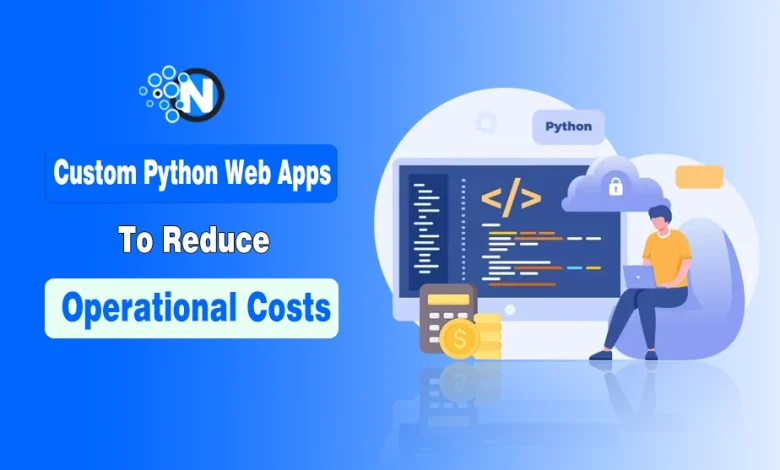
By the time these issues appear in financial reports, they’re already part of daily operations. That’s why many businesses turn to custom Python web applications—to automate workflows, streamline processes, and reduce long-term costs.
In this blog post, you will learn how custom Python web apps improve operational efficiency, automate repetitive work, and reduce long-term operational costs.

The Hidden Cost of Fragmented SaaS Stacks
Modern businesses rely heavily on SaaS tools. A typical technology stack may include:
- CRM platforms
- billing and subscription management tools
- customer support software
- analytics and reporting dashboards
- marketing automation platforms
- inventory management systems
- spreadsheets used for internal coordination
While each tool solves a specific problem, more applications mean more complexity. Teams spend excessive time synchronizing data, exporting and reconciling information, and fixing broken API integrations. Subscription costs rise, often without clear visibility into actual usage.
What appears efficient at first often evolves into a fragmented ecosystem. Employees end up maintaining workflows instead of executing them. Many organizations attempt to cut costs by relying solely on SaaS, but in practice, the hidden costs—operational overhead, integration maintenance, and duplicated work—often outweigh savings.
At a certain growth stage, consolidating multiple SaaS tools into a custom platform becomes a more efficient strategy.
Why Automation Drives Profitability
When operational complexity increases, companies often respond by hiring more staff. Additional operations specialists, support agents, or analysts may temporarily resolve bottlenecks.
However, expanding headcount does not eliminate the underlying inefficiencies. It simply distributes them across more people. Automation addresses the root cause. Modern Python automation solutions allow organizations to eliminate entire categories of manual work rather than merely accelerating existing processes.
Python-based systems are particularly effective for:
- workflow automation
- backend data processing
- API integrations between platforms
- real-time data pipelines
- automated reporting systems
For example, in logistics companies, automated order validation and routing reduce hours of manual reconciliation. In finance departments, automated transaction processing replaces spreadsheet-based workflows and reduces human error.
In customer support operations, unified customer profiles allow agents to resolve issues faster without switching between multiple tools.
These improvements increase operational output without requiring proportional increases in payroll.
Where Operational Costs Actually Come From
Many companies assume salaries or software subscriptions are the main drivers of operational costs. In reality, structural inefficiencies are often the biggest expense:
- Manual data entry: Duplicated effort and errors across disconnected systems.
- Subscription sprawl: Paying for overlapping SaaS tools with redundant features.
- Limited visibility: Fragmented or outdated reports slow decision-making and increase mistakes.
Investing in another SaaS tool rarely fixes these issues. A better internal software architecture, tailored to actual workflows, often delivers far greater cost reduction.
What Custom Python Web Applications Do Differently
Custom Python applications approach operational problems from the inside out. Instead of adapting workflows to existing software products, the system is designed around the organization’s real processes.
Key benefits include:
- Single Source of Truth: Unified platform centralizes operational data.
- Embedded Business Logic: Ensures rules are applied consistently without manual oversight.
- Python Ecosystem: Frameworks like Django and FastAPI enable scalable web applications and seamless integrations.
- Long-Term Ownership: Eliminates recurring SaaS fees while evolving with the business.
Over time, this approach reduces operational friction and boosts efficiency across departments.
Operational Areas Where Python Automation Delivers the Most Value
Python automation excels in workflows where repetitive tasks and data coordination create bottlenecks:
- Order Processing: Automated validation, routing, and fulfillment.
- Reporting & Analytics: Reliable dashboards replace manual spreadsheets.
- Customer Service: Unified customer profiles improve resolution speed.
- Inventory Management: Real-time synchronization reduces errors.
- Compliance: Integrated audit logs and automated reporting streamline processes.
By automating these operations, businesses scale without proportional complexity or cost.
Evaluating the ROI of Custom Business Software
When comparing SaaS tools with custom software, companies often focus only on monthly subscription costs. A more accurate analysis should consider the broader operational impact.
SaaS pricing models can appear inexpensive at first. However, integration costs, data coordination, and workflow limitations often increase operational expenses over time. A realistic build vs buy analysis should examine a time horizon of at least 12 to 24 months.
Within that period, many organizations find that custom software begins to deliver measurable ROI through:
- reduced operational overhead
- improved automation
- lower subscription costs
- faster workflows
- better decision-making based on real-time data
From a strategic perspective, custom business software becomes an operational asset rather than a recurring expense.
When to Consider a Custom Python Web Development Company
Several indicators suggest that an organization may benefit from custom software.
Teams may feel constrained by existing tools instead of empowered by them. Unique workflows may be difficult to implement without major compromises. Integration challenges may require constant manual workarounds.
Security or performance limitations can also signal that off-the-shelf platforms are no longer sufficient.
In these situations, working with a custom Python web development company like PLANEKS can help evaluate whether building a tailored platform would improve operational efficiency.
A professional discovery phase typically analyzes workflows, integration requirements, operational costs, and long-term scalability before development begins.
Implementation Roadmap for Custom Python Applications
Successful implementations usually follow a structured process:
- Discovery Phase: Identify high-cost inefficiencies and map workflows.
- MVP Development: Automate processes that provide immediate operational impact.
- Integration: Connect with CRM, ERP, and payment systems.
- Optimization: Add automation layers and performance improvements over time.
Many organizations notice improvements within months, with gains compounding as more workflows are automated.
Conclusion: Treat Software as a Strategic Asset
Custom Python web applications are not built simply to introduce new technology. Their purpose is to align software with the real operational structure of a business.
By automating workflows, consolidating systems, and integrating data across departments, companies can significantly reduce operational costs while building scalable infrastructure.
Organizations that treat software as a strategic operational asset – rather than just another tool – often gain long-term advantages in efficiency, adaptability, and cost control.
Frequently Asked Questions
Custom software typically requires a higher upfront investment. However, many organizations find that the elimination of recurring subscription fees, manual workarounds, and operational inefficiencies makes custom platforms more cost-effective over time.
Most organizations reach positive ROI within 12–24 months. Early benefits often appear much sooner through reduced manual work, fewer operational errors, and improved reporting capabilities.
Yes. Python integrates easily with modern platforms, including CRM systems, ERP software, payment gateways, and analytics tools.