Honor Robot Phone Steals the Show at MWC 2026 with AI-Powered Motion Camera Concept
At MWC 2026 in Barcelona, Honor showcased a kinetic smartphone prototype featuring a motorized camera module, AI object tracking, and robotics-inspired motion — hinting at the future of embodied AI in smartphones.

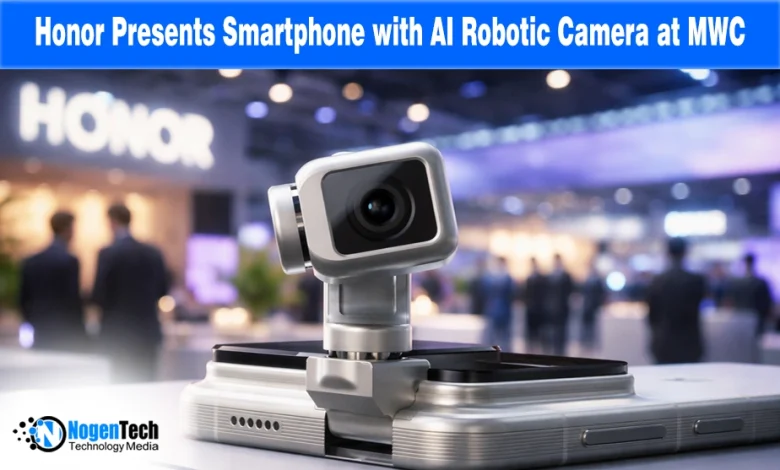
At the Mobile World Congress in Barcelona, Honor revealed one of the most unusual concepts on the show floor: an Honor robot phone prototype capable of physically moving its camera module using AI.
The Honor concept demonstration showcased a motion camera phone built around robotics-inspired hardware movement and on-device AI processing. While still experimental, the device hints at a future where smartphones combine embodied AI with mechanical innovation to redefine human-device interaction.
What Happened?
During an innovation showcase in Barcelona, Honor introduced a kinetic smartphone prototype featuring a motorized camera module capable of physical movement. The demonstration, often called the “Honor dancing phone” demo, showed the camera tilting, rotating, and repositioning itself in response to motion and AI instructions.
Rather than relying only on digital stabilization, the device integrates:
- Multi-axis camera movement
- Hardware-based camera stabilization
- AI-driven object tracking
- Real-time motion response systems
This approach turns the smartphone camera into a mechanically adjustable imaging system. In simple terms, the device doesn’t just record movement; it physically adapts to it.
Why It Matters Now
The smartphone industry is entering a new phase of AI smartphone trends, where artificial intelligence moves beyond software assistants and begins interacting directly with hardware.
The specimen demonstrates how AI-driven hardware movement could redefine how smartphones capture photos, videos, and interpret their surrounding environment.
Rather than requiring users to keep the phone perfectly steady or manually adjust framing, the device can potentially track subjects automatically using motion-controlled camera technology guided by AI.
This evolution reflects a broader industry push toward next-generation mobile interaction, where smartphones respond dynamically to real-world activity.
Who Is Affected?
Several groups could benefit if technologies from the Honor robotics smartphone concept reach commercial devices.
Consumers:
Users who record videos or take photos may benefit from smoother footage due to hardware-based camera stabilization.
Content Creators:
Creators could capture moving subjects more easily through AI object tracking and automatic framing adjustments.
Developers:
App developers may gain access to new tools that interact with real-time motion response systems, enabling innovative camera-based experiences.
Competing Manufacturers:
Other smartphone makers, including companies like Samsung, which recently launched their Galaxy S26 Ultra, may feel pressure to explore similar hardware innovations.
Industry Context
For years, smartphone innovation focused largely on processors, camera resolution, and display improvements. Now the conversation is shifting toward smartphones that blend AI software with mechanical hardware.
The idea behind embodied AI in smartphones is that intelligence should not only live inside apps or cloud systems, but it should also influence how the device physically behaves. Google’srecent integration of Intrinsic mirrors this shift, signaling a broader industry pivot toward physical intelligence.
At technology events like Mobile World Congress and CES, manufacturers often present early prototypes to explore these possibilities.
The Honor robot phone fits squarely into this category: a concept designed to test new ideas about how smartphones might interact with the physical world.
What’s New: Step-by-Step Breakdown
1. Motorized Camera Module
This is the most distinctive feature of the Honor’s prototype.
Small internal actuators allow the camera unit to rotate and reposition itself, enabling mechanical camera articulation beyond what traditional fixed smartphone cameras offer.
This design allows the device to automatically adjust framing when capturing moving subjects, rather than relying solely on digital stabilization or software-based cropping.
2. Multi-Axis Camera Movement
The camera module supports multi-axis movement, meaning it can shift and rotate in more than one direction instead of remaining fixed in a single position.
This capability enables smoother transitions when tracking moving subjects and allows the camera to adjust its orientation more naturally during video recording.
3. Gimbal Stabilization System
Honor appears to integrate a 4DoF gimbal stabilization system, which physically counters movement across four axes to maintain steady footage.
Unlike purely software-based stabilization, hardware-based camera stabilization works in real time by mechanically adjusting the camera module, which can reduce motion blur and improve overall video stability.
4. AI Object Tracking
The prototype also demonstrated AI-based object tracking, allowing the phone to identify and follow subjects automatically.
Using on-device AI processing, the phone analyzes movement and adjusts the camera module accordingly to maintain framing.
5. Real-Time Motion Response System
The prototype features a real-time motion response system that enables the camera to react instantly to movement or changes in the environment.
This capability was particularly visible during the Honor dancing phone demo, where the camera module moved dynamically in response to motion, creating a visually rhythmic effect.
Impact Analysis
Market Impact
The concept positions Honor as a brand willing to experiment with robotics-inspired mobile design.
While many smartphone makers focus primarily on AI software, Honor’s prototype hints at a future where AI-driven hardware movement could become an integral part of smartphone design.
If this approach proves successful, it may influence the direction of future mobile hardware development.
User Impact
Short-term:
- Increased interest in experimental smartphone concepts
- Greater attention to motion-controlled camera systems
Long-term:
- Potential integration of AI-guided hardware movement into commercial smartphones
- Smarter, automated camera systems for everyday photography and video
Developer & Enterprise Implications
Developers could eventually create applications that interact with the device’s mechanical camera articulation. For example, camera-based AI apps might trigger physical movement of the camera during:
- Live streaming
- Augmented reality experiences
- Automated video capture
When paired with advanced on-device AI processing, these capabilities could open new possibilities for interactive and immersive applications.
Expert Insight & Competitive Context
Industry observers increasingly view embodied AI as the next phase of intelligent devices, as supported by a Forbes report. While most smartphones rely primarily on software automation, prototypes like the Honor robot phone explore how AI might control hardware movement directly.
This concept reflects broader technology trends in which robotics and AI are increasingly merging into consumer electronics.
However, it remains uncertain whether such designs will reach mass production.
Common Misconceptions
“The Phone Literally Walks or Moves Around”
The device does not move across surfaces like a robot. The motion is limited to the motorized camera module, which adjusts the camera’s orientation.
“This Technology Is Ready for Consumer Phones”
The Honor concept phone showcased at MWC is still an experimental prototype and not commercially available. Such designs are often revealed years before any potential release.
“AI Replaces the Camera Hardware”
AI enhances the system but does not replace its physical components. The gimbal stabilization system and motorized mechanics remain central to the design.
Future Outlook
The Honor AI-powered smartphone concept hints at how future devices may blend AI with dynamic hardware.
Possible developments include:
- Smarter AI-driven object-tracking cameras
- Fully adaptive smartphone imaging systems
- More advanced robotics integration in smartphones
As AI smartphone trends continue to evolve, the industry may see more manufacturers experimenting with kinetic smartphone prototypes.
When Not to Rely on Social Media
Tech demonstrations often go viral online, but social media clips rarely explain the engineering behind new prototypes. Short videos of the Honor dancing phone demo may create the impression that the phone behaves like a robot.
In reality, the prototype simply demonstrates AI-driven camera articulation and motion stabilization technology.
For accurate information, readers should rely on:
- Official company presentations
- Coverage from established technology publications
- Demonstrations at events like Mobile World Congress
What’s Your Take?
Would you use a smartphone with a motion-controlled camera that automatically tracks subjects?
Do you see robotics-inspired mobile design becoming part of everyday devices, or do you think the Honor robot phone will remain an experimental showcase?
Share your thoughts and predictions.
How This News Was Verified
- Verified details from Honor’s public demonstration during MWC 2026 Barcelona
- Cross-referenced smartphone camera engineering concepts, such as gimbal stabilization systems.
- Synthesized reporting from recognized technology media outlets like CNBC, PCMag, and TechCrunch, covering MWC innovation highlights
- Reviewed industry analysis on embodied AI and next-generation mobile interaction from Delloite.
- Reviewed CISA guidelines for responsible tech journalism