Anthropic Challenges Pentagon AI Supply-Chain Risk in U.S. Courts
Legal battle highlights rising scrutiny of AI vendors in U.S. defense technology supply chains as governments tighten national security oversight.

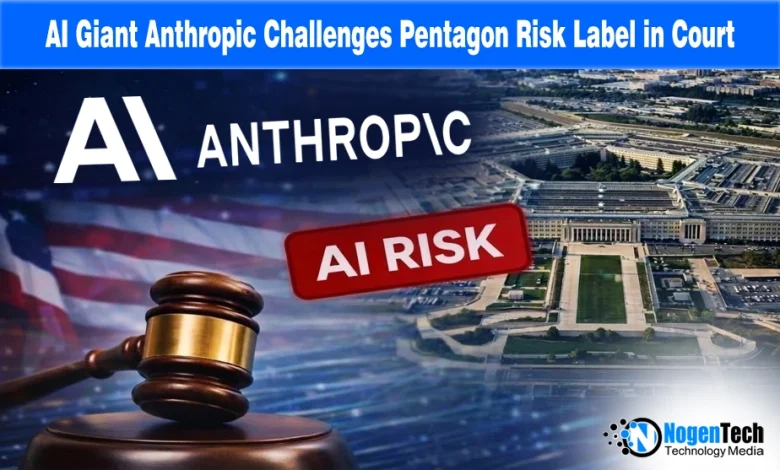
Anthropic announced that it has launched a legal challenge after the Pentagon tied its flagship model, Claude AI, to an artificial intelligence supplier risk designation.
The dispute, now moving through the U.S. Federal Court System, centers on how the U.S. government evaluates AI supply chain security for companies involved in U.S. defense AI procurement.
The case reflects growing regulatory scrutiny over AI vendors entering national security programs. As governments integrate advanced AI into military systems, procurement officials are increasing AI vendor national security review processes to assess potential technology risks and supplier dependencies.
Inside the Anthropic Pentagon Dispute
The Anthropic-Pentagon dispute emerged after the United States Department of Defense classified the company under a Pentagon AI supplier risk designation, potentially limiting its participation in sensitive government AI contracts. The department also issued a compliance deadline to Anthropic, requesting clarifications related to the designation, which the AI startup declined to accept, escalating the matter into a formal dispute.
According to the official company statement, Anthropic filed a legal challenge to the Pentagon’s action, arguing that the classification misrepresents its security posture and compliance standards. The company contends that its internal safeguards and infrastructure meet requirements for AI government contractor compliance.
The dispute is unfolding in federal court, where judges will determine whether the government’s defense contractor risk assessment process properly evaluated the company’s role in the defense technology ecosystem.
The case also places the Pentagon under scrutiny regarding how it identifies risks in the defense technology supply chain oversight framework.
Why This Dispute Matters Now
The dispute arrives at a moment when governments worldwide are tightening oversight of AI infrastructure tied to national security.
According to a recent report from Gartner, governments are accelerating investment in sovereign AI systems and infrastructure, with security and supply-chain control becoming critical for public-sector deployments through 2027. This shift explains the rising artificial intelligence national security scrutiny applied to vendors entering military programs.
The situation also parallels recent moves by large technology firms. For instance, Microsoft has expanded its government AI capabilities through Azure OpenAI Service, authorized for FedRAMP High environments. Similarly, Google has also introduced Assured Workloads to help government agencies meet strict compliance requirementswhen running cloud and AI systems.
The Anthropic case, therefore, highlights how AI procurement security concerns now shape the competitive landscape of defense AI.
Who Does the Dispute Affects?
Several groups may feel the effects of this AI supplier compliance dispute.
Developers
Engineers building AI for government programs must follow stricter verification and compliance standards.
Enterprises
Companies entering defense technology markets could face increasing government technology procurement risk assessments.
Investors
Venture capital firms funding AI startups must now consider regulatory exposure tied to defense partnerships.
Defense agencies
Defense agencies rely on supplier risk classifications to ensure the integrity and security of technology supply chains used in sensitive AI systems.
Rising Defense AI Oversight
The dispute reflects a broader shift toward AI regulatory scrutiny in defense procurement. According to IDC, global spending on artificial intelligence technologies is accelerating rapidly, with the market projected to grow significantly as governments and enterprises expand AI infrastructure.
As AI is embedded in intelligence platforms, cybersecurity systems, and autonomous technologies, regulators are conducting deeper national security reviews of vendors.
Governments are exploringthe deployment of AI tools on classified military networks and applying procurement and risk-assessment standards similar to those used for traditional defense contractors, which explains the expansion of AI procurement security concerns across Western defense ecosystems.
Breaking Down the Dispute
Here are the main elements shaping the legal and procurement debate.
1. Pentagon Risk Classification
As previously reported by TechCrunch, the Defense Department issued a Pentagon AI supplier risk designation tied to supply chain evaluation processes.
These reviews examine infrastructure dependencies, cybersecurity practices, and potential foreign influence risks.
2. Legal Challenge from Anthropic
Anthropic responded by filing an Anthropic legal challenge to the Pentagon case in federal court.
According to the Wall Street Journal, Anthropic argues that the designation incorrectly evaluates its compliance with AI government contractor compliance standards.
3. Court Review of Procurement Decisions
Judges within the U.S. Federal Court System will evaluate whether procurement authorities followed proper procedures.
The case may define how courts interpret government technology procurement risk determinations.
4. Broader Supply Chain Security Debate
The dispute raises broader questions about AI supply chain security for defense systems.
Government agencies increasingly want traceability across model training data, infrastructure, and cloud platforms.
Defense AI Market Implications
The legal challenge could reshape how AI vendors approach defense procurement requirements.
Market Impact
The Anthropic-Pentagon dispute could shape competition among AI vendors pursuing U.S. defense AI procurement contracts.
If courts limit the Pentagon’s authority to classify suppliers as risky, more startups may pursue government partnerships.
Conversely, sustaining the designation could significantly raise compliance barriers for new AI vendors, potentially deterring innovators from entering the defense market, as per a Reuters report.
User Impact
- Short-term: Defense programs may delay or reassess certain AI integrations while procurement reviews continue.
- Long-term: Clearer standards for AI vendor national security review could strengthen trust in AI deployed for military and intelligence operations.
Enterprise AI Compliance Challenges
The case signals rising expectations for AI government contractor compliance. Companies developing AI for defense environments must demonstrate:
- transparent supply chains
- secure training infrastructure
- strict data governance policies
- verifiable cybersecurity controls
As reported by Tech Radar, these requirements are reflected in the U.S. Department of Defense’s updated CMMC cybersecurity framework for contractors, which imposes tiered compliance standards based on data sensitivity and national security risk. This trend illustrates expanding defense technology supply chain oversight across government agencies.
Expert Insight & AI Defense Landscape
Industry analysts increasingly view AI vendors as part of the critical national infrastructure.
According to McKinsey’s defense technology analysis, governments are adopting AI not only for automation but also for strategic intelligence and decision support systems as part of broader efforts to modernize defense operations.
Technology publications, including The Verge and Wired, have similarly reported that defense agencies now conduct deeper national security reviews of AI vendors before awarding contracts, reflecting heightened scrutiny of compliance and strategic alignment in defense procurement.
This scrutiny places companies like Anthropic alongside larger technology players already operating within regulated government environments, with big tech industry voices expressing concern over the Pentagon’s potential supply‑chain risk designation for AI vendors, according to CNBC.
Misunderstandings About AI Risk Reviews
Some interpretations of the case oversimplify how procurement risk reviews work.
“The case focuses only on one AI company”
In reality, the dispute represents broader AI regulatory scrutiny in defense sector procurement affecting many vendors.
“AI risk designations automatically ban companies from government work”
In practice, they often trigger deeper AI supplier compliance dispute reviews rather than outright exclusion.
Future of Defense AI Procurement
The outcome of the Anthropic Pentagon dispute may influence how governments manage AI supply chain security.
If courts require greater transparency in procurement risk classifications, defense agencies may redesign vendor review frameworks.
The decision could also shape how AI startups structure compliance programs before entering U.S. defense AI procurement markets.
When Not to Rely on Social Media
Social media discussions often oversimplify complex procurement disputes.
Defense supply chain classifications involve legal standards, cybersecurity assessments, and regulatory frameworks that rarely appear in viral posts.
Responsible technology journalism therefore relies on official filings, government documentation, and verified reporting rather than speculation.
What’s Your Take?
Should governments apply stricter AI vendor national security review standards before integrating AI into defense systems?
Or could heavy compliance requirements slow innovation in critical technologies?
Share your perspective on how AI companies should navigate defense procurement rules.
How This News Was Verified
- Public announcement from Anthropic’s Official Newsroom
- Verified reporting from global technology media outlets, including TechCrunch, Reuters, and The Verge.
- Verified reporting from major business and financial outlets, including CNBC, The Wall Street Journal, and The Hill
- Analyst insights from Gartner, IDC, and McKinsey
- Reviewed CISA guidelines for responsible tech journalism