Imagine this: you’re planning a weekend getaway, scrolling through endless hotel options, comparing prices, and trying to figure out which one actually fits your vibe. It’s exciting, but also a little overwhelming, right?
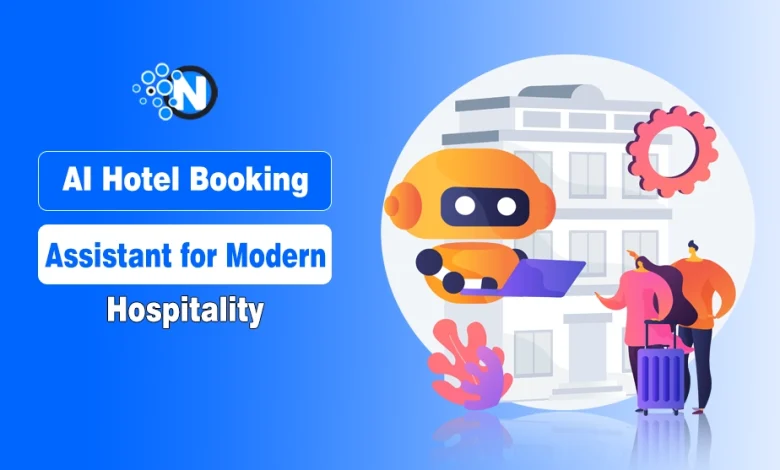
Now picture having a smart digital assistant that not only finds the best room for you but also remembers your preferences, suggests perks you’ll actually use, and answers your questions instantly—almost like chatting with a super-efficient concierge who never sleeps. That’s the kind of shift AI is bringing to hospitality, and it’s changing the way hotels connect with guests in ways we couldn’t have imagined a decade ago.
Lets discuss why hotels are turning to AI-powered assistants, and why understanding the AI hotel booking assistant meaning is key to seeing where the industry is headed.”

The Real Problem: Guests Don’t Shop the Way They Used to
Today’s guest rarely arrives at your booking engine fully decided. They arrive with questions. Sometimes, many questions:
- “Is breakfast included?”
- “Can I check in late?”
- “Do you have parking?”
- “Is the cancellation policy flexible?”
- “Do you have family rooms?”
- “Can I bring a pet?”
- “Is the pool open?”
If the answers aren’t obvious within seconds, the guest often moves on, especially on mobile. That’s not because your hotel isn’t good. It’s because the web has trained people to expect immediate clarity. Even if your website contains the answers, a guest may not find them quickly enough to stay.
This is where an AI hotel booking assistant becomes relevant. It meets guests where they are in moments of uncertainty and removes friction from the booking journey.
What an AI Assistant for Hotels Actually Does?
An AI assistant for hotels is a digital team member designed to handle high-volume, repetitive guest interactions through chat (and in some cases, voice). It doesn’t “guess” what your hotel offers.
When implemented properly, it pulls from the information you decide is authoritative your room descriptions, policies, seasonal notes, amenities, and availability rules.
Think of it as three capabilities working together:
- Instant information delivery
The assistant answers common questions accurately, consistently, and politely. - Guided decision-making
It helps guests choose the right room by asking simple, relevant questions like:
- “How many guests are traveling?”
- “Do you prefer a double bed or twin beds?”
- “Is parking essential for you?”
- “Would you like breakfast included?”
- “How many guests are traveling?”
- Booking support and pre-booking confidence
It reduces hesitation by explaining policies in human language and confirming details without making the guest feel “sold to.”
In practice, it’s less like a robot and more like a patient, always-available receptionist who never gets tired and never forgets the policy wording.
Why “24/7” Matters More Than It Sounds
Many hotels assume most bookings happen during business hours. In reality, travelers research late at night, during commutes, between meetings, or after their kids fall asleep. And international travelers are often in different time zones.
That’s why 24/7 hotel booking assistance isn’t a nice-to-have; it’s often the difference between capturing demand and losing it. Guests don’t wait until morning to continue their planning; they continue now. If your hotel isn’t responsive at that moment, the path of least resistance is another property.
For small hotels in particular, “always-on” responsiveness used to require staff you simply couldn’t justify. Now, the role can be partially covered by a well-designed assistant without forcing the hotel to become “less personal.”
What Small Hotel Owners Gain (Without Becoming Overly Digital)?
Small hotels are built on personality, warmth, and local character. There’s a fair concern that automation might dilute that. The truth is the opposite when you implement it thoughtfully.
A good assistant supports your brand by:
- Keeping your tone consistent (friendly, boutique, family-run, premium, whatever you are)
- Reducing missed inquiries when the front desk is busy
- Answering accurately instead of rushed or inconsistent responses
- Helping guests self-serve simple needs without feeling ignored
The “human” part of hospitality remains in the moments where it’s most valuable: special requests, complex itineraries, service recovery, local recommendations, and genuine conversation. You’re not automating hospitality; you’re automating the repetitive parts that prevent hospitality.
The Overlooked Benefit: Fewer “Almost Bookings.”
Hotels lose revenue in a quiet, invisible way: guests who are interested but not confident. They’re not price-shopping; they’re uncertainty-shopping.
They hesitate because:
- The room types aren’t clear
- The policy language feels complicated.
- They aren’t sure if the hotel fits their needs.
- They can’t confirm one detail that matters to them.
An assistant reduces this uncertainty by clarifying calmly, quickly, and without pressure. It can also surface the details guests care about most (parking, breakfast, pet rules, bed types, accessibility), which improves the quality of the booking decision and reduces post-booking friction.
When guests book with confidence, they’re less likely to cancel or later complain about misunderstood expectations.
Common Use Cases That Solve Real Headaches
Here are the most practical, non-glamorous tasks where a modern AI assistant creates value:
1) Repetitive questions at peak times: When check-ins, check-outs, and calls collide, response quality suffers. The assistant handles predictable questions, while the staff handles human ones.
2) Pre-arrival clarity: Guests often ask the same things after booking: directions, parking, check-in times, and breakfast hours. An assistant can provide consistent answers and reduce incoming messages.
3) Rate and policy explanations in human language: Many guests don’t interpret policy text well. A good assistant translates without changing the rules.
4) Room choice guidance: Instead of leaving the guest to compare five room types on their own, the assistant asks a few questions and recommends the right match based on their needs.
5) Multilingual support: Even basic multilingual capability can prevent lost international bookings. The assistant can respond in the guest’s language while maintaining consistent policy wording.
What “Good” Looks Like: Accuracy, Boundaries, and Tone
From a software and operations perspective, success isn’t measured by how clever the assistant sounds. It’s measured by whether it is:
- Accurate: It should not invent amenities, policies, or availability.
- Clear about boundaries: If a request requires staff approval (e.g., a special discount or an exception to policy), it should say so.
- Aligned with your service style: A luxury property sounds different than a family-run guesthouse.
- Able to escalate: When guests are frustrated or the request is unusual, handing off to a person should be easy.
The most important “feature” is trust. If guests trust the assistant’s answers, they stay engaged. If they don’t, they leave, and the technology becomes a liability.
How to Prepare Without Getting Technical
If you’re a small hotel owner or a hospitality software stakeholder, the best starting point isn’t technology; it’s content readiness. Before any AI layer works well, it needs clean, consistent information.
A practical checklist:
- Do we have one clear source of truth for policies?
- Are room types described in simple, comparable language?
- Are check-in/out times, parking rules, breakfast details, and pet rules unambiguous?
- Do we have seasonal exceptions documented (holiday hours, pool closures, renovation notes)?
- Do we know which questions create the most friction for guests?
When you clean up these basics, you improve your website and your staff workflows even before adding an assistant. The AI becomes an amplifier of clarity, not a bandage for confusion.
A Balanced View: Not Magic, but Meaningful
An AI assistant isn’t a shortcut to more bookings by itself. It’s not a substitute for a good product, fair pricing, and a trustworthy guest experience. But it is a practical way to meet modern expectations, especially for small teams juggling everything at once.
When done well, the assistant’s impact is simple:
- Guests get answers faster.
- Staff get fewer interruptions.
- Decisions become easier.
- Confidence rises.
- The booking journey feels smoother and more human because the staff have more time to be human.
That’s the real meaning behind the term. An AI hotel booking assistant is less about automation and more about preserving the quality of hospitality at scale, so even a small hotel can offer responsive, professional 24/7 hotel booking assistance without losing its character.