Clear and consistent communication forms the foundation of every successful organization. Many workplaces face obstacles from scattered channels and missed messages. A unified communication platform offers a single solution, enabling staff to connect effortlessly and productively.
When you integrate multiple tools, this platform streamlines activities and enhances collaboration. In this blog post, I will share 10 advantages of using a unified communication platform.
And when you adopt this approach, it improves collaboration within your business and sets you up for growth and long-term success.
10 Advantages of Using a Unified Communication Platform
Using a unified communication platform is not about adding new software. It is about removing friction from how people work and communicate every single day. Below, I am going to detail the 10 benefits of using a unified communication platform.
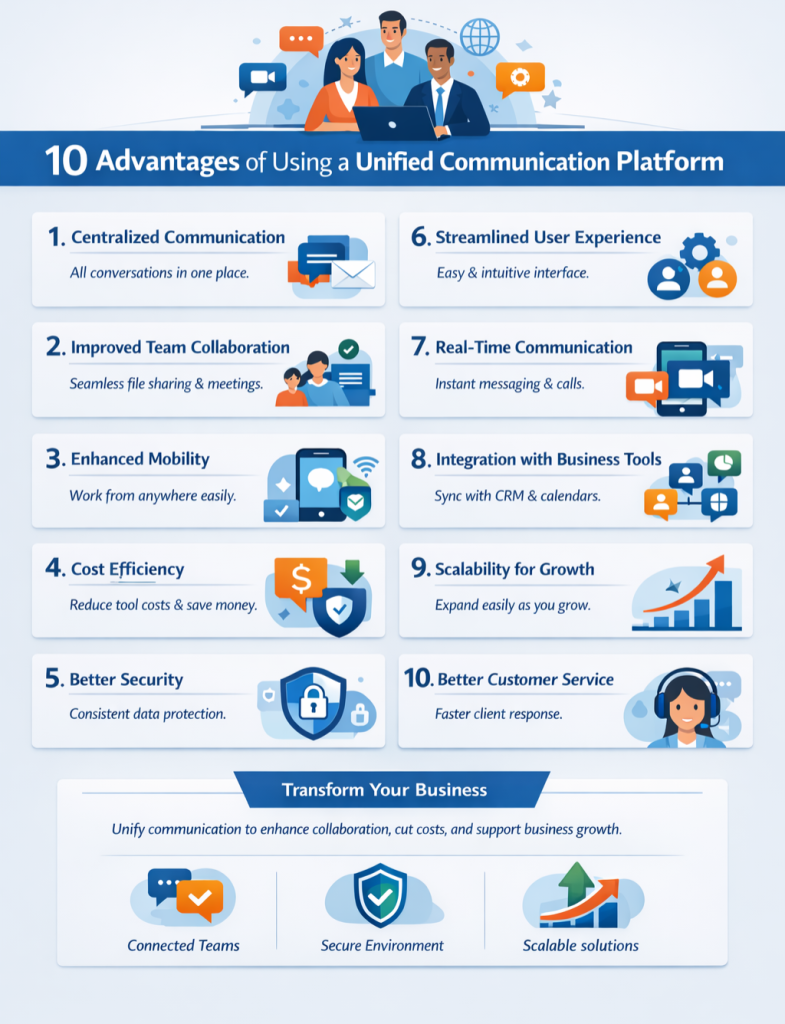
1. Centralized Communication
Unified communication solutions keep all conversations in one location. As a result, your employees no longer need to flip through emails, chats, and calls. This arrangement reduces confusion, increases productivity, and makes information easier to find. Centralization ensures everyone stays updated and informed.
2. Improved Team Collaboration
When everyone uses the same set of tools, collaboration becomes seamless. Teams can share files, set up meetings, and discuss ideas without delay.
Quick access to shared documents and real-time conversations ensures timely decisions and project completion. Ultimately, it boosts team efficiency and satisfaction.
3. Enhanced Mobility
Modern platforms are mobile-friendly and they allow employees to work from anywhere. This flexibility supports remote work and keeps communication uninterrupted.
Employees can hold meetings, answer messages, and access files outside the office. Enhanced mobility also promotes a healthier work-life balance.
4. Cost Efficiency
When you reduce the number of communication tools, it also lowers costs and decreases invoices. This helps organizations save on overlapping subscriptions and maintenance fees.
Unified systems typically require less training than multiple platforms and enable companies to allocate savings to other priorities.
5. Better Security
A unified platform ensures consistent security settings and access controls. Fewer entry points make data protection easier.
Regular updates and monitoring safeguard business information from unauthorized access. It not only improves confidence but also ensures compliance in the workplace.
6. Streamlined User Experience
Employees benefit from a consistent interface and familiar features. Learning one system saves time and reduces frustration.
Staff can focus on their work instead of technical issues, due to intuitive navigation and fewer passwords. A simple, user-friendly experience increases adoption and satisfaction.
7. Real-Time Communication
Instant messaging, video calls, and presence indicators keep everyone connected at all times. Quick responses help resolve issues before they escalate. This allows teams to plan and act in real time, and make the workforce more responsive and agile.
8. Integration With Business Tools
Unified platforms often integrate with calendars, project management apps, and customer relationship systems. Integration reduces repetitive data entry and streamlines workflows.
Staff can automate tasks, receive reminders, and track progress in one place, using time and resources more efficiently.
9. Scalability for Growth
A unified platform accommodates more users and features with minimal disruption as an organization grows. Adding departments or expanding teams becomes easier.
Flexible solutions adapt to changing business requirements without major upgrades, ensuring communication keeps pace with growth.
10. Better Customer Service
Clients benefit when staff communicate efficiently and access information quickly. With unified systems, employees can promptly respond to customer queries. Coordinated internal communication resolves issues swiftly, enhancing relationships and strengthening reputation.
Final Thoughts
A unified communication platform transforms how organizations connect, collaborate, and serve clients. Centralizing tools enhances collaboration, reduces costs, and ensures that information remains secure. Features like real-time messaging, mobile access, and integration with business systems allow employees to work smarter.
As companies seek more flexible and efficient workflows, adopting a single platform becomes increasingly valuable. Embracing this approach positions organizations for greater growth, stronger teamwork, and long-term success.