Top Tech Stories of 13th Week [2026]

![Top Tech Stories of 13th Week [2026]](https://www.nogentech.org/wp-content/uploads/2026/04/Top-Tech-Stories-of-13th-Week-2026-780x470.webp)
Week thirteen of 2026 exposed a technology landscape racing ahead, where breakthroughs in AI, hardware, and space exploration collided with security and operational challenges. The industry confronted both opportunity and risk.
Intel’s Fab 34 buyback and Google DeepMind’s Gemma 4 release signaled a focus on control, optimization, and open deployment, while Hitachi and MOL repurposed ships into offshore AI data centers to overcome land and power constraints.
The pattern is clear: innovation continues to surge faster than oversight, forcing companies, regulators, and users to navigate emerging vulnerabilities, ethical dilemmas, and strategic opportunities.
7 Biggest News of the 13th week of 2026
This week, the storylines moved from bold AI expansion to infrastructure strain, from open model releases to regulatory crackdowns, revealing a tech industry accelerating rapidly while confronting energy limits, security risks, and growing policy pressure that could shape its next phase:
Claude Leak
On March 31, 2026, a misplaced debug file in Claude Code’s npm update exposed 512,000 lines of internal TypeScript, revealing 44 hidden features including the always-on KAIROS agent. Competitors gained a full product roadmap. Anthropic confirmed human error but the code was already forked over 41,500 times.
Intel Buyback
Intel announced a $14.2 billion deal to repurchase Apollo’s 49 percent stake in Fab 34, regaining full control of its Irish chip factory. The move secures AI chip production, supports the 18A node, strengthens Intel’s IDM 2.0 strategy, and signals renewed financial stability amid global manufacturing expansion.
Axios Hack
North Korean threat actor UNC1069 compromised Axios npm accounts for three hours, delivering WAVESHAPER.V2 malware via updates 1.14.1 and 0.30.4. Millions of systems using Axios were exposed, raising cryptocurrency theft concerns. Experts warn the attack shows systemic open-source long-term security risks.
Artemis Launch
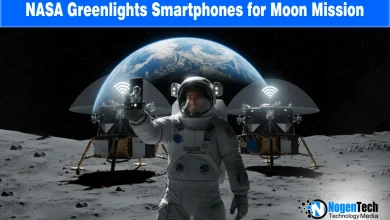
NASA’s Artemis II mission achieved Earth orbit with Orion carrying four astronauts, including a Canadian crew member. The crew is testing life-support, docking, and propulsion systems ahead of a lunar flyby. Minor issues like a toilet malfunction are managed while preparing for the critical Trans-Lunar Injection burn.
Google Gemma 4
Google DeepMind released Gemma 4, a family of four open-weight AI models from edge devices to 31B parameters, now fully Apache 2.0 licensed. Optimized with NVIDIA hardware, the models support image, video, and audio processing, enabling private agentic workflows and local deployment without subscription or cloud restrictions.
Floating Data Centers
Hitachi and MOL plan to repurpose aging ships into offshore AI data centers by 2027, targeting Japan, Malaysia, and the US. Utilizing seawater cooling, these floating platforms reduce construction time, bypass land and power constraints, and provide high-density compute for AI workloads while repurposing maritime assets efficiently.
Microsoft Copilot Cowork
Microsoft launches Copilot Cowork for Frontier program customers, enabling autonomous multi-step workflows across Microsoft 365 apps. Using GPT-5 and Claude models with Work IQ, the system plans, executes, and critiques tasks in real time, improving DRACO benchmark performance while maintaining human oversight, compliance, and integration with the Microsoft 365 E7 suite.