When a CRM doesn’t fit your business, it creates more problems than it solves.
Many businesses invest in a CRM platform but struggle with disconnected workflows, scattered customer data, and inefficient processes.
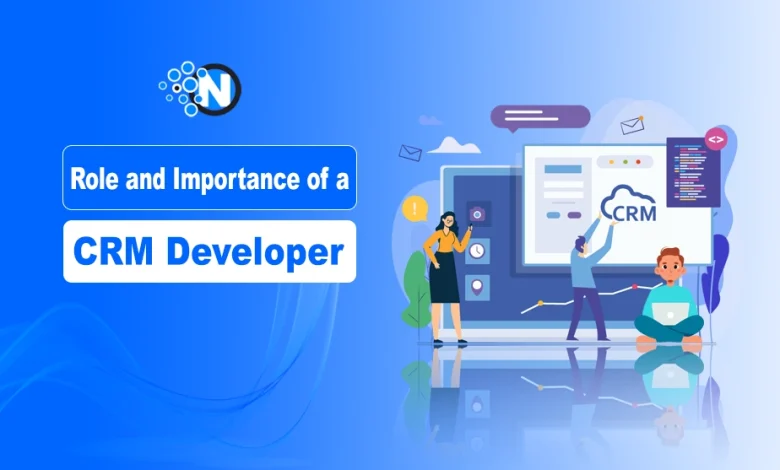
That’s where a CRM Developer makes the difference by transforming a standard Customer Relationship Management (CRM) system into a solution tailored to business goals. A CRM Software Developer designs, customizes, and optimizes platforms such as:
- Salesforce
- Microsoft Dynamics 365
- HubSpot
- Zoho CRM
This helps businesses Automate workflows, improve sales and customer service, and scale operations efficiently
Moving forward, you’ll learn what a CRM Developer is, what a CRM Developer does, CRM Developer roles and responsibilities, essential skills, career opportunities, salary expectations, and why these professionals are critical to modern business success.
What is a CRM Developer?
A CRM Developer is a software specialist who customizes, integrates, and maintains CRM software like Salesforce, Microsoft Dynamics 365, HubSpot, and Zoho CRM to automate business processes, manage customer data, and improve sales, marketing, and customer service for organizations across the United States.
A CRM application developer adapts CRM software to match an organization’s workflows, whether that means tailoring desktop tools or choosing between Mobile CRMs vs. Traditional CRMs for field teams instead of relying on default features.
They connect business systems, automate repetitive tasks, and ensure customer data remains accurate, secure, and accessible across departments.
A skilled CRM Developer transforms a CRM platform into a centralized system that improves collaboration, operational efficiency, and customer experiences while supporting long-term business growth.
What Does a CRM Developer Do?
A CRM Developer aligns CRM software with an organization’s processes to improve operational efficiency and customer relationship management. Their responsibilities include:
- Customizing CRM modules, dashboards, and user interfaces
- Automating sales, marketing, and customer service workflows
- Integrating CRM platforms with ERP systems, accounting software, and third-party applications using APIs
- Managing customer data to maintain accuracy, security, and compliance
- Optimizing system performance, scalability, and reliability
- Troubleshooting technical issues and deploying updates
- Collaborating with sales, marketing, customer support, and IT teams to implement business requirements
By connecting people, processes, and business systems, a customer relationship management developer helps organizations streamline operations, improve customer experiences, and make informed business decisions through a centralized CRM platform.
Why Is a CRM Developer Important for Business Success?
A CRM Developer is important because they help businesses maximize customer relationship management by customizing workflows, integrating systems, automating processes, and driving operational efficiency and business growth.
Modern CRM platforms provide powerful features, but unlocking the full key benefits of CRM systems usually requires customization.
A CRM Developer adapts the platform to business requirements, ensuring teams can work efficiently while maintaining accurate, secure, and connected customer data.
How Does a CRM Developer Customize CRM Systems?
A CRM Developer configures CRM platforms to match business processes instead of relying on default settings. Rather than sticking to basic tools, they help build out the essential CRM features you need in your business software, including:
- Custom fields and customer records
- Dashboards and reports
- User roles and permissions
- Sales, marketing, and support workflows
Customized CRM systems improve usability, adoption, and productivity.
How Do CRM Developers Improve Business Processes?
CRM Developers automate repetitive tasks that reduce manual effort and improve operational consistency.
Common automations include:
- Lead assignment
- Approval workflows
- Follow-up reminders
- Support ticket routing
- Marketing campaign triggers
Automation saves time, minimizes errors, and increases team productivity.
Why Are CRM Integrations Important?
A CRM Developer connects CRM platforms with business applications through APIs to create a unified workflow.
Common integrations include:
- ERP systems
- Accounting software
- Email marketing platforms
- Customer support tools
- E-commerce platforms
Integrated systems eliminate duplicate data, improve collaboration, and provide a single source of customer information.
How Do CRM Developers Support Business Growth?
Custom development plays a crucial role in modern trends of CRM in small business digital transformation. As organizations expand, CRM Developers build scalable CRM solutions that support:
- More users
- Growing customer databases
- Advanced workflows
- New business applications
- Multi-location operations
Scalable CRM systems reduce future development costs and support sustainable growth.
How Do CRM Developers Improve Customer Experience?
A centralized CRM gives teams instant access to customer information, enabling faster, more personalized interactions.
Benefits include:
- Faster response times
- Personalized communication
- Consistent customer service
- Higher customer satisfaction
- Improved customer retention
How Do CRM Developers Protect Customer Data?
CRM Developers strengthen CRM security by implementing controls that protect sensitive business and customer information.
They focus on:
- Role-based access
- Secure API integrations
- Data validation
- Platform updates
- Performance monitoring
These practices improve compliance, reduce security risks, and keep CRM systems reliable.
What Skills Does a CRM Developer Need? You Must Prefer Before Hiring Any
A CRM Developer needs expertise in CRM platforms, programming languages, SQL, APIs, and cloud technologies to customize, integrate, secure, and optimize systems like Microsoft Dynamics 365, HubSpot, and Zoho.
A successful CRM Developer combines technical expertise with business knowledge to build CRM solutions that improve performance, data management, and workflow automation.
Which Programming Languages Are Used in CRM Development?
CRM development requires languages for customization, integrations, and automation. Common languages include:
- JavaScript
- HTML
- CSS
- Python
- Java
- PHP
- C# (Microsoft Dynamics 365)
- Apex and Visualforce
Beyond traditional code for enterprise suites, developers frequently utilize custom APIs and webhooks to extend flexible platforms. For example, customizing Monday CRM features to seamlessly connect specialized departmental tools.
Why Is Database Management Important?
CRM platforms rely on structured customer data for reporting and automation. Core database skills include:
- SQL
- NoSQL
- Data modeling
- Data migration
- Data security
Why Are APIs and Integrations Essential?
APIs connect CRM platforms with other business systems, creating a unified flow of customer data. Common integrations include:
- ERP systems
- Accounting software
- Marketing automation platforms
- Customer support tools
- E-commerce platforms
Which Soft Skills Support CRM Development?
Technical expertise is most effective when combined with:
- Problem-solving
- Analytical thinking
- Communication
- Collaboration
- Attention to detail
- Adaptability
These skills help CRM Developers deliver reliable solutions that align with business requirements.
When Should a Business Hire a CRM Developer?
A business should hire a CRM Developer when its Customer Relationship Management platform requires customization, integrations, automation, performance optimization, or scalability beyond built-in capabilities.
As business requirements evolve, standard CRM features may no longer support operational needs. A CRM Developer extends the platform to improve efficiency, connectivity, and long-term performance.
When Is CRM Customization Required?
Businesses benefit from a CRM Developer when they need:
- Custom workflows
- Advanced reports and dashboards
- Role-based access
- Department-specific processes
- Industry-specific CRM features
When Are CRM Integrations Necessary?
A CRM Developer integrates CRM platforms with:
- ERP systems
- Accounting software
- Marketing automation tools
- Customer support platforms
- E-commerce systems
These integrations centralize customer data and eliminate duplicate processes.
When Should a Business Optimize Its CRM System?
As CRM usage grows, developers help maintain system performance by:
- Optimizing databases
- Improving workflow efficiency
- Resolving technical issues
- Applying platform updates
- Strengthening security
Why Hire a CRM Developer During Business Growth?
Business expansion often requires CRM systems that can support:
- More users
- Larger customer databases
- New business processes
- Additional software integrations
- Multi-location operations
Hiring a CRM Developer helps businesses scale their CRM platform while maintaining performance, security, and operational efficiency.
What People Also Want to Know About CRM Developers
What Is the Difference Between a CRM Developer and a CRM Administrator?
A CRM Developer builds and customizes Customer Relationship Management (CRM) platforms like Salesforce and Microsoft Dynamics 365, while a CRM Administrator manages users, permissions, reports, and daily system operations.
What Is a CRM Developer Job Description?
A CRM Developer’s job includes customizing CRM platforms, automating workflows, integrating business applications through APIs, managing customer data, and optimizing systems.
What Are the Roles and Responsibilities of a CRM Developer?
A CRM Developer customizes CRM platforms, automates workflows, integrates business systems, manages customer data, improves system security, and optimizes performance to support business operations and customer relationship management.
How Can a CRM Developer Improve Business Performance?
A CRM Developer improves business performance by automating workflows, integrating enterprise systems, optimizing CRM platforms, and delivering accurate customer data that supports better sales, marketing, and service decisions.
Can Small Businesses Benefit From a CRM Developer?
Yes. Small businesses can use a CRM Developer to customize CRM platforms, automate routine tasks, integrate business applications, and build scalable systems that improve productivity and customer management.
Which Industries Need CRM Developers?
Industries including healthcare, finance, retail, manufacturing, real estate, education, and eCommerce rely on CRM Developers to customize customer management systems and streamline business processes.
Do CRM Developers Need Programming Skills?
Yes. CRM Developers commonly use JavaScript, SQL, Python, Apex, C#, and APIs to customize, integrate, automate, and maintain modern Customer Relationship Management (CRM) platforms.
Final Thoughts: Why a CRM Developer Is a Smart Business Investment
A CRM Developer does far more than customize software; they build systems that help businesses strengthen customer relationships, automate operations, and support sustainable growth.
Whether you’re using Salesforce, Microsoft Dynamics 365, HubSpot, or Zoho CRM, the right developer can turn a standard Customer Relationship Management (CRM) platform into a strategic business asset.
From a business perspective, investing in a skilled CRM Developer isn’t just about improving technology; it’s about creating efficient processes that deliver long-term value, better customer experiences, and measurable business results.