Apple iPhone 17e and iPad Air M4 Unveiled at Apple March 2026 Launch Event
Apple expands its 2026 device lineup with the Apple iPhone 17e and Apple iPad Air M4 powered by the Apple M4 chip.

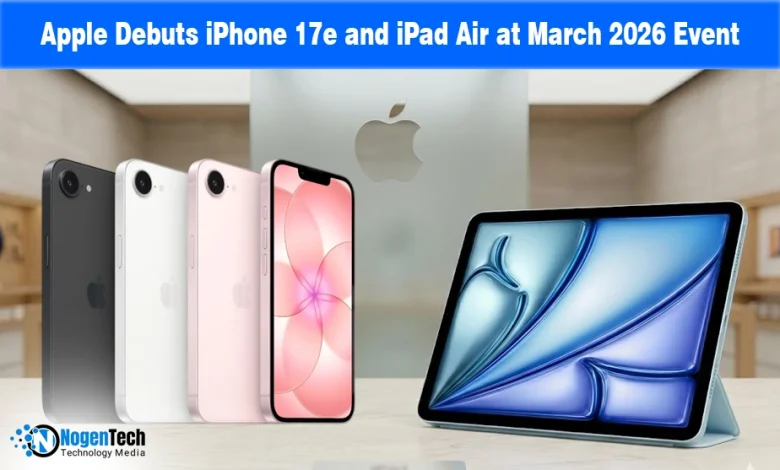
Apple has officially introduced the iPhone 17e and a refreshed iPad Air featuring the M4 chip as part of its early 2026 device updates. These products expand Apple’s lineup with devices designed to deliver strong performance and modern features at a more accessible price point.
The iPad Air now runs on Apple’s M4 chip, continuing the company’s use of custom silicon for improved performance. The iPhone 17e brings several advanced capabilities, including the anticipated MagSafe, a 48 MP dual-camera system, and satellite connectivity, to a wider segment of iPhone users.
Together, these updates highlight Apple’s strategy of bringing advanced hardware to more users across its product ecosystem.
Here’s what the announcement means for consumers, developers, and the broader technology industry.
What Happened?
At the Apple March 2026 launch event, the company revealed two major products: the Apple iPhone 17e and the Apple iPad Air M4, as per Tom’s Guide.
The iPhone 17e specs position the device as a modern entry point into Apple’s smartphone ecosystem. The device includes support for MagSafe, an upgraded Fusion camera system, and emergency satellite connectivity capabilities.
Apple also confirmed improvements in efficiency and system responsiveness through hardware and software optimization across iOS.
Meanwhile, the Apple iPad Air M4 introduces the Apple M4 chip to Apple’s mid-range tablet lineup, delivering significantly improved CPU and GPU performance compared with previous iPad Air models, as per MacRumors.
Industry research from IDC shows that tablet replacement and refresh cycles continue to influence overall tablet demand, and that newer hardware introductions help sustain market interest.
Why It Matters Now
The Apple launch arrives as the consumer electronics industry moves rapidly toward AI-optimized hardware platforms.
Gartner forecasts that AI‑optimized PCs and generative AI smartphones, equipped with dedicated hardware for on‑device AI, will grow significantly, reflecting a broader focus on local AI processing capabilities.
Additionally, Apple’s strategy reflects broader industry developments.
Companies like Microsoft and Qualcomm have pushed AI-focused computing platforms, while Nvidia continues investing in edge-AI infrastructure. Similarly, Google has expanded its Tensor chip strategy to support machine-learning tasks directly on smartphones.
Within this context, the Apple M4 chip and iPhone 17e show Apple continuing to expand its vertically integrated silicon ecosystem.
Who Is Affected?
Consumers
Consumers gain access to a more affordable iPhone option with modern features like MagSafe iPhone 17e compatibility and satellite connectivity.
Developers
Developers benefit from improved hardware performance across Apple devices, particularly through the neural processing capabilities integrated into the Apple M4 chip.
Enterprises
Enterprises using iPads in professional environments may see meaningful benefits from the improved iPad Air M4 performance, particularly in enhanced productivity and creative applications.
Investors
Investors closely monitor Apple’s product cycles, as hardware refreshes remain a key revenue driver for Apple Inc.
Industry Context
Apple’s new device strategy aligns with several broader technology trends shaping the hardware industry.
AI-Optimized Consumer Devices
The consumer hardware industry is increasingly adopting on-device AI, exemplified by Qualcomm’s CES 2026 Snapdragon platforms that run advanced AI locally. Apple is part of this trend, using Apple Silicon to power AI features directly on iPhones and iPads, improving responsiveness and privacy.
Custom Silicon Ecosystems
Apple’s custom silicon transition began in 2020 with the introduction of the first M‑series chip, the M1, for Mac computers, marking Apple’s shift from Intel processors to its own Apple‑designed silicon.
Satellite Connectivity in Smartphones
The inclusion of satellite connectivity reflects a growing trend among smartphone manufacturers to integrate emergency communication capabilities into consumer devices.
What’s New: Step-by-Step Breakdown
1. iPhone 17e Core Hardware
The Apple iPhone 17e introduces several premium technologies previously reserved for higher-end models.
Key iPhone 17e specs include:
- Fusion camera system
- Satellite connectivity support
- MagSafe accessory compatibility
- Improved power efficiency
These additions make the device a more capable entry-level iPhone.
2. MagSafe Integration
The iPhone 17e supports MagSafe, allowing seamless use with magnetic Apple accessories such as chargers, cases, and wallets.
MagSafe has become a central part of Apple’s accessory ecosystem, enabling consistent charging alignment and simplified device attachment.
3. Apple M4 Chip Performance
The Apple iPad Air is powered by the Apple M4 chip, which integrates CPU, GPU, and neural processing engines into a unified architecture, optimized for performance and machine‑learning tasks.
This design allows improved iPad performance, supporting demanding workloads such as:
- video editing
- design applications
- AI-assisted productivity tools
4. Product Positioning
Apple is positioning the iPhone 17e at a more accessible price tier. As per CNET, the base model starting at $599 (256 GB) while still offering compatibility with Apple’s broader ecosystem of accessories, services, and software.
This approach mirrors Apple’s strategy of expanding advanced features across multiple device categories rather than limiting them to flagship models.
Impact Analysis
Market Impact
Apple’s new device lineup strengthens Apple’s vertically integrated hardware strategy.
Industry reporting from Barrons has noted that Apple’s ability to control hardware, software, and silicon simultaneously allows the company to optimize performance and efficiency more effectively than competitors relying on third-party chips.
User Impact
Short Term
Users benefit from improved device capabilities, particularly in performance and accessory compatibility.
Long Term
The expansion of Apple silicon across devices may enable more sophisticated on-device AI features in future software updates.
Developer & Enterprise Implications
Macobserver notes that developers building apps for iOS and iPadOS can leverage the Apple M4 chip’s enhanced capabilities, including its faster CPU, improved GPU, expanded unified memory, and a 16‑core Neural Engine, to boost performance in machine‑learning and graphics‑intensive tasks.
Increasing on-device computing power is becoming critical as mobile applications incorporate more AI-driven features. Moreover, enterprises deploying tablets across field operations, education, and creative industries may also benefit from improved M4 performance.
Expert Insight & Competitive Context
Industry analysts often cite Apple’s silicon strategy as a key differentiator. The company designs its own chips and integrates them closely with its hardware and software, allowing Apple to optimize performance and efficiency.
The 2026 Gartner technology trends also emphasize the importance of integrated computing platforms that combine CPUs, GPUs, and specialized hardware. Apple’s continued expansion of custom silicon aligns with this broader industry shift toward AI-optimized hardware, alongside similar investments from companies such as Nvidia, Google, and Qualcomm.
Common Misconceptions
“The iPhone 17e Is Only a Budget Device”
While positioned at a lower price tier, the iPhone 17e still includes features such as MagSafe support, advanced camera capabilities, and satellite connectivity.
“The iPad Air Is Just a Casual Tablet”
That view overlooks its capabilities. Powered by the M4 chip, the iPad Air supports demanding productivity tasks and professional workflows beyond casual use.
Future Outlook
The Apple launch event signals that the company will likely continue expanding its silicon roadmap across more devices.
Deloitte’s 2026 outlook highlights rising demand for AI‑capable hardware, a trend reflected in Apple’s expansion of custom silicon to support on‑device AI and machine‑learning features
Future Apple updates may focus on:
- deeper AI integration
- stronger neural processing engines
- expanded ecosystem connectivity
When Not to Rely on Social Media
Major product launches frequently generate speculation across social media platforms.
However, viral posts often exaggerate claims related to device performance, battery life, or pricing.
For accurate information, consumers should rely on:
- official company announcements
- reputable technology publications
- analyst research from firms like Gartner and IDC
Social media discussions often misinterpret technical features such as satellite connectivity, MagSafe, or the Apple M4 chip.
What’s Your Take?
Do you think these Apple devices represent the right direction for Apple’s hardware ecosystem?
Will Apple’s continued investment in the Apple M4 chip help it maintain leadership in mobile and tablet performance?
Share your thoughts and predictions about Apple’s new devices.
How This News Was Verified
- Verified information from Apple Newsroom official announcement
- Cross-referenced industry insights from Gartner, IDC, and Deloitte.
- Enterprise impacts verified via MacObserver’s reporting.
- Reviewed independent reporting from Tom’s Guide and CNET.
- Reviewed CISA guidelines for responsible tech journalism