Intel Introduces Core Series 2 Processors For Industrial Edge AI Computing
Intel expands its edge AI strategy with Core Series 2 processors designed for industrial automation, robotics, and healthcare workloads.

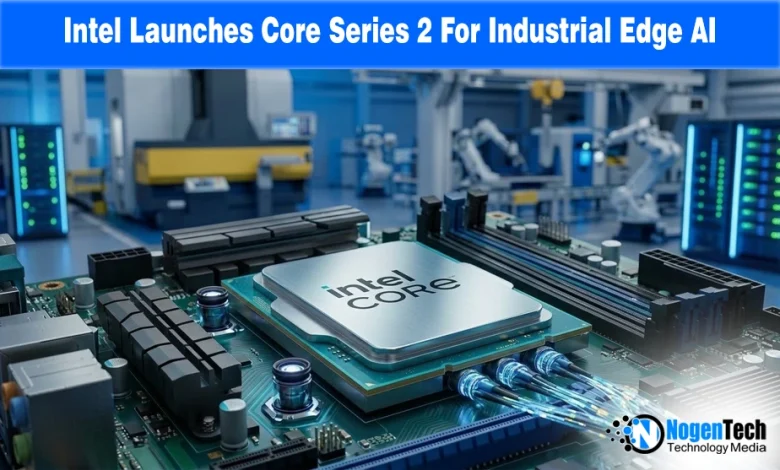
The semiconductor giant Intel has introduced its Intel Core Series 2 processors aimed at industrial edge computing and artificial intelligence workloads during Embedded World 2026 in Nuremberg.
The announcement expands Intel’s push into edge AI infrastructure as industries increasingly deploy machine learning systems directly on local devices rather than on cloud platforms.
The new chips are designed to deliver deterministic performance for real-time computing environments such as factory automation, robotics, and healthcare monitoring systems. According to the company, the processors form part of a broader platform combining hardware and software tools for embedded AI computing.
Intel targets industrial edge computing with Core Series 2 Chip
Intel unveiled the Intel Core Series 2 processors as part of its broader computing strategy, positioning the chips as high-performance industrial edge computing chips optimized for deterministic and real-time workloads.
According to Intel’s official newsroom announcement, the processors are designed for environments where predictable processing speed and reliability are essential. Industrial automation systems, robotics controllers, and edge-based AI applications often require deterministic performance processors capable of running time-sensitive tasks without latency fluctuations.
The company said the Series 2 processors integrate CPU performance improvements and built-in acceleration features tailored for embedded AI computing. These capabilities allow industrial devices to process the AI models locally instead of relying on distant cloud infrastructure.
Coverage from All About Circuits noted that the processors are designed for real-time industrial workloads, enabling systems used in factory robotics, machine vision, and safety-critical monitoring.
The launch reflects a continued focus by Intel on expanding its footprint in the rapidly growing edge computing market, where computing workloads are moving closer to data sources such as sensors, machines, and medical devices.
Focus on Industrial Edge AI Infrastructure
Edge computing is becoming a critical part of modern AI infrastructure as organizations increasingly run AI models directly on devices to address security, latency, and compliance concerns tied to cloud systems.
Factories, hospitals, and transportation networks are adopting industrial AI hardware, driving demand for low-latency, reliable processors. McKinsey & Company reports edge AI is accelerating across sectors as computing moves closer to the data source.
Intel’s Series 2 processors aim to meet that need by supporting deterministic computing for time-sensitive workloads such as robotics control systems and medical monitoring devices. Running AI locally can also improve privacy and keep systems operating when network connectivity is limited.
The move also reflects intensifying competition in edge AI infrastructure, with companies such as AMD launching processors like the Ryzen AI Embedded P100 for industrial AI computing, and Nvidia also developing processors and accelerators tailored for embedded AI deployments.
Industry and Analyst Reactions
Intel executives described the announcement as part of a broader effort to expand the company’s role in edge computing, alongside the expansion to the GPU market.
In its official newsroom release, Intel said the Intel Core Series 2 processors are designed to support “predictable performance and scalable AI capabilities” for industrial systems.
Industry coverage echoed that positioning. Analysis from TechPowerUp noted that the chips are intended to power devices requiring both high CPU performance and integrated AI acceleration, particularly in robotics and industrial automation environments.
Earlier reporting from Reuters reported that technology companies are increasingly moving AI processing closer to data sources: factories, retail, and healthcare, using edge infrastructure for faster, lower-latency operations.
The Industry Effects of Intel Edge AI Processors
The introduction of Intel Core Series 2 processors could influence multiple sectors adopting embedded AI computing and edge-based analytics.
For manufacturers, the chips may enable more responsive robot process automation and machine vision systems capable of analyzing data directly on production lines. Deterministic computing is especially important in industrial automation, where precise timing and system reliability affect operational safety.
Healthcare systems are another key target. Healthcare AI applications such as patient monitoring devices and medical imaging systems increasingly require local processing to reduce latency and ensure privacy.
Developers building robotics or edge AI applications could also benefit from Intel’s broader edge AI platform, including the Intel Edge AI Suite, which provides software tools designed to simplify the deployment of AI models on edge hardware.
Together, these technologies signal Intel’s effort to strengthen its presence in the expanding edge computing ecosystem.
What’s Next For Intel
Intel is expected to continue expanding its edge AI platform through developer tools and software support tied to the Intel Edge AI Suite. The company will likely work with industrial partners to integrate Intel Core Series 2 processors into robotics, healthcare, and factory automation systems.
Additional ecosystem announcements and deployment partnerships may follow as edge AI adoption accelerates across enterprise infrastructure. This could further position Intel within the growing industrial edge computing landscape.