Intel Announces Entry Into GPU Market to Challenge Nvidia’s Dominance
Intel CEO Lip-Bu Tan confirmed that the company will develop its own high-performance GPUs, a market currently dominated by Nvidia. The announcement was made at the Cisco AI Summit on Tuesday.

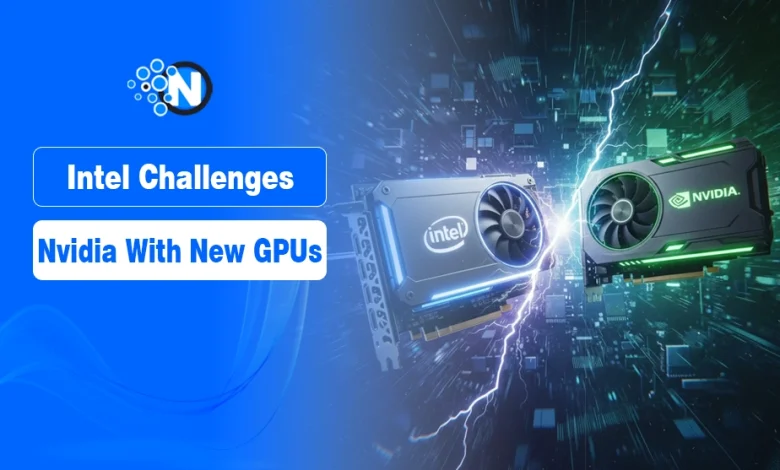
Intel’s decision to enter the GPU manufacturing fray marks a pivotal shift in the semiconductor landscape. By challenging Nvidia’s long-standing dominance, CEO Lip-Bu Tan is betting that Intel’s engineering resurgence can meet the insatiable demand for AI-capable silicon.
This bold expansion aims to redefine Intel’s market position, transforming the legacy CPU manufacturer into a comprehensive high-performance computing powerhouse for 2026.
The Architecture of Ambition
According to reporting from TechCrunch, Intel is officially pivoting toward the production of Graphics Processing Units (GPUs) to secure its future in the generative AI era.

Speaking at the Cisco AI Summit, intel’s CEO emphasized that while Intel has traditionally been a CPU powerhouse, the industry’s shift toward specialized processors for training large language models is unavoidable.
The report notes that the company did not provide product names or specific performance targets at the event but confirmed that the initiative is a priority moving forward.This strategy serves as a “notable expansion” of the company’s core business, directly targeting the lucrative market currently held by Nvidia.
Engineering a Comeback
The technical backbone of this initiative is being built on elite talent acquisitions. A report by Reuters confirms that the project is being overseen by Kevork Kechichian, the Executive VP and General Manager of Intel’s data center group.
Furthermore, Intel has secured Eric Demers as its Chief GPU Architect. Demers, a veteran with over 13 years at Qualcomm, brings the high-level design expertise necessary to bridge the gap between Intel’s legacy architecture and the specialized requirements of modern AI clusters.
Reuters also highlighted Tan’s comments on global competition, noting his surprise at Huawei’s continued ability to recruit top chip designers despite U.S. restrictions. This concern reflects intensifying geopolitical pressure in semiconductor design and manufacturing.
The Official Roadmap and 14A Node Strategy
In official statements following the summit, Intel clarified that this GPU offensive is “customer-led,” meaning the silicon specifications will be tuned to the immediate needs of data center partners like Cisco.
Organically answering the industry’s “How,” Intel plans to utilize its cutting-edge 14A manufacturing technology to achieve the performance-per-watt metrics required to compete.
By 2028, Intel expects these specialized chips to address the critical memory bottlenecks currently slowing down global AI scaling, positioning the firm as a primary provider rather than a secondary player.
Source: Intel Will Start Making GPUs



![Top Tech Stories of 8th Week [2026]](https://www.nogentech.org/wp-content/uploads/2026/02/Top-Tech-Stories-of-8th-Week-2026-390x220.webp)