Can AI Just Keep You Company? Ludens AI Says Yes
Ludens AI believes AI doesn’t need to perform tasks to be valuable. With Cocomo and INU, the company shows that consistent presence, emotional responsiveness, and shared routines can offer meaningful companionship without productivity, commands, or jobs.

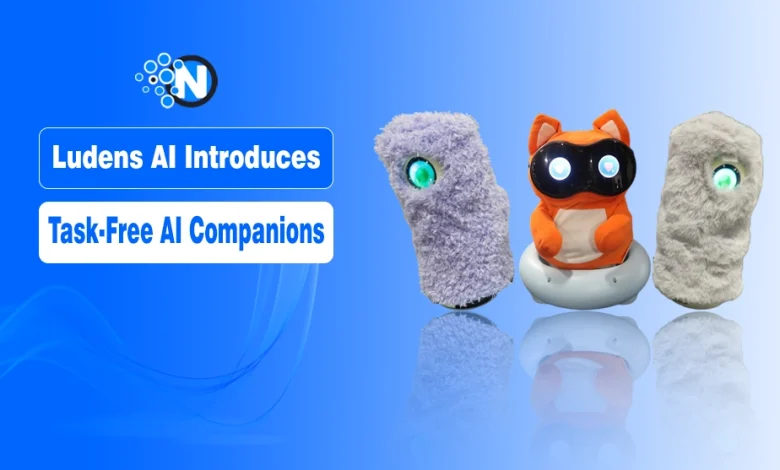
Ludens AI, a Japanese startup, introduced cute AI Pets: Cocomo and INU at CES 2026, marking a cultural shift in how people relate to technology.
Ludens AI brought some very cute robots to CES 2026. This is Cocomo, a robot pet that's designed to be a companion. It can follow you around and learn about you over time. pic.twitter.com/rj6dLXN4h4
— Karissa Bell (@karissabe) January 5, 2026
While most AI products race to prove productivity, Ludens AI is exploring a different question: What if AI’s value lies in companionship rather than capability?
AI pets like Cocomo and INU challenge long-held assumptions about usefulness, emotional connection, privacy, and the role of machines in everyday life. That’s why I’ve come up with a deep analysis of AI pets’ every major aspect, and why this category is gaining momentum.
7 Major Aspects of Having an AI Pet
1. Presence Over Productivity: A New Definition of “Useful.”
Traditional AI assistants succeed by doing: setting reminders, answering questions, and controlling homes. AI pets succeed by being. Cocomo and INU are intentionally jobless. They exist to share space, observe routines, and form low-pressure bonds.
This design aligns with growing research suggesting that consistent presence and social rhythm improve emotional well-being.
Health authorities, including the U.S. Surgeon General, have warned that weak social connections can be as damaging to long-term health as smoking. AI pets are emerging as ambient companions that reduce isolation without demanding attention or performance.
2. Emotional Bonding and Micro-Interactions
AI pets don’t rely on conversation-heavy interaction. Instead, they thrive on micro-signals:
- Eye contact
- Subtle movement
- Reactive sounds
- Repeated rituals
Cocomo, the more advanced concept, learns its owner’s daily rhythms, morning coffee, evening reading, and adjusts its behavior over time. INU, a simpler “desktop alien dog,” responds playfully when you speak or approach, deliberately limiting expectations.
This mirrors the success of earlier digital companions like Tamagotchi and robotic pets such as Sony’s Aibo. The goal isn’t realism, but it’s familiarity.
3. Why Simplicity is a Feature and Not a Flaw
Many social robots failed because they promised too much. Products like Jibo and early utility bots collapsed under the weight of user expectations. AI pets take the opposite approach: fewer features, fewer disappointments.
By not competing with smartphones or smart speakers, Cocomo and INU avoid latency, accuracy, and reliability comparisons. If the pet reliably reacts, acknowledges presence, and maintains emotional consistency, users still perceive value, even without functional output.
4. Psychological Comfort Without Obligation
Unlike human relationships or even real pets, AI pets offer companionship without responsibility:
- No feeding schedules
- No emotional labor
- No guilt
This makes them appealing to:
- Remote workers
- Urban apartment dwellers
- Elderly users
- People seeking low-effort emotional grounding
Social robots like Intuition Robotics’ ElliQ have already shown measurable improvements in engagement and well-being among seniors. AI pets extend this idea to broader audiences.
5. Privacy, Trust, and Ethical Design
Living with an AI pet raises legitimate concerns. These devices watch, listen, and learn. As emotional attachment increases, so does the need for strong safeguards.
Key expectations for ethical AI pets include:
- On-device data processing
- Clear indicators when sensors are active
- Simple controls for memory deletion
- Transparent data policies
Regulatory frameworks like the European Union’s AI Act will require effective AI systems to disclose how they interpret and store emotional data. Trust will be built not through cuteness alone, but through accountability.
6. The Market Demand for AI Companionship
Despite widespread anxiety around AI, demand for comforting, low-stakes AI remains strong. A 2023 survey by Pew Research Center found that while many Americans feel cautious about AI, they are open to technologies that offer small comforts or reduce loneliness.
Crowdfunded successes like KEYi Tech’s Loona further prove that expressive, pet-like robots resonate with consumers, especially when expectations are clear and limited.
7. Do AI Pets Replace Human Connection?
AI pets are not substitutes for human relationships, but they don’t need to be. Their role is supplemental. They fill quiet moments, reduce emotional friction, and create routine-based comfort.
Unlike productivity tools, success here isn’t measured in efficiency. It’s measured in:
- Time spent nearby
- Emotional familiarity
- Habit formation
- Sense of being “noticed.”
Final Thoughts on AI Pets
Cocomo and INU represent a subtle but important shift in consumer AI. In a world saturated with assistants, the most radical idea may be an AI that does nothing, except keep you company.
By stripping away tasks and embracing presence, Ludens AI is betting that companionship itself is enough. If that bet pays off, the future of AI pets won’t be defined by what they can do, but by how they make people feel.