Looking for the safest and most secure wallet to store your Ethereum?
The best Ethereum wallets in 2026 protect your ETH with self-custody, strong security features, and support for the broader Ethereum ecosystem. Whether you’re a beginner or a long-term investor, choosing the right wallet helps safeguard your funds from hacks, phishing attacks, and unauthorized access.
When comparing Ethereum wallets, look for:
- Self-custody with private key ownership
- Cold storage for long-term security
- Seed phrase backup and PIN protection
- Support for ETH, ERC-20 tokens, and Layer 2s
- Simple account recovery options
So now in this guide I will show you 10 best Ethereum wallets for 2026, covering their security, features, pricing, and ideal use cases to help you choose the right wallet.
What Is an Ethereum Wallet?
An Ethereum wallet is a digital tool that lets you access, manage, and use your ETH on the Ethereum network. Rather than storing your cryptocurrency, it holds the private keys that prove ownership and allow you to send and receive ETH, interact with smart contracts, and use decentralized applications (dApps).
What Is an Ethereum Wallet Address?
An Ethereum wallet address is a unique public identifier used to receive ETH and other compatible tokens. Like a bank account number, it’s generated automatically when you create a wallet and can be safely shared to receive funds.
What Is the Difference Between a Wallet and an Exchange?
A wallet gives you control of your private keys, while an exchange holds them for you. Exchanges like Coinbase or Binance custody your assets on your behalf, whereas a self-custody wallet gives you full ownership and control, hence the saying, “Not your keys, not your coins.
What Makes an Ethereum Wallet Safe and Secure?
The safest Ethereum wallets protect your private keys, offer strong security features, and give you full control over your ETH.
In 2026, hardware wallets like ELLIPAL Titan 2.0, Ledger Nano X, Trezor Safe 5, and NGRAVE ZERO provide the highest level of protection, while trusted hot wallets such as MetaMask, Trust Wallet, Coinbase Wallet, and Exodus balance security with everyday convenience.
Key Security Features to Look For
- Self-custody (private key ownership)
- Seed phrase backup
- PIN or biometric protection
- Secure Element (SE) chip
- Air-gapped storage (hardware wallets)
- Open-source security audits
- Transaction simulation
- Two-factor authentication (where supported)
Is a Hardware Wallet the Safest Option?
Yes. Hardware wallets store your private keys offline, making them the most secure choice for long-term ETH storage. For everyday transactions, many users pair a hardware wallet with a trusted hot wallet to balance security and convenience.
Our Picks for the 10 Best Ethereum Wallets in 2026
I evaluated each wallet based on security, self-custody, Ethereum and ERC-20 support, Layer 2 compatibility, ease of use, and overall value. Here’s a quick comparison before the detailed reviews.
| Wallet | Type | Best For | Price |
|---|---|---|---|
| ELLIPAL Titan 2.0 | Hardware | Maximum security | Paid |
| Ledger Nano X | Hardware | Staking & everyday use | Paid |
| Trezor Safe 5 | Hardware | Open-source security | Paid |
| NGRAVE ZERO | Hardware | Offline cold storage | Paid |
| MetaMask | Browser & Mobile | DeFi & dApps | Free |
| Rabby Wallet | Browser, Desktop & Mobile | Advanced DeFi | Free |
| Trust Wallet | Mobile | Multi-chain support | Free |
| Exodus | Desktop & Mobile | Beginners | Free |
| Rainbow | Mobile | NFTs & Ethereum | Free |
| Coinbase Wallet | Mobile | Base ecosystem | Free |
Some of the most popular and secure Ethereum wallets available in 2026 are:
1. ELLIPAL Titan 2.0 — Best Overall Secure Ethereum Wallet
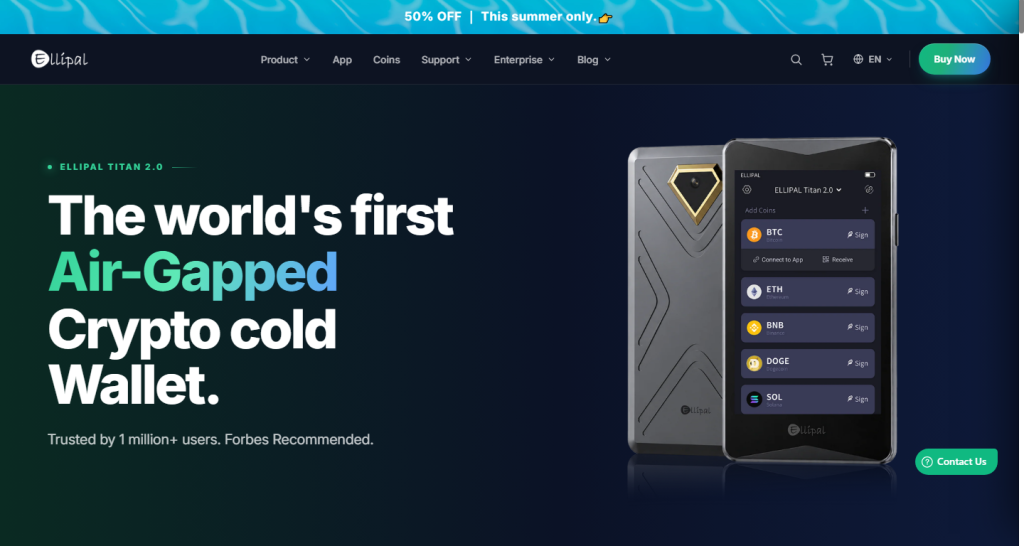
ELLIPAL Titan 2.0 is the best Ethereum wallet for users who prioritize maximum offline security. Its fully air-gapped design keeps your private keys isolated from online threats while securely managing ETH, ERC-20 tokens, and other crypto assets.
Key Features
- 100% air-gapped (no USB, Wi-Fi, Bluetooth, or NFC)
- QR code transaction signing
- Large touchscreen display
- Supports ETH, ERC-20 tokens, and 10,000+ assets
- Anti-tamper and self-destruct protection
- Companion mobile app
| Pros | Cons |
|---|---|
| Fully offline for maximum security | Bulkier than Ledger or Trezor |
| QR code signing reduces attack risks | No Bluetooth or desktop app |
| Supports 10,000+ crypto assets | Higher price |
| Built-in anti-tamper protection | Less convenient for frequent transactions |
2. Ledger Nano X — Best Ethereum Hardware Wallet for Most Users
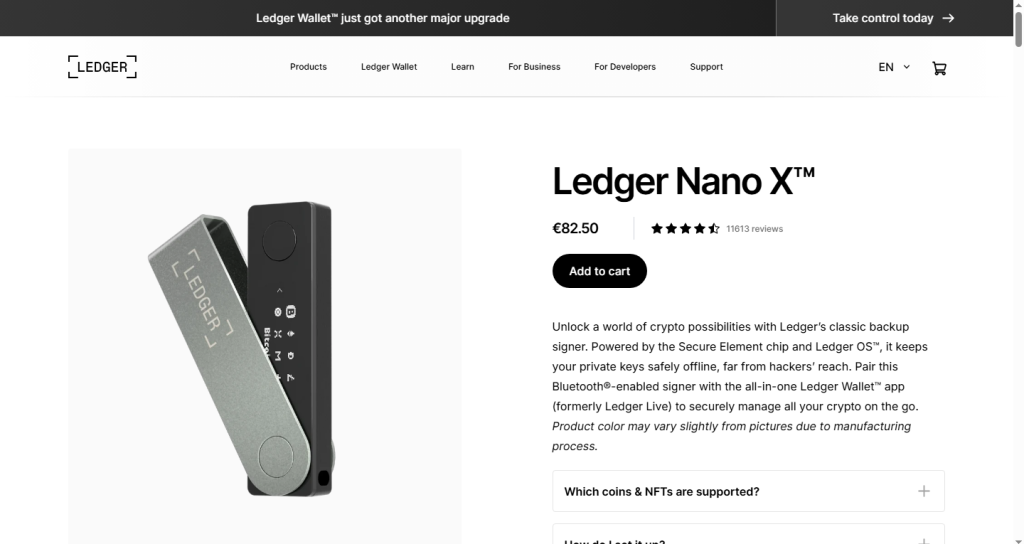
Ledger Nano X is one of the most popular hardware wallets for Ethereum, trusted by over 6 million users. It combines offline private key storage with Bluetooth connectivity, making it a strong choice for securely managing ETH, staking, and interacting with the Web3 ecosystem.
Key Features
- Certified Secure Element (SE) chip
- Supports 10,000+ coins, tokens, and NFTs
- Bluetooth and USB-C connectivity
- Supports ETH, ERC-20 tokens, NFTs, and Layer 2 networks
- Ethereum staking through Ledger Live
- Compatible with Web3 wallets like MetaMask and Rabby
Looking for a more affordable option? The Ledger Nano S Plus offers similar security and Ethereum support but connects via USB only.
| Pros | Cons |
|---|---|
| Certified Secure Element chip | Closed-source firmware |
| Supports 10,000+ digital assets | More expensive than entry-level wallets |
| Bluetooth for mobile convenience | Bluetooth increases the attack surface, though private keys remain offline |
| Native ETH staking and broad Web3 compatibility | Ledger Connect Kit incident (2023) affected third-party dApps, not users’ private keys |
3. Trezor Safe 5 — Best Open-Source Ethereum Hardware Wallet
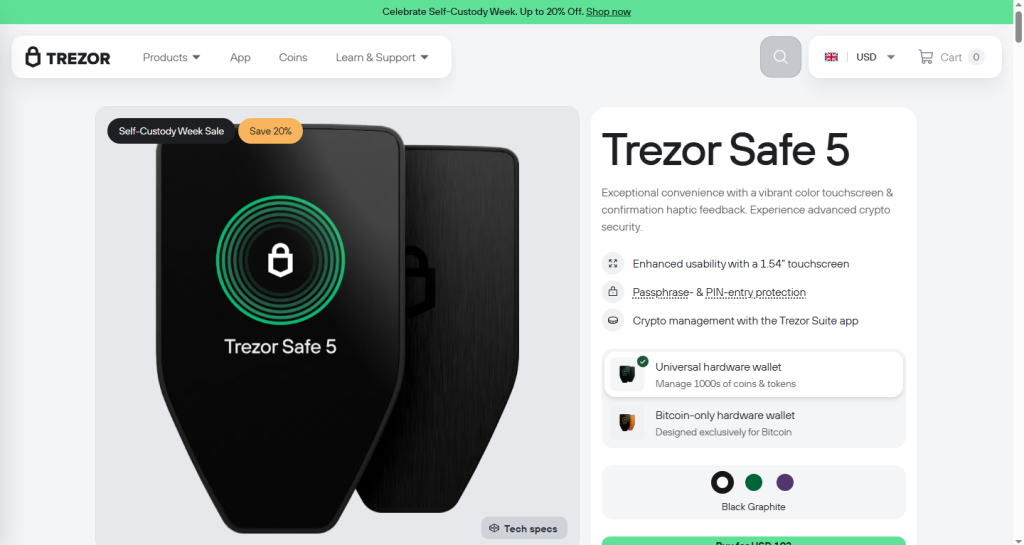
Trezor Safe 5 is the best Ethereum wallet for users who value open-source security and transparency. Its fully auditable design, secure offline storage, and touchscreen interface make it a trusted choice for protecting ETH and other crypto assets.
Key Features
- Fully open-source firmware
- Color touchscreen with haptic feedback
- Supports ETH, ERC-20 tokens, and thousands of cryptocurrencies
- Passphrase protection for added security
- USB-C connectivity (no Bluetooth)
- Compatible with MetaMask, Exodus, and other Web3 wallets
Pros and Cons
| Pros | Cons |
|---|---|
| Fully open-source and independently auditable | No Bluetooth connectivity |
| Secure offline private key storage | Fewer supported assets than Ledger |
| Passphrase support for extra protection | Limited native NFT management |
| Works with popular Web3 wallets | Requires a USB connection |
4. NGRAVE ZERO — Best Ethereum Hardware Wallet for Maximum Security
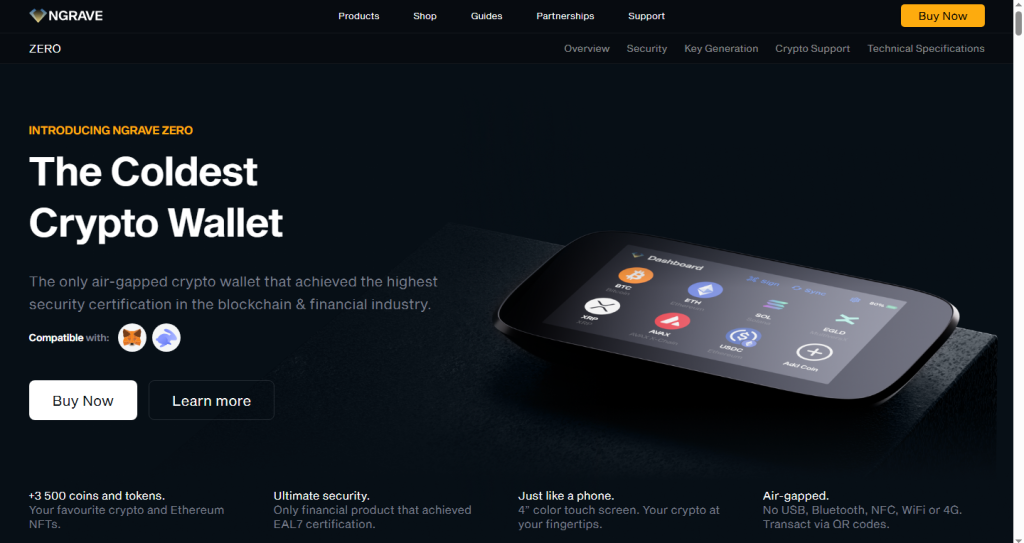
NGRAVE ZERO is designed for users who want the highest level of offline protection for their ETH. Its fully air-gapped design, EAL7-certified Secure Element, and advanced key generation make it one of the most secure hardware wallets available.
Key Features
- EAL7-certified Secure Element
- Fully air-gapped with QR code signing
- 4-inch touchscreen with biometric authentication
- Advanced key generation using multiple entropy sources
- NGRAVE LIQUID companion app
- Supports ETH, ERC-20 tokens, and multiple blockchains
| Pros | Cons |
|---|---|
| EAL7-certified security | Premium price |
| Fully air-gapped design | Smaller ecosystem than Ledger or Trezor |
| Biometric authentication | Limited DeFi integrations |
| Advanced offline key generation |
5. MetaMask — Best Ethereum Software Wallet for DeFi and dApps
MetaMask is the leading Ethereum software wallet for DeFi, NFTs, and Web3 applications. It supports Ethereum, all major EVM-compatible networks, and integrates with hardware wallets for added security.
Key Features
- Browser extension and mobile app
- Supports Ethereum, ERC-20 tokens, and EVM-compatible networks
- Built-in swaps, bridges, NFTs, and portfolio tools
- Supports Layer 2s, including Arbitrum, Optimism, Base, and Polygon
- Hardware wallet integration with Ledger and Trezor
- MetaMask Snaps adds support for ecosystems like Bitcoin, Solana, and Cosmos
Pros and Cons
| Pros | Cons |
|---|---|
| Excellent dApp and DeFi compatibility | Hot wallet that’s always online |
| Free and easy to use | Frequent target of phishing scams |
| Supports major EVM networks and MetaMask Snaps | 0.875% swap fee |
| Works with Ledger and Trezor |
6. Rabby Wallet — Best Ethereum Wallet for Active DeFi Users
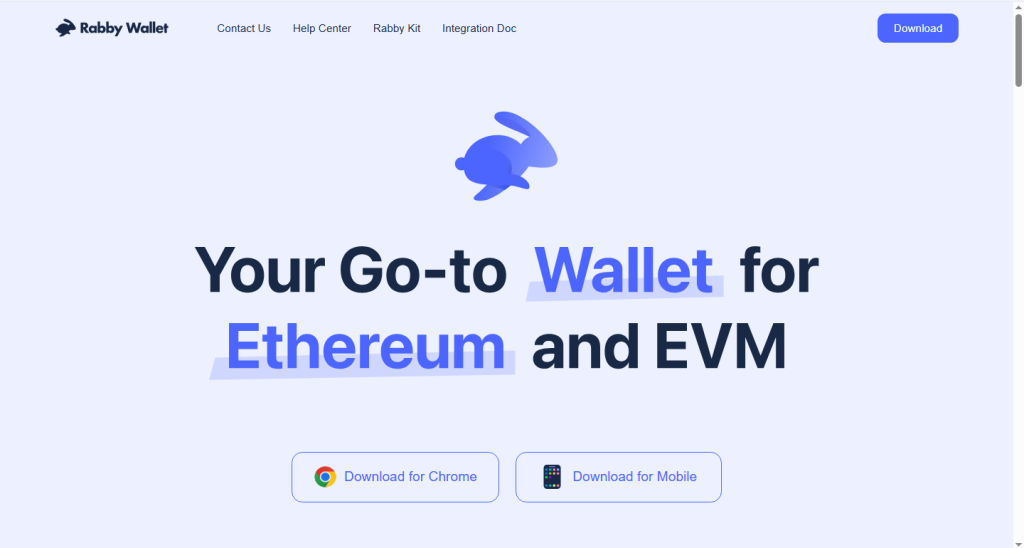
Rabby Wallet is a self-custodial Ethereum wallet built for safer DeFi and Web3 interactions. Developed by DeBank, it supports Ethereum and EVM-compatible networks while helping users detect phishing, risky contracts, and suspicious transactions before signing.
Key Features
- Pre-transaction simulation with balance and approval previews
- Detects phishing, malicious contracts, and unsafe token approvals
- Automatic network switching across EVM chains
- Supports Ethereum, Arbitrum, Optimism, Base, BNB Chain, and other EVM networks
- Compatible with Ledger, Trezor, and Keystone hardware wallets
- Browser extension, desktop, and mobile apps
- Free to use with a 0.25% swap fee
| Pros | Cons |
|---|---|
| Transaction simulation before signing | Supports EVM networks only |
| Detects phishing and unsafe approvals | Not beginner-friendly |
| Automatic network switching | 0.25% swap fee |
| Open-source with hardware wallet support |
7. Trust Wallet — Best Mobile Wallet to Store Ethereum
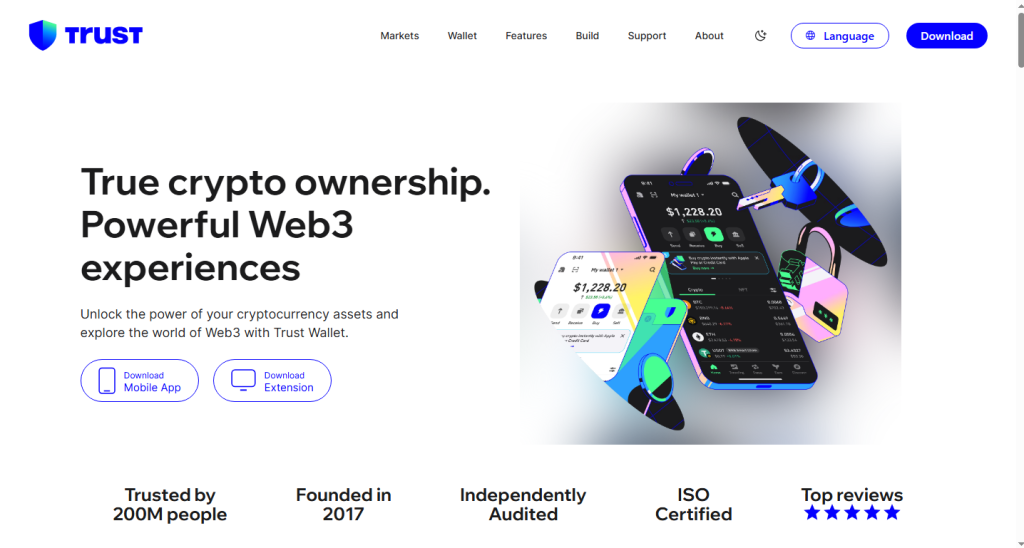
Trust Wallet is a self-custodial mobile wallet that makes it easy to store, stake, and manage ETH on the go. It supports Ethereum, ERC-20 tokens, NFTs, and over 100 blockchains, while offering built-in Web3 features for everyday crypto users.
Key Features
- iOS and Android app
- Supports ETH, ERC-20 tokens, NFTs, and 100+ blockchains
- Built-in ETH staking
- Built-in dApp browser, swaps, and crypto purchases
- Biometric authentication and encrypted local storage
- Browser extension with Ledger hardware wallet support
| Pros | Cons |
|---|---|
| Easy to use for mobile-first users | Hot wallet that’s always online |
| Supports 100+ blockchains and millions of tokens | Mobile devices are more vulnerable to malware and theft |
| Built-in ETH staking | Limited customer support |
| Ledger hardware wallet integration | dApp browser availability varies in some iOS regions |
8. Exodus — Best Beginner-Friendly Ethereum Wallet
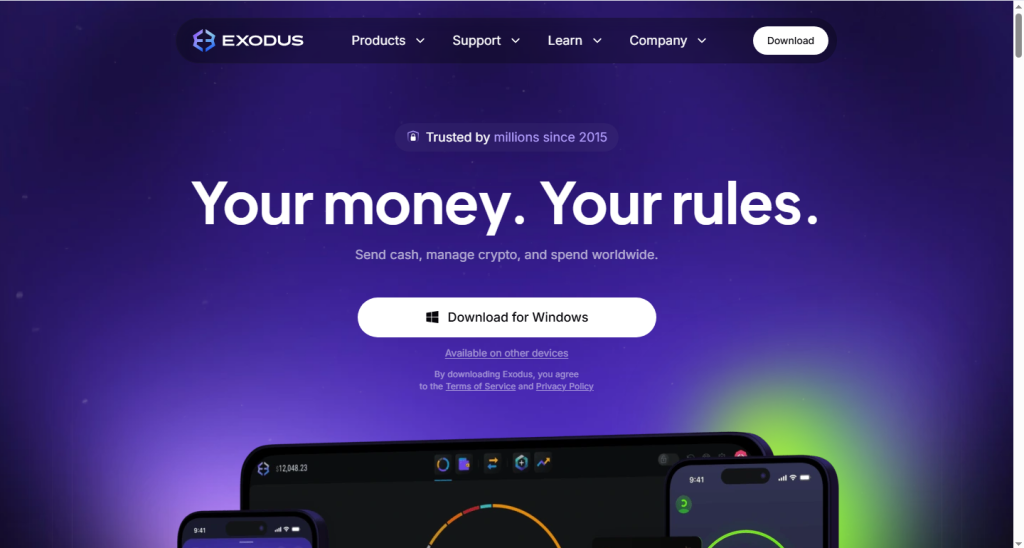
Exodus is a self-custodial Ethereum wallet built for beginners who want a simple, polished experience across desktop and mobile. It supports ETH, ERC-20 tokens, and millions of digital assets across 50+ blockchains, with built-in portfolio tools and hardware wallet integration.
Key Features
- Clean, beginner-friendly interface
- Desktop, mobile, and browser extension
- Supports ETH, ERC-20 tokens, and millions of digital assets across 50+ blockchains
- Built-in swaps, portfolio tracker, and price charts
- Integrates with Trezor and Ledger hardware wallets
- No account or KYC required for wallet use
| Pros | Cons |
|---|---|
| Intuitive interface for beginners | Closed-source software |
| Supports millions of digital assets | Built-in swaps typically cost more than DEX trades |
| Works with Trezor and Ledger hardware wallets | Limited advanced DeFi features |
| No account or KYC required | Fiat purchases may require KYC through third-party providers |
9. Rainbow Wallet — Best Ethereum Wallet for NFT Collectors
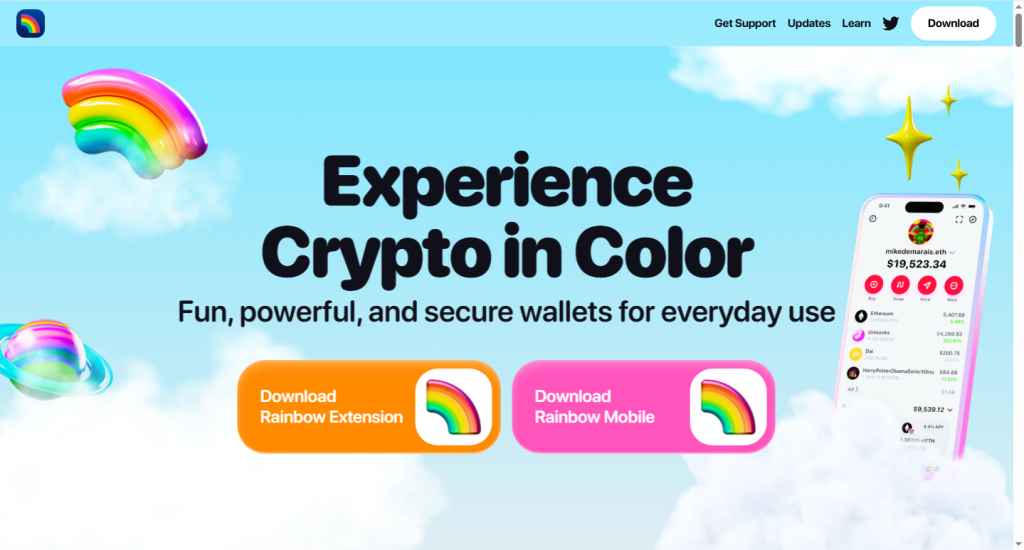
Rainbow Wallet is a self-custodial Ethereum wallet built for NFT collectors and everyday Web3 users. It offers a polished interface, native NFT support, seamless Ethereum Layer 2 integration, and expanded multi-chain support, including Solana.
Key Features
- Mobile app and browser extension
- Native NFT gallery and portfolio view
- Supports Ethereum, ERC-20 tokens, Layer 2s, and Solana
- Built-in token swaps and bridging
- Self-custodial with on-device private key management
| Pros | Cons |
|---|---|
| Excellent NFT viewing experience | Fewer advanced DeFi features than Rabby |
| Supports Ethereum, Layer 2s, and Solana | Smaller ecosystem than MetaMask |
| Clean, beginner-friendly interface | 0.85% swap fee before RNBW rewards |
| No account or KYC required | Best suited for users focused on the Ethereum ecosystem |
10. Coinbase Wallet — Best Ethereum Wallet for Coinbase Users
Coinbase Wallet is a self-custodial Ethereum wallet that supports ETH, ERC-20 tokens, NFTs, DeFi, and multiple blockchains. Unlike Coinbase Exchange, it gives you full control of your private keys while making it easy for existing Coinbase users to transition to self-custody.

Key Features
- Self-custodial with private key ownership
- Browser extension and mobile app
- Supports ETH, ERC-20 tokens, Ethereum Layer 2s, Solana, Bitcoin, and other major networks
- Built-in access to dApps, DeFi, and NFTs
- Biometric authentication and optional encrypted cloud backup
- Seamless integration with Coinbase accounts
| Pros | Cons |
|---|---|
| Easy onboarding for Coinbase users | Optional cloud backup may increase recovery risks if not properly secured |
| Full self-custody of private keys | Fewer advanced DeFi features than MetaMask or Rabby |
| Supports Ethereum, Layer 2s, and multiple blockchains | Closely tied to the Coinbase ecosystem |
| Browser extension and mobile app | Popular target for phishing scams due to brand recognition |
How to Create an Ethereum Wallet?
Creating an Ethereum wallet takes just a few minutes. The steps below show how to set up a Coinbase Wallet (software wallet), but the process is similar for most self-custody wallets like MetaMask, Trust Wallet, and Rabby.
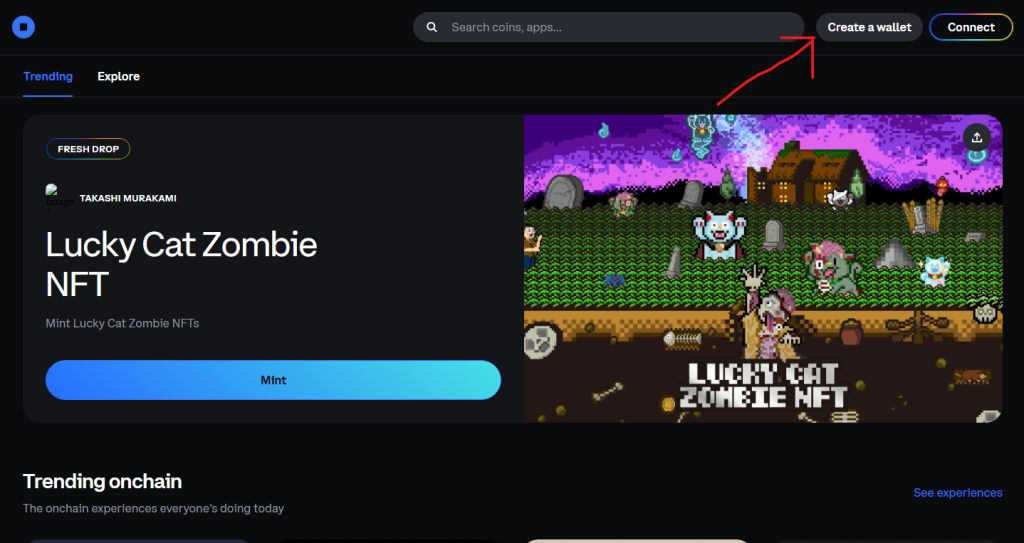
Step 1: Create a New Wallet
Download the Coinbase Wallet app or browser extension and click Create a Wallet to begin the setup process.
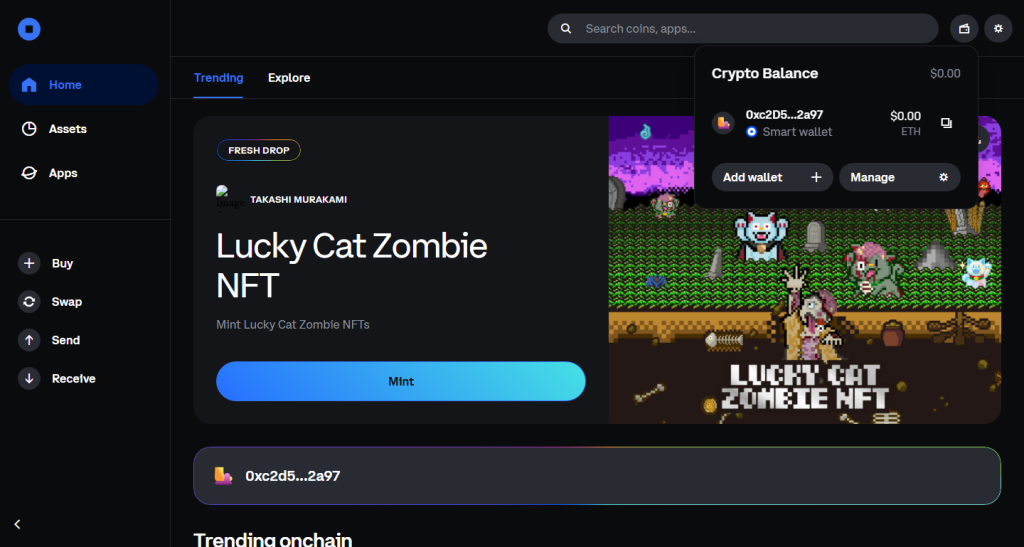
Step 2: Complete the Wallet Setup
Follow the on-screen instructions to create your wallet, set a password, and securely back up your recovery phrase. Store your recovery phrase offline and never share it with anyone.
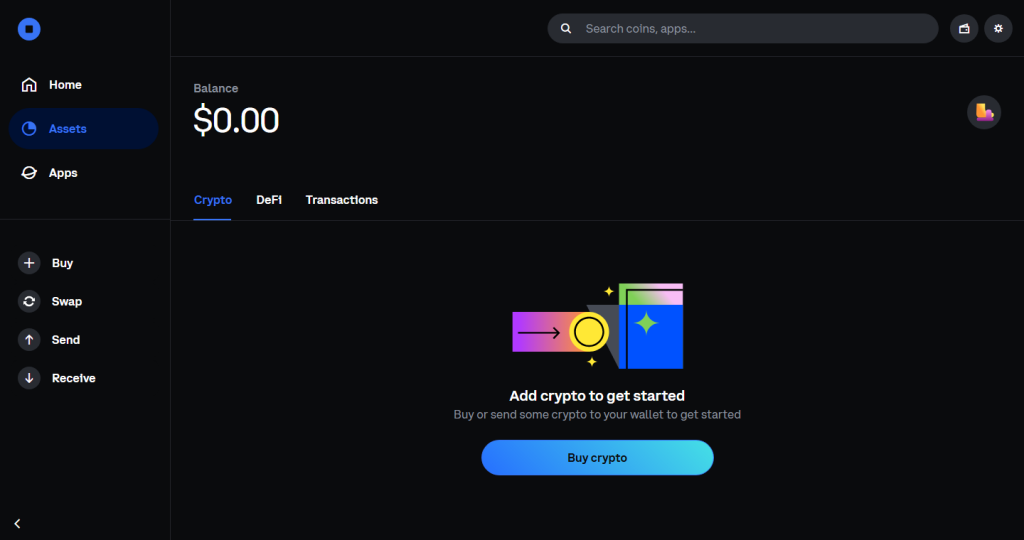
Step 3: Access Your Wallet
Once setup is complete, you’ll be taken to your wallet dashboard, where you can buy, receive, send, or swap cryptocurrencies.
Step 4: Copy Your Ethereum Wallet Address
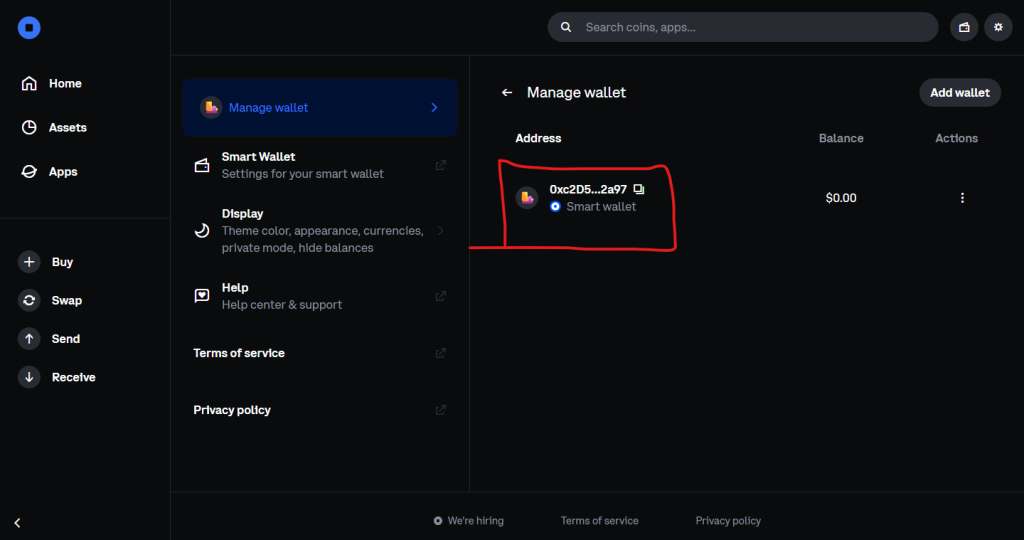
Open your wallet, select your Ethereum account, and copy your wallet address to receive ETH from an exchange or another wallet.
People Also Ask About Storing Ethereum Safely
What is the safest Ethereum wallet in 2026?
Hardware wallets are the safest option because they keep your private keys offline. For long-term storage, they’re more secure than software wallets or exchanges.
Can you store Ethereum in a Bitcoin wallet?
No. Ethereum requires an Ethereum-compatible wallet. Sending ETH to a Bitcoin address can permanently lose your funds.
Is it safe to store Ethereum on Coinbase?
Yes, but it depends on the product. Coinbase Wallet is self-custodial, while Coinbase Exchange holds your private keys on your behalf.
How do I check my Ethereum wallet balance?
Open your wallet app or enter your public wallet address into Etherscan to view your balance and transaction history.
What happens if my hardware wallet is lost or stolen?
Your ETH isn’t stored on the device itself. You can restore access using your recovery phrase, provided you’ve backed it up securely.
Can Breadwallet store Ethereum?
No. BRD (formerly Breadwallet) was discontinued after its acquisition by Coinbase. Use a modern Ethereum-compatible wallet instead.
Which Ethereum Wallet Should You Choose?
If I had to recommend one approach, I’d choose a hardware wallet for long-term storage and a software wallet for everyday use. It offers the best balance of security, convenience, and flexibility for managing ETH.
Ultimately, the right wallet depends on how you use Ethereum. Long-term holders should prioritize offline security, while active users may prefer quick access to DeFi, NFTs, and Web3 applications.
No matter which wallet you choose, my advice is simple: keep control of your private keys, back up your recovery phrase offline, and avoid leaving large amounts of ETH on an exchange.