If you have ever dealt with a machine breaking down at the worst possible moment, you already understand the real cost of surprise failures. It is not just the repair bill. It is the downtime, the missed deadlines, the stressed team, and the customer frustration that follows.
That is exactly why predictive maintenance software feels like such a game changer in modern operations. Instead of waiting for equipment to fail, you can spot problems early, plan maintenance smarter, and keep everything running smoothly.
Let’s get into the 10 exciting benefits that make predictive maintenance worth serious attention.
What is Predictive Maintenance Software?
?
Predictive maintenance software is a tool that monitors equipment condition using real time data and alerts you before a machine is likely to fail, so maintenance can be planned instead of done after a breakdown.
They are designed to help you maintain equipment based on real condition data instead of guesswork or fixed schedules. It pulls information from sensors, machine logs, IoT devices, data analytics techniques, vibration readings, temperature monitoring, and even historical breakdown patterns.
The goal is simple: detect warning signs early, so you fix the issue before it becomes a failure.
Predictive maintenance is the smarter middle ground. It helps you fix only what needs fixing, right when it needs fixing.
How Predictive Maintenance Software Works in Real Life?
?
Predictive maintenance can sound like a complex buzzword until you see it in action. So let me break it down in a simple way.
A predictive maintenance system usually works by:
- Collecting equipment data continuously
- Detecting patterns that signal abnormal behavior
- Predicting when a failure is likely to happen
- Alerting your maintenance team early
- Helping schedule work orders and spare parts
- Tracking results so predictions get better over time
Some platforms also include dashboards, mobile alerts, and integrations with CMMS or ERP tools so everything stays connected.
10 Exciting Benefits of Predictive Maintenance Software
?
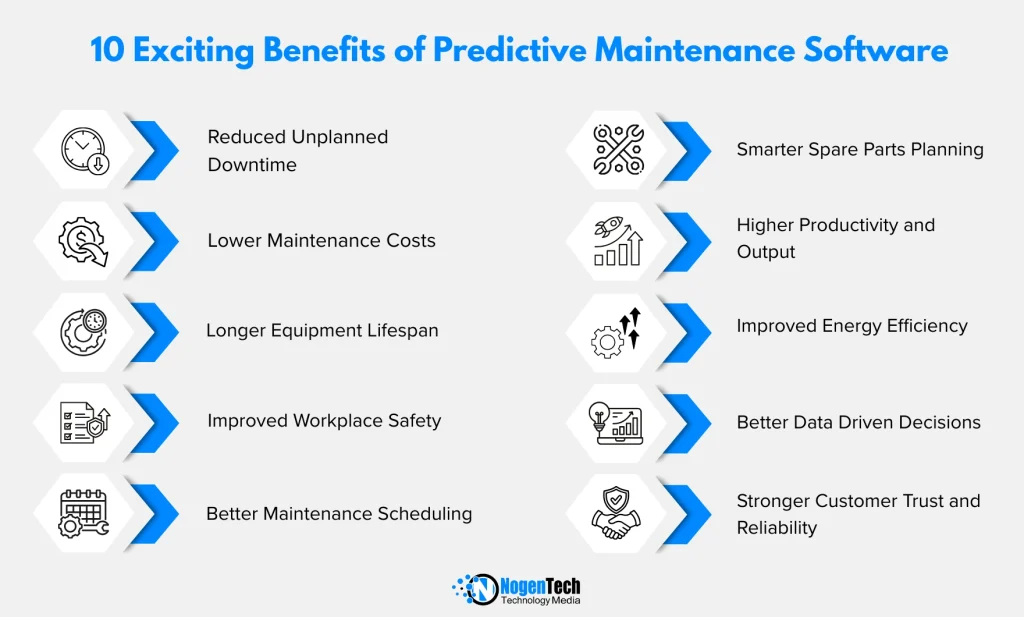
Predictive maintenance software is not just about avoiding breakdowns. It is about building a smarter, calmer, and more profitable operation. In this section, I will take you through the 10 biggest benefits that make predictive maintenance a serious competitive advantage.
1. Reduced Unplanned Downtime
Unexpected breakdowns are the kind of problem that never show up at a convenient time. With real time condition monitoring, you can catch warning signals early, like rising vibration, unusual heat, or pressure changes, before they turn into full shutdowns.
That gives you enough time to plan repairs during scheduled downtime instead of losing hours in emergency stoppages. Hence, fewer surprises mean production efficiency, better deadlines, and less stress across every team that depends on consistent equipment performance.
2. Lower Maintenance Costs
One of the fastest ways to waste money in operations is fixing equipment too late or servicing it too early. When maintenance decisions are based on actual machine condition, you will be able to stop throwing budget into unnecessary part changes and avoid expensive emergency repairs.
It also reduces overtime labor and prevents small issues from turning into major damage. The best part is that maintenance spending becomes predictable, because work is planned instead of being forced by surprise breakdowns and rushed last minute decisions.
3. Longer Equipment Lifespan
Equipment lasts longer when it is not pushed to failure. Predictive maintenance software and smart technology catch these faults early so you can repair or adjust components before they start damaging other parts of the machine.
Ultimately, it reduces long term wear on bearings, motors, belts, and pumps, and it keeps systems running closer to their ideal performance range. This approach protects expensive assets, reduces the need for frequent replacements, and helps you get the maximum return from every machine you have invested in.
4. Improved Workplace Safety
Safety improves when machines fail less often, and maintenance is less rushed. Equipment breakdowns can cause overheating, pressure leaks, electrical issues, and unexpected movement, which increases risk for workers and facilities.
With early alerts and condition insights, you can address problems before they turn into dangerous incidents. It also reduces emergency repairs where teams at workplaces are forced to work quickly under stress.
A more controlled maintenance environment means fewer hazards, better compliance, and a workplace where people feel safer.
5. Better Maintenance Scheduling
Maintenance becomes much easier to manage when you know what needs attention and when. Instead of guessing timelines or relying on fixed schedules, condition based insights, provided by predictive maintenance software, help you prioritize the right tasks at the right time.
This prevents last minute chaos, reduces workload spikes, and improves coordination between operations and maintenance teams. The result is a smoother workflow where repairs are planned and technicians are assigned properly.
And, obviously, machines get serviced before failures happen, not after the damage is already done.
6. Smarter Spare Parts Planning
Inventory becomes far more efficient when parts are ordered with purpose instead of panic. Predictive maintenance software can let you see which components are showing early wear. In this way, you can prepare spare parts ahead of time without overstocking everything.
With this approach, you can prevent stockouts, reduce emergency shipping costs, and avoid long delays caused by missing components. Over time, spare parts planning becomes leaner, cheaper, and more reliable.
The maintenance team stays ready, and the business stops wasting money on unnecessary inventory.
7. Higher Productivity and Output
Productivity rises naturally when equipment stops interrupting the workflow. When machines run consistently, production lines stay stable, operators remain focused, and deadlines are easier to meet.
Healthy equipment also produces better quality output, because failing machines often create defects and inconsistent results. With fewer stoppages and fewer performance drops, throughput improves without adding pressure on the team.
Over time, higher uptime and reliable performance create smoother business operations and stronger output across the entire facility.
8. Improved Energy Efficiency
Energy waste often comes from machines struggling silently before they fail. When components wear out, friction increases, and equipment starts consuming more power than normal just to deliver the same output.
When you catch these efficiency drops early, you can fix the underlying issue and restore normal performance before utility costs climb. This not only lowers operating expenses but also reduces unnecessary strain on the equipment.
9. Better Data Driven Decisions
The real advantage comes when maintenance stops being guesswork and becomes measurable. With performance trends and equipment health data in front of you, you can clearly identify which assets fail most often, what causes downtime, and where money is being wasted.
It helps with budgeting, planning upgrades, and allocating technicians more effectively. It also makes it easier to justify investments because decisions are backed by real evidence. Better insights lead to better reliability and stronger ROI over time.
10. Stronger Customer Trust and Reliability
Customers may never see your machines, but they always feel the impact of downtime. When equipment stays reliable, production stays consistent, delivery schedules stay on track, and quality remains stable.
That reduces complaints and builds long term customer loyalty and trust. In service based industries, reliable systems also protect uptime commitments and improve customer satisfaction.
Over time, this reliability becomes a competitive advantage because clients remember the businesses that deliver consistently without excuses, delays, or unexpected disruptions.
Final Thoughts
?
Predictive maintenance software is one of those tools that quietly transforms how a business operates. Instead of waiting for machines to fail, you get ahead of problems with real data, smarter planning, and better control.
I have seen how it reduces downtime, cuts costs, improves safety, and even makes maintenance teams feel less overwhelmed because they are no longer stuck in constant firefighting mode.
If you want smoother operations and fewer unpleasant surprises, predictive maintenance is absolutely worth exploring. Start small, prove the value, and then scale it across your most critical assets.