Alphabet Unifies Intrinsic with Google Driving Major Physical AI Push
Alphabet accelerates Physical AI through deep Google Intrinsic Integration to deploy scalable Embodied Intelligence and the new Intrinsic Vision model.

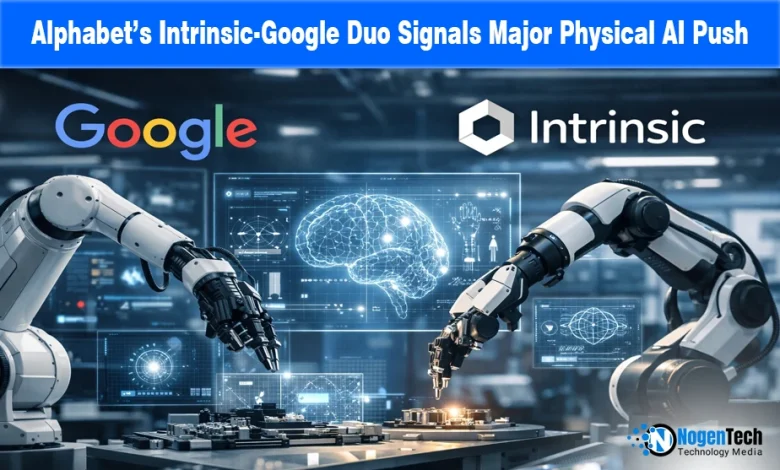
Alphabet is accelerating its robotics ambitions. In a move that underscores the growing importance of Physical AI commercialization, the company is deepening its Alphabet-Google Intrinsic Integration, aligning its robotics software arm Intrinsic more closely with Google’s artificial intelligence research ecosystem.
The development highlights Alphabet’s broader strategy to bring Embodied Intelligence, AI systems that operate in the physical world, from research labs into real-world deployment.
With collaboration across Google and DeepMind teams, and the planned rollout of the Intrinsic Vision AI model (Specific 2026 tech release), the company appears to be laying the groundwork for scalable, real-world robotics applications.
Here’s what happened, why it matters, and what comes next.Clear Explanation of the News
What Happened?
Alphabet is integrating its robotics software subsidiary Intrinsic, according to its official platform documentation, more closely with core Google AI operations. Intrinsic, which was spun out of Alphabet’s experimental innovation lab X, develops software tools that make industrial robots easier to program and deploy.
The renewed focus on Alphabet-Google Intrinsic Integration reflects a strategic push to unify robotics, AI models, and cloud infrastructure under a more cohesive roadmap.
This initiative builds on the ongoing Google DeepMind Robotics collaboration, connecting robotics research with the large-scale AI systems developed by Google DeepMind. DeepMind has previously published research on robotic manipulation, multimodal learning, and reinforcement learning for real-world tasks.
Why It Matters Now
AI development is rapidly shifting from text and image generation toward physical-world applications. Industry leaders increasingly view Embodied Intelligence as the next frontier, with Nvidia CEO Jensen Huang recently declaring that the “ChatGPT moment for robotics is here” as physical AI models begin to understand, reason, and act in the real world.
While generative AI transformed digital workflows in 2023 and 2024, 2025 and beyond may mark the beginning of scaled Physical AI commercialization, where AI systems power warehouses, manufacturing lines, healthcare robotics, and logistics automation.
Alphabet’s tighter integration suggests it wants to compete aggressively in this emerging sector.
Who Is Affected?
- Industrial manufacturers using robotics automation
- Enterprise customers exploring AI-powered physical systems
- Robotics developers building on Intrinsic’s platform
- Competing AI firms are investing in embodied AI
Industry Context
Alphabet’s robotics ambitions are not new. The company previously acquired robotics startups and invested in automation platforms. However, earlier efforts lacked a unified AI infrastructure.
Now, with Google’s AI breakthroughs and DeepMind’s robotics research maturing, the timing appears more strategic.
The planned Intrinsic Vision AI model signals a product milestone designed to bridge visual perception and robotic manipulation at commercial scale.
Impact Analysis
Market Impact
The robotics market continues to expand, driven by labor shortages, supply chain optimization, and automation demand, as noted in recent industry reports. By strengthening Alphabet-Google Intrinsic Integration, Alphabet positions itself to compete with established industrial automation firms and emerging AI-native robotics companies.
If successful, Physical AI commercialization could open new enterprise revenue streams beyond advertising and cloud services, a diversification strategy often discussed in Alphabet Investor Relations pages.
User Impact
For enterprise users:
- Easier robot programming
- Faster deployment cycles
- Improved visual perception systems
- More adaptive automation systems
For developers:
- Access to AI models integrated with robotics toolchains
- Enhanced simulation-to-reality workflow
- Unified AI infrastructure via Google ecosystems
Short-Term vs Long-Term Effects
Short-term:
- Internal restructuring and roadmap alignment
- Early enterprise pilots
- Developer tooling improvement
Long-term:
- Large-scale deployment of embodied AI systems
- Autonomous robotics across logistics, retail, and manufacturing
- Standardization of AI-driven robotic programming
The shift from experimental robotics to Physical AI commercialization represents a long-term strategic bet.
Step-by-Step Breakdown: What’s Changing
What’s New
- Deeper operational ties between Google AI and Intrinsic
- Expanded Google DeepMind Robotics collaboration
- Roadmap confirmation for the Intrinsic Vision AI model (Specific 2026 tech release)
What Changed
Previously, Intrinsic operated with greater separation from Google’s AI model development. The integration now emphasizes shared AI infrastructure, research pipelines, and product alignment.
What Users Should Do
- Monitor Intrinsic’s official product updates
- Evaluate robotics automation strategies
- Assess compatibility with existing industrial systems
- Follow Google DeepMind research publications for insight
What Users Should Avoid
- Assuming immediate mass deployment in 2025
- Overestimating short-term revenue impact
- Relying on speculative rumors instead of official announcements
Expert Insight and Industry Context
Executives at Google DeepMind have consistently emphasized the importance of multimodal AI and real-world learning systems in published research papers. Robotics researchers widely agree that simulation-trained models must integrate physical-world feedback to scale reliably.
The Google DeepMind Robotics collaboration suggests Alphabet aims to combine foundation models with robotics-specific training environments.
Compared with previous robotics initiatives at Alphabet, this effort appears more cohesive and infrastructure-driven. It leverages cloud AI, model training, and deployment capabilities that did not exist at a comparable scale a decade ago.
Meanwhile, competitors in the AI sector are also pursuing embodied AI systems, but commercialization remains limited. Alphabet’s integration may provide operational advantages through unified research and cloud ecosystems.
Common Misconceptions
“Robots Will Immediately Replace Human Workers”
There is no verified evidence that the Alphabet-Google Intrinsic Integration signals rapid, universal job displacement. Most robotics deployments focus on repetitive, hazardous, or precision tasks.
“Physical AI Is Already Fully Mature”
Despite rapid progress, experts report that Embodied Intelligence remains technically challenging. Robotic perception, fine motor control, and generalization across environments still require significant development.
“The Intrinsic Vision AI model Means Consumer Robots in 2026”
The Intrinsic Vision AI model (Specific 2026 tech release) is expected to focus on industrial and enterprise applications rather than consumer household robots.
Future Outlook
Alphabet’s robotics strategy appears aligned with a multi-year roadmap.
Potential developments may include:
- Expanded enterprise pilots in logistics
- AI-enhanced robotic arms for manufacturing
- Cloud-based robotics development platforms
- Deeper AI model integration with physical systems
Risks remain. Robotics hardware margins differ from software economics. Deployment complexity could slow Physical AI commercialization. Regulatory oversight may also shape development timelines.
However, the strategic alignment between Intrinsic and Google AI strengthens Alphabet’s position in the emerging Embodied Intelligence market.
When Not to Rely on Social Media
Major AI announcements often trigger exaggerated claims online. Readers should avoid relying on:
- Viral posts claiming “fully autonomous factories by next year”
- Unverified leaks about robotics consumer launches
- Misleading interpretations of research papers
Instead, consult:
- Official Intrinsic statements
- Google DeepMind research publications
- Alphabet earnings calls and regulatory filings
- Established tech media reporting
For high-stakes business decisions, primary sources matter more than speculation.
What’s Your Take?
Do you believe Physical AI commercialization will scale as quickly as generative AI did?
How significant is the Alphabet-Google Intrinsic Integration in shaping the future of Embodied Intelligence?
Share your thoughts, predictions, or industry experiences in the comments below.
How This News Was Verified
- Verified information from official Alphabet and Intrinsic platform documentation
- Cross-referenced Google DeepMind published research papers on robotics and AI
- Analysis from the broader industry reports from Deloitte and McKinsey.
- Consulted Alphabet investor relations and regulatory filings for strategic context.
Reviewed CISA guidelines for responsible tech journalism