Are you feeling mentally exhausted from constant digital interaction and AI-driven technology?
Over the last few years, I have noticed how deeply artificial intelligence has become part of daily life, from AI chatbots and recommendation algorithms to workplace automation and communication tools.
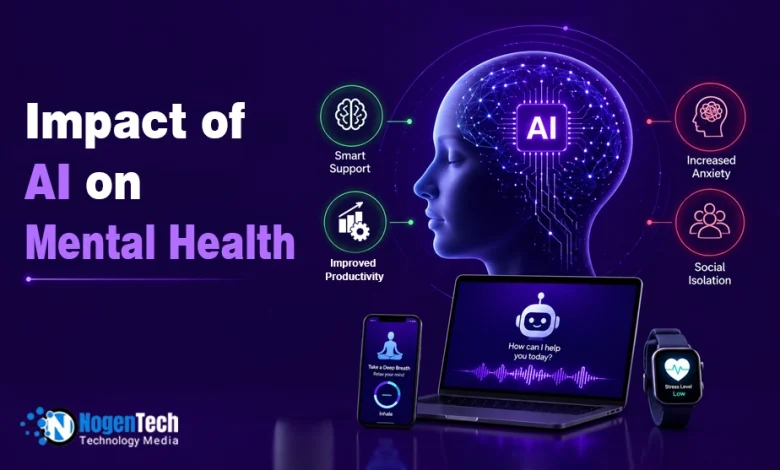
While these technologies can reduce stress, improve productivity, and expand access to mental health care, they also increase anxiety, burnout, social isolation, and emotional dependency.
As AI continues to shape modern society, understanding its positive and negative effects on mental health has become more important than ever.
Now, let’s discuss how AI affects mental health, including its positive effects, negative consequences, and growing influence on human behavior and emotional well-being.
What is the Impact of AI on Mental Health?
Artificial intelligence affects mental health by improving convenience and productivity while also increasing risks like anxiety, burnout, social isolation, and emotional dependency.
The psychological impact of AI largely depends on how people interact with AI-driven platforms and digital technology. In the last 3 years, AI systems have deeply shaped everyday routines, often without people realizing it.
From social media feeds to workplace tools, AI now influences how you think, communicate, and consume education. Some of the common ways AI affects mental health are:
- AI-driven social media algorithms: Personalized content feeds can increase dopamine addiction, comparison anxiety, and digital fatigue through constant engagement.
- Workplace automation and productivity tools: AI tools reduce repetitive tasks and communication stress, but they may also create pressure around job security and performance.
- AI chatbots and virtual assistants: Some people use AI systems for emotional support and mental health services, especially when immediate human help is unavailable.
- Constant digital interaction: According to the World Health Organization, excessive screen exposure and digital overload may contribute to stress, sleep disruption, and emotional exhaustion.
Positive Impact of AI on Mental Health
Artificial intelligence can improve mental health by reducing stress, simplifying daily tasks, improving productivity, and expanding access to mental health support.
When used responsibly, AI tools can help reduce cognitive overload and improve emotional well-being. AI-powered tools have made repetitive digital tasks easier to manage.
Instead of spending hours handling emails, organizing information, or responding to routine communication, professionals now rely on AI systems to save time and reduce mental fatigue. This gets done by:
- Reduced workplace stress: AI automation tools can manage repetitive tasks like emails, scheduling, and data organization, helping reduce burnout and mental exhaustion.
- Better access to mental health support: AI chatbots and mental health apps provide immediate emotional support and self-help guidance when professional help is not easily available.
- Improved productivity and work-life balance: AI tools simplify workflows, allowing people to focus more on important tasks instead of constant digital management.
- Personalized mental health care: AI technologies are increasingly used to support early detection and personalized mental health treatment.
If I tell you my personal experience, then I was overwhelmed by constant workplace communication, causing mental fatigue after hours of repetitive digital interaction. AI productivity tools and unified communication platforms helped me reduce this pressure by automating routine responses and organizing tasks more efficiently.
Negative Effects of AI on Mental Health
Artificial intelligence can negatively affect mental health by increasing anxiety, social isolation, digital addiction, emotional dependency, and cognitive overload.
Excessive exposure to AI-driven platforms may also contribute to stress, burnout, and reduced real-world interaction. As AI-powered systems became more integrated into daily life, constant notifications, personalized feeds, and nonstop digital interaction have mentally exhausted many people.
Some of the most common negative effects of AI on mental health include:
- Social isolation and reduced human interaction: Heavy reliance on AI chatbots, social media such as Instagram, TikTok, YouTube, and Snapchat, and digital communication can weaken real-world social connections.
- Anxiety about job replacement: Workplace automation has increased stress and uncertainty for employees concerned about job security.
- Digital addiction and dopamine overload: AI-driven recommendation algorithms may contribute to compulsive scrolling, mental fatigue, and emotional instability.
- Emotional dependency on AI systems: Some users develop unhealthy attachments to AI chatbots and virtual companions.
- Information overload and burnout: Constant digital exposure and information overload can increase stress and emotional exhaustion.
Someone constantly switching between AI-generated notifications, social media feeds, emails, and digital tasks may gradually experience anxiety, sleep disruption, and cognitive fatigue.
How AI Is Changing Mental Health Care?
Artificial intelligence is changing mental health care by improving access to support, assisting with early detection, and helping people manage stress more efficiently.
While AI cannot replace licensed therapists, it is becoming an important tool in modern mental health treatment and emotional wellness support.
AI Chatbots and Emotional Support
AI chatbots can provide instant emotional support, coping strategies, and self-help guidance for people dealing with stress, anxiety, or emotional exhaustion.
- Available 24/7 for immediate support
- Helpful for stress management and emotional check-ins
- Can improve accessibility for people with limited mental health resources
However, AI chatbots should support professional care, not replace human therapists or clinical treatment.
AI in Mental Health Diagnosis
AI systems are increasingly being used to detect patterns linked to anxiety, depression, and emotional distress.
- Analyzes behavioral and emotional data
- Helps identify early warning signs
- Supports healthcare professionals with faster assessments
According to the National Institutes of Health, researchers are exploring AI technologies to improve early mental health detection and treatment support.
Personalized Mental Health Treatment
AI tools can personalize mental health recommendations based on individual behaviors, symptoms, and emotional patterns.
- Personalized therapy recommendations
- Adaptive mental wellness programs
- Data-driven treatment support
This can help people receive more targeted mental health care instead of generalized support strategies.
Limitations of AI Therapy
Despite its benefits, AI still lacks human empathy, emotional understanding, and professional clinical judgment.
- Cannot fully understand human emotions
- Raises privacy and ethical concerns
- May provide inaccurate mental health guidance
For example, someone struggling with severe emotional trauma may benefit from AI-based coping tools, but long-term psychological healing still requires meaningful human connection and professional therapy.
How AI Addiction and Emotional Dependency Affect Mental Health?
AI-powered platforms can increase digital addiction, emotional dependency, loneliness, and mental fatigue through constant personalized engagement and nonstop digital interaction.
As AI became more integrated into social media, entertainment, and communication platforms, people started spending hours consuming personalized multilingual content without recognizing its psychological effects.
- AI recommendation algorithms: Personalized feeds encourage compulsive scrolling and dopamine-driven behavior.
- Emotional attachment to AI chatbots: Some users rely on AI systems for companionship and emotional validation.
- Reduced real-world interaction: Excessive digital engagement may weaken offline relationships and increase social isolation.
- Information overload and burnout: Constant digital exposure can increase stress and emotional exhaustion.
For example, someone spending hours interacting with AI-powered feeds, chatbots, and personalized content may gradually experience emotional fatigue and reduced offline engagement.
Future Risks and Ethical Concerns of AI
There is no doubt AI is serving with a lot of facilitaaies but it’s also raising concerns around privacy, such as:
- Emotional manipulation
- Digital dependency
- Growing influence of AI systems
- Human Behavior and Mental Disruption
As AI-powered platforms became more integrated into daily life, I noticed increasing concerns about how these systems collect personal data and influence emotions through personalized algorithms.
- Privacy and mental health data risks: AI platforms may collect sensitive emotional and behavioral data.
- Emotional manipulation through algorithms: Personalized feeds can influence emotions, attention, and online behavior.
- AI addiction and digital dependency: Excessive reliance on AI systems may increase emotional dependency and reduce offline engagement.
- Reduced human interaction: Heavy digital interaction can weaken real-world social connections.
- Bias and misinformation: AI-generated content may spread inaccurate or emotionally harmful information.
- Lack of human empathy in AI therapy: AI cannot fully understand human emotions or replace professional psychological care.
People Also Ask
Can AI replace human therapists?
No, AI cannot fully replace human therapists because it lacks empathy, emotional understanding, and professional clinical judgment. However, AI tools can support mental health care through emotional check-ins, self-help guidance, and symptom tracking.
Why does AI increase emotional dependency?
AI systems use personalized algorithms and continuous interaction to keep users engaged. Over time, some people may become emotionally attached to AI chatbots, recommendation systems, or digital platforms for validation and companionship.
Can AI cause digital burnout?
Yes, excessive exposure to AI-driven notifications, personalized feeds, and nonstop digital interaction can contribute to cognitive overload, stress, and mental exhaustion.
Is AI making social isolation worse?
AI-powered communication and entertainment platforms may reduce face-to-face interaction and increase loneliness when digital engagement replaces real-world social connections.
How is AI used in mental health treatment?
AI is used in mental health care for emotional support chatbots, early symptom detection, personalized treatment recommendations, and digital wellness applications.
What are the biggest mental health risks of AI?
The biggest concerns include AI addiction, emotional dependency, social isolation, misinformation, privacy risks, and reduced human interaction.
My Final Opinion on AI Affecting Mental Health in Modern Society
Artificial intelligence is reshaping mental health in modern society by improving productivity, expanding access to mental health care, and simplifying daily life. However, AI addiction, emotional dependency, digital burnout, and reduced human interaction also remain growing concerns.
In my opinion, AI itself is not harmful, but excessive dependence on AI-driven technology can negatively affect emotional well-being over time.
The long-term psychological impact of artificial intelligence will ultimately depend on how responsibly people, companies, and society choose to use it.