How BLDC Motors Power Wind Trackers and Solar Systems
BLDC motors play a vital role in renewable energy by powering wind and solar trackers. Their efficiency, durability, and precision allow turbines and panels to capture maximum energy with minimal maintenance.

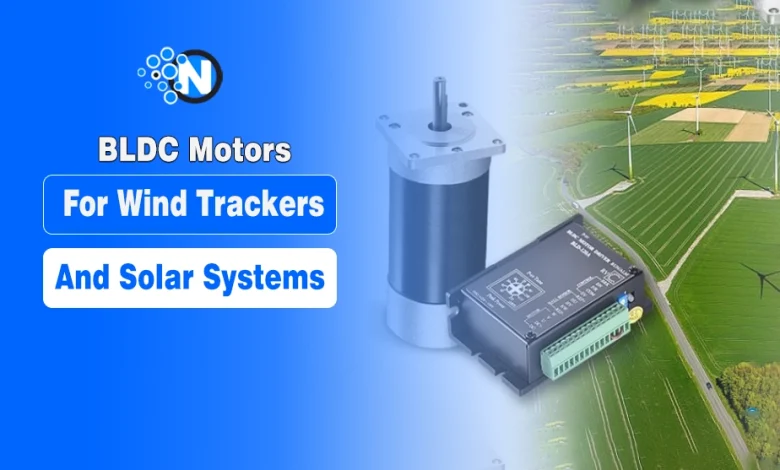
I’ll never forget a breakdown at a solar farm system on the edge of the desert. The heat and dust finally killed an old AC motor, so we swapped in a BLDC unit out of desperation. By sunset, the tracker wasn’t just working—it was gliding. A month later, in those same brutal conditions, the BLDC motor was still running smoothly and cool while others stalled.
That was the moment I stopped looking at datasheets and made BLDC motors my default choice for the field.
Why BLDCs Changed My Tracking Game
Back in the day, we sized trackers around what the motor could survive—not what the panels really needed. Old AC motors did the job, but they hated dust, low speeds, and constant wear. Brushes burned out, gearboxes screamed, and maintenance trucks were always on the move.
Then BLDC motors arrived with proper controllers, and it was night and day. Electronic commutation meant no brushes grinding themselves to death. I’ve seen BLDC units pulled after ten years in desert dust storms still spinning like new. With the right sealing, you’re looking at 15–20 years of life, which completely changes the economics of renewable projects.
Efficiency is another hidden gem. At 88–94% efficiency on 24–48 volts DC, you’re not wasting solar power just to nudge panels. And with torque available from zero speed, trackers finally move the way they should—slow, steady, confident.
Solar Trackers That Actually Work
Solar tracking systems look simple until you install a few hundred of them. Wind loads. Temperature swings from minus twenty to sixty five Celsius. Panels acting like sails at fifty kilometer per hour gusts. That’s where BLDC motors earn their keep.
Single axis solar trackers driven by BLDC motors routinely deliver 20 to 25 percent more yield. I’ve seen it in production curves, not marketing slides. Dual axis systems push close to 35 percent when everything is dialed in. The secret is silky low speed rotation combined with serious holding torque. A good inner rotor BLDC paired with a 20:1 worm gear will lock panels in place without constantly sipping power.
Most of the solar BLDC motors I’ve worked with sit in the 200 watt to 2 kilowatt range. Base speeds around 3000 rpm, geared down hard. Zero cogging matters more than peak power because trackers spend their life creeping, not sprinting. With proper IP67 sealing, sand and rain stay outside where they belong.
Controllers make or break the system. Sensorless control works fine for budget installs where absolute positioning isn’t critical. Hall sensors are worth every extra dollar when precision matters, especially on dual axis trackers. Regenerative braking helps in gusty conditions, dumping energy back into the DC bus instead of cooking resistors. I’ve watched arrays ride out storms that used to twist frames simply because the BLDC held its ground.
Wind Turbines Facing the Gusts
Wind is a different beast. Louder. Meaner. Less forgiving. I remember climbing a small hilltop turbine where the yaw system sounded like a cement mixer full of bolts. Old gearbox. AC motor. Constant maintenance headaches. We retrofitted a compact BLDC yaw drive and the silence afterward felt unreal.
BLDC wind yaw control shines because it delivers high torque at low speed with almost no power draw. The nacelle stays locked on the breeze instead of hunting back and forth. That alone reduces mechanical stress across the whole turbine. Pitch control is where things really get interesting. In gusts, blade pitch needs fast, precise adjustments. BLDC motors do that without the clunky response of hydraulic or brushed systems.
Field data shows a consistent 5 to 8 percent gain in annual energy production from better yaw and pitch response. That doesn’t sound huge until you multiply it across years of operation. Rural sites appreciate how quiet these systems are, too. No gear whine echoing across fields at night. Just steady rotation and steady output.
Compact size helps in cramped nacelles. Passive cooling keeps things simple. CAN bus monitoring lets you see issues before you feel them in your knees during a climb. Fewer truck rolls. Fewer climbs. More time actually producing power.
Field Lessons Integration Tricks
No motor works in isolation. Integration is where experience matters. I learned the hard way that cable glands and seals are just as important as torque ratings. One desert site taught me that fine dust will find any weakness. Since then, I never skip proper IP67 connectors and breathable membranes for pressure equalisation.
Thermal management is another quiet killer. BLDC motors run cool compared to old designs, but controllers still need airflow. Passive cooling fins beat fans every time in dusty environments. Simpler wins. Always.
Torque sizing deserves respect. Calculate based on panel area and wind loads, not guesswork. A tracker facing fifty kilometres per hour winds needs holding torque margins, or you’ll watch it slip at the worst moment. I’ve seen arrays twist just enough to lose alignment for weeks because someone undersized the drive.
Voltage choice matters too. Twenty-four-volt systems are forgiving and safe. Forty-eight-volt setups reduce current and cable losses on large farms. Both work well with brushless DC motors if the controller is matched properly. This is where talking to manufacturers who actually understand renewable energy pays off.
Real Numbers From Real Jobs
I’m not a fan of vague claims. Numbers tell the truth. Here’s a simple comparison I’ve pulled together after years of installs and retrofits.
| Parameter | BLDC Motor | Traditional AC Motor |
| Efficiency | 88–94% | 70–80% |
| Low-Speed Torque | High, stable | Poor, jerky |
| Maintenance Life | 15–20 years | 5–8 years |
| Dust Tolerance | Excellent with sealing | Moderate |
| Upfront Cost | Higher | Lower |
| Operating Cost | Very low | High |
On one 10 MW solar farm, swapping to BLDC motors on single axis trackers paid back in under two years. Energy harvest went up. Maintenance visits dropped hard. Gearbox failures basically vanished. The finance team didn’t care about the technology. They cared that numbers stopped bleeding.
Wind sites tell a similar story. Yaw systems using BLDC motors draw less auxiliary power and reduce wear on main bearings. Over time, that adds up to serious savings. The motors cost more upfront, sure, but eighteen to twenty-four months later, nobody complains anymore.
Where Is This Headed?
What excites me now is how smart these systems are getting. Better sensorless algorithms. Cheaper Hall sensors. More robust CAN bus diagnostics. BLDC motors are becoming the quiet backbone of renewable energy infrastructure. Solar trackers that move like they’re alive. Wind turbines that face gusts instead of fighting them. If you spend your days out here in the dust and wind, that kind of reliability isn’t a luxury; it’s survival.