Has this ever happened that you built a site and the CMS felt like a clunky chain that forces you to juggle between outdated templates? Don’t worry, there are some modern solutions for it, and one of the best options that you cannot ignore is Headless CMS.
With omnichannel demands exploding, a headless CMS is the sleek solution. This helps in decoupling your content from the front-end, letting APIs feed data to any device or app. This setup gives businesses the freedom to deliver content anywhere, on websites, apps, smart devices, and even digital billboards.
Of course, with all that flexibility comes a mix of pros and cons.
This blog post highlights the advantages and disadvantages of headless CMS in detail. This will let you decide that you should opt for one and when.
What is a Headless CMS?
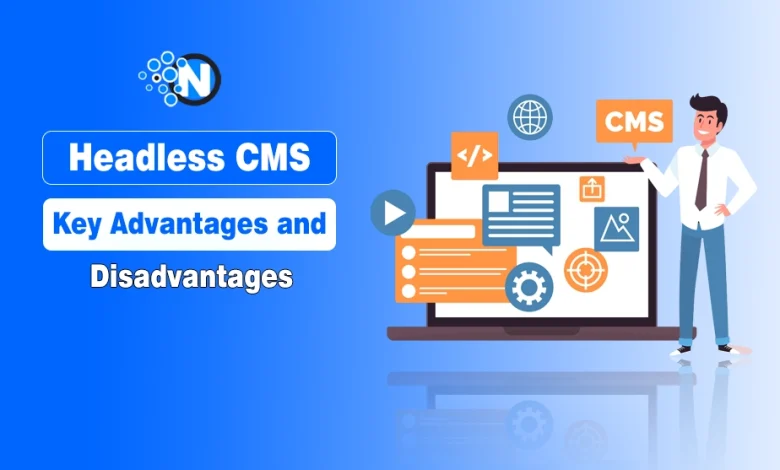
A headless CMS is a content management system that only handles the backend (where content is created and stored) and delivers that content through APIs. Unlike traditional CMS platforms, it doesn’t have a built‑in frontend or design layer. This means developers can use any technology to display the content on websites, apps, or other digital platforms.
Different front-end systems can efficiently consume the raw content through powerful APIs. Design is highly flexible and allows freedom to developers.
It gives teams the freedom to select the most appropriate tools for the job. And also, it offers the possibility of true omnichannel content distribution, where a piece of content is written only once and distributed everywhere. This improves security because it does not expose the CMS back office to the open internet.
Headless CMS vs Traditional CMS: Major Differences
In a traditional CMS, content management is closely connected to a particular display layer. This presents the entire HTML page by using pre-defined templates.
A headless CMS isolates the content backend completely. This is because its content is structured data, and it is transferred to any device through APIs. It gives better flexibility and omnichannel access.
Architectural Style: Monolithic and Decoupled
The basic difference in the role is in architecture. A conventional CMS represents a monolithic system that is the content database, content management interface, and front-end presentation layer.
The content creators are presented with the built-in templates and the WYSIWYG editors to create pages. This will be rendered instantly by the system.
In the case of headless CMS, it is, on the other hand, API-first and decoupled. The backend is used to store raw content information and make it available in APIs when requested. This gets done with no idea of the location and method of displaying that content.
It lets the developers have all the freedom to shape the head with current frameworks such as React or Vue.
Capacity of Content Delivery and Omnichannel Capability
Older systems are channel-specific by nature and are mainly adapted to release content to a single site. And it is all through server-side rendering of HTML pages.
Reformatting the content on a mobile app or a smart device would need very little redevelopment. A headless CMS is able to perform well in terms of omnichannel.
This one treats content as raw data, which is served over a centralized API. This means that the same repository of content can be consumed across multiple front-end programs at the same time.
It can be a static website, an iOS app, an Android app, a voice assistant or even a digital signage. The makers of content can key in one time, and developers can recycle that information into an infinite number of digital interactions.
The Advantages of Headless CMS: Why It's Winning Hearts
Headless CMS shines in flexibility and efficiency, making it a winning product for agile teams. Now I will unpack the big wins that you can avail yourself of by using it:
Omnichannel Delivery: One Source, Endless Destinations
The crown jewel of headless CMS is omnichannel support. It lets you publish content to websites, apps, IoT devices, and displays from a single repository. This helps you save hours on recreation.
Updates sync instantly and change a product description, and it’s live on your site, app, and smartwatch simultaneously. This helps in ensuring brand consistency without errors like mismatched fonts.
According to multiple resources, it is stated that there is an 80% reduction in development time and 90% in publishing for multi-platform content. You also get the availability of real-time personalization, like tailoring emails or WhatsApp messages.
You can use it for a retail client, such as a CMS that will feed their e-commerce site, Instagram shop, and in-store kiosks. And after that engagement, the target audience will definitely get up to a reasonable value.
Front-End Freedom and Developer Empowerment
Headless CMS unleashes developers. Decoupling allows any front-end framework, such as React, Vue, or Angular, without CMS constraints, enabling dynamic, user-centric experiences.
This will lead to no more wrestling with bloated themes; build custom UIs that evolve with trends. Some of the experts stress the reusability of content as data means high scalability, with APIs integrating seamlessly with tools like analytics or AI.
It aids talent retention by letting devs use cutting-edge stacks. In projects, this meant faster iterations: a headless setup let you swap from React Native to Flutter for an app without touching the CMS.
Performance Boost and Scalability Superpowers
Speed is king because a significant number of users just bounce off due to it. Headless delivers only essential data through APIs, slashing load times traditional CMSes generate full HTML server-side, bogging down during peaks.
A 1-second delay cuts conversions and satisfaction of users as well. Even CDN compatibility for global caching, improving SEO, and mobile experiences can also get features by using and according to the user demand.
And for scalability, the APIs handle traffic spikes without back-end rewrites. It gets done by also adding channels like voice assistants effortlessly.
I have also seen a headless e-commerce site handle Black Friday surge in traffic without crashes, and the bounce rates also fell. Plus, enhanced security: smaller attack surface, easier DDoS protection.
The Disadvantages of Headless CMS: The Hidden Hurdles
Headless isn’t flawless; its power comes with some trade-offs as well that you cannot ignore. Here are some of the major ones that you have to look for:
Setup Complexity and Developer Dependency
The use of a headless CMS increases the complexity of setup and the dependency of developers compared to a conventional CMS. The first difficulty is that the whole front-end presentation layer must be developed manually. This is because the CMS does not offer any form of process besides the raw data through APIs.
The complexity of the setup is also represented by the support of multiple API connections. It also includes the integration of third-party services and the presupposition of reliable content preview environments.
It makes the organization too reliant on technical personnel, not only in the initial construction. Also, in the maintenance, addition of features, and problem-solving throughout the decoupled architecture.
Missing Visual Tools and WYSIWYG Editors
One of the most significant shortcomings of headless CMS architecture is the lack of outdated visual tools and powerful WYSIWYG editors. Since the development of content is independent of the presentation layer, content developers usually create in a structured data format.
You get this, having no real-time idea of how the end site will look. This compels developers to create their own so-called preview environments to provide a bridge over the gap.
As a result, although content management is more flexible, the experience granted to the non-technical creators is less enjoyable. And it is also less visually immediate than in monolithic systems, requiring the editorial team to have more technical imagination.
Higher Costs and Resource Demands
Headless CMS implementation can be both costly and require more resources. It is not only the cost of the CMS license but also the requirement to recruit dedicated front-end developers. This is necessary to develop the whole presentation layer by hand.
The architecture necessitates the incorporation of a lot of third-party services, such as e-commerce and analytics, through custom APIs. And the issue arises that this complicates the matter at hand.
This makes the overall cost of ownership (TCO) increase. This is because it requires a more expensive and larger technical staff to develop initially and maintain a more fractured technology stack.
When Going Headless Makes Sense
A headless CMS is a good choice if you need entire layout freedom, plan to distribute content material throughout a couple of channels, or have already got a successful development team. It`s particularly precious for corporations aiming to future-proof their virtual strategy, assist fast scaling, or supply especially custom-designed stories throughout web, mobile, and rising platforms.
Brands with international reach or complicated content needs can enjoy the flexibility and centralised control a headless method provides. Investing in professional headless CMS development services ensures your architecture is optimized, scalable, and fully aligned with your business goals.
Final Thoughts
In my experience as a developer, embracing a headless CMS has been a game-changer. Headless CMS offers unparalleled flexibility, omnichannel content delivery, and seamless API integration. This is making it perfect for modern teams aiming to boost scalability and performance.
While setup demands technical expertise and sometimes higher costs, it also gives you some relief. That includes the freedom from rigid templates and outdated editors, which is well worth it.
For those seeking to distribute content across web, mobile, or IoT devices with ease, a headless CMS provides the streamlined, secure, and future-proof approach you need. If you want to stay ahead, it’s time to go headless.