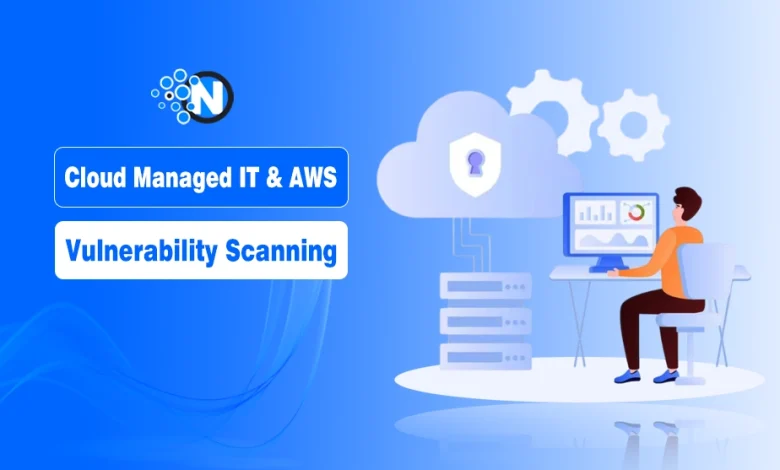
Cloud adoption has increased, but with it comes the challenge of keeping systems secure, compliant, and efficient. That’s where cloud managed IT services and AWS vulnerability scanning tools step in.
As we enter 2026, enterprises no longer ask if the cloud is right for them; they ask how to adapt it without falling prey to complexity or cyberattacks. As digital perimeters dissolve, two solutions have emerged as the “standard kit” for high-performing companies: Cloud Managed IT Services and AWS Vulnerability Scanning.
Together, these pillars allow businesses to scale at the speed of the market while maintaining a “bulletproof” security posture.
Cloud Managed IT: Simplifying Complexity
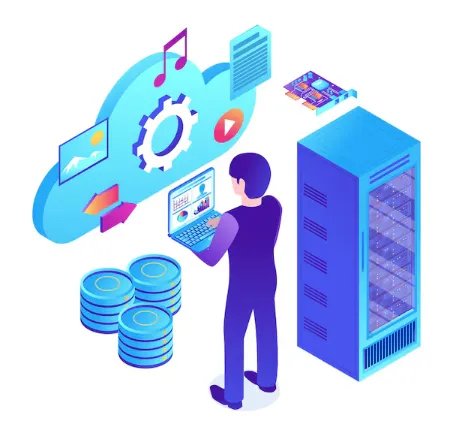
Cloud Managed IT services work as an extended technology team, taking on the daily management and maintenance of your cloud infrastructure. They provide 24/7 monitoring and support to prevent downtime, implement updates and patches, and ensure systems remain reliable.
Cloud managed IT services take that burden off internal teams by:
- Automating routine tasks like monitoring, backups, and patch management.
- Scaling resources on demand, so you don’t overpay for unused capacity.
- Providing 24/7 support, which is critical for global operations.
- Ensuring compliance with industry standards by embedding best practices into workflows.
In my experience, this shift allows IT teams to focus less on firefighting and more on innovation.
AWS Vulnerability Scanning: Staying Ahead of Threats
AWS vulnerability scanning continuously assesses your cloud environment for security gaps, including misconfigurations, weak IAM policies, exposed S3 buckets, and outdated software. By identifying risks in real time and prioritizing them based on business impact, these tools help enterprises act quickly to remediate critical vulnerabilities.
Here’s why it matters:
- Continuous scanning: Inspector automatically rescans resources when changes occur, catching new vulnerabilities instantly.
- Context-rich insights: Findings are enriched with details like severity and exposure, helping teams prioritize fixes.
- Integration with AWS Security Hub: Vulnerability data is correlated across accounts, giving a unified view of risks.
- Scalability: Works across large enterprise environments without manual overhead.
For enterprises, this means fewer blind spots and faster remediation — critical in industries where downtime or breaches can cost millions.

Why You Can’t Have One Without the Other
Think of Cloud Managed IT as the engine of a high-performance car and AWS Vulnerability Scanning as the brakes and safety sensors.
- Without Managed IT: You have a secure vault, but no one is inside to update the software or keep the lights on.
- Without Vulnerability Scanning: You have a high-speed engine, but you’re driving blind through a field of digital landmines.
By integrating these two, you create a feedback loop: the scanner identifies a weakness (e.g., an unpatched EC2 instance), and the Managed IT team applies the fix immediately. This reduces your Mean Time to Remediation (MTTR), the most critical metric in modern cybersecurity.
Top Reasons Why Cloud Managed IT & AWS Vulnerability Scanning Matter for Enterprises
Enterprises need both operational efficiency and proactive security to thrive in today’s cloud-driven environment. Cloud Managed IT and AWS vulnerability scanning work together to keep systems running smoothly while protecting against evolving threats.
24/7 Monitoring and Support
Cloud Managed IT services provide continuous monitoring of your cloud environment around the clock. This ensures that potential issues are detected and resolved before they escalate into downtime, allowing your business operations to remain uninterrupted and reliable.
Predictable Costs
By adopting a subscription-based managed IT model, enterprises can shift from expensive capital expenditures to predictable operational expenses. This approach simplifies budgeting and reduces the financial risk associated with maintaining on-premise infrastructure.
Regulatory Compliance
Managed IT providers help ensure that your cloud infrastructure adheres to critical global standards such as GDPR, SOC2, and HIPAA. This reduces the risk of non-compliance penalties and helps maintain trust with customers and stakeholders.
Continuous Vulnerability Detection
AWS vulnerability scanning gives you a real-time check-up of your cloud environment. Continuous monitoring, unlike periodic scans, enables enterprises to identify the changing threats and AI-driven attacks as they arise, keeping systems resistant to advanced threats.
Protection Against Human Error
A great number of the cloud breaches are caused by misconfigurations or human errors, e.g. weak IAM policies or exposed S3 buckets. These problems are detected automatically by scanning and eliminated before they can be exploited.
Prioritized Remediation
Professional vulnerability scanners do not only offer long lists of vulnerabilities, but focus on the vulnerabilities that are most likely to impact negatively on your business operations. This helps your IT team to concentrate on the most important things giving you a shorter Mean Time to Remediation (MTTR).
Integrated Security Feedback Loop
By combining Managed IT services with AWS vulnerability scanning, enterprises create a proactive feedback loop. Scanners flag issues immediately, and the Managed IT team applies fixes without delay, ensuring continuous improvement of both security and operational efficiency.
Best Practices for Utilizing Cloud Managed IT & AWS Vulnerability Scanning
To get the most value from Cloud Managed IT and AWS vulnerability scanning, enterprises need a structured approach that balances operational efficiency with proactive security. Following these established best practices ensures systems remain reliable, secure, and compliant while minimizing risks:
- Establish 24/7 monitoring and alerting for critical systems.
- Regularly review and update cloud configurations to prevent misconfigurations.
- Prioritize vulnerabilities based on business impact, not just quantity.
- Implement automated patch management and remediation processes.
- Ensure compliance with relevant industry standards and regulations.
- Build collaboration between IT, security, and development teams.
- Schedule periodic reviews of vulnerability scanning policies and procedures.
<strong>Innovation Needs Protection: Cloud IT + AWS Vulnerability Scanning</strong>
Cloud operations and security are no longer issues that enterprises can afford to address separately. Cloud Managed IT services offer efficient and compliant system operation and AWS vulnerability scanning offers round the clock, priority-based security against emerging threats.
They will jointly form a proactive security and operation platform that will lessen risk, limit downtime, and speed up vulnerability response. Through best practices, businesses can ensure that they can scale in the cloud, keeping pace as well as safety in a complicated digital environment.