

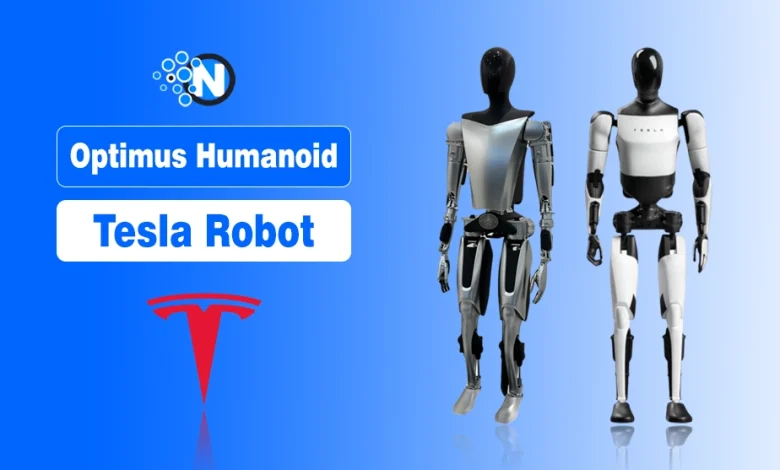
Elon Musk first announced Tesla’s humanoid robot Optimus (aka Tesla Bot) in 2021. At that time, he painted an almost sci-fi picture: a future where robots take over dangerous, boring, and repetitive work, freeing humans for more creative pursuits.
Musk even hinted that Optimus could become “more significant than Tesla’s vehicle business.” But as the dust settles on prototypes and early demos, experts and industry insiders are asking a much more pragmatic question: Can Optimus actually replace human workers?
Today, I’ll break down these questions using expert insights and real-world analysis to determine whether this is just hype or a genuine glimpse into the future of humanoid robots.
What is Tesla Robot Optimus?
Optimus is a humanoid Tesla robot about human height (around 5’8″) and weight (~125 lb) designed to navigate environments built for people: stairs, warehouses, factory floors, and even homes.
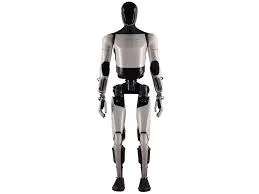
It uses AI, cameras, and motion planning systems to walk, balance, pick up objects, and interact with its surroundings. According to Tesla’s own framing, the robot is meant to perform tasks that are: Dangerous, Repetitive, and Undesirable for humans.
For example, these robots will move parts on a factory line, lift materials, or handle simple chores. Musk has emphasized Optimus’s use of Tesla’s AI infrastructure, the same technologies underpinning Tesla’s autonomous vehicles, to make a general-purpose autonomous humanoid.
Early Progress: Impressive Looks, Limited Reality
So far, Tesla has shown videos of Optimus prototypes walking, lifting objects, and navigating simple environments.
2.5 years https://t.co/BUojkVwqk7
— Tesla Optimus (@Tesla_Optimus) December 3, 2025
Several publicly shared clips have included staged demos, including household chores, interacting with humans, and even dancing, that capture imaginations but raise questions about autonomy versus scripting or remote control.
Industry observers note that many of these demos are curated and don’t necessarily reflect robot autonomy the way we’d see it in a factory or a home without supervision. Some reports suggest that early versions of Optimus were teleoperated or heavily assisted behind the scenes.
And while speculative timelines, such as limited production starting in the mid-2020s, have been floated, there’s no definitive date for when Optimus might be widely deployed or affordable for most users.
The Hard Truth: Technical Hurdles Still Loom Large
The idea of replacing human workers with robots sounds futuristic, but the devil is in the details.
1. Locomotion & Stability
Walking on two legs is deceptively hard. While Optimus can move and navigate flat terrain, tackling uneven floors or complex spaces without tripping remains a major engineering challenge: one that roboticists have grappled with for decades.
2. Dexterity & Manipulation
Picking up fragile objects, let alone folding laundry or doing detailed assembly work, requires fine motor control and tactile feedback that robots today still struggle to master. Humans excel here; robots do not yet, which is a negative point to humanoid Tesla bot.
3. Power & Endurance
Battery life is a persistent bottleneck. A robot capable of performing full shifts without recharging is an aspiration, but current hardware can fall short under continuous use. That’s what makes it a little bit costly.
4. Real Autonomy
AI vision and decision-making are rapidly advancing, but navigating a cluttered home or chaotic workplace without rules or clear instructions remains a frontier challenge. Robots may recognize objects, but understanding context (what to do with them) is still very hard.
Poptimus pic.twitter.com/pu8MxEoDJz
— Tesla Optimus (@Tesla_Optimus) September 6, 2025
Industry Skepticism: “Not There Yet”
Many robotics experts and leaders are openly cautious about claims that humanoid robots will soon replace humans:
- Humanoid robotics is overhyped: Many established experts say the technology remains far from matching human adaptability and general capability.
- Workplace deployment is limited: Even when robots are used today, such as logistics bots or industrial arms, they are typically specialized and task-specific, not generalist humanoids.
- Costs and safety matter: Beyond purchase price, the infrastructure needed to safely integrate robots alongside humans can outweigh the benefits, especially in environments like homes or small businesses.
In essence, swapping out a warehouse worker for a robot that can adapt and improvise across unpredictable situations is still a longer-term dream.
So, What Could Optimus Replace, Realistically?
Despite the hype, there are niches where robots like Optimus and EngineAI T800 could make sense:
- Repetitive factory tasks: Logistics, component movement, and heavy lifting, where environments are structured and predictable.
- Hazardous work: Situations where human safety is a priority, e.g., toxic areas, high temperatures, or heavy machinery zones.
- Supplemental help: Robots can assist humans rather than fully replace them — sort of co-workers rather than substitutes.
In these cases, robots could augment, not eliminate, human labor by taking on the part of the job humans dread or that pose physical risks.
What About Everyday Life?
Tesla’s vision isn’t limited to factories. Musk has repeatedly suggested that Optimus could one day work in homes, tidying up, carrying groceries, assisting elderly people, tasks that seem simple but are deceptively complex for AI and robotics.
However, most experts agree that reliable household robots are decades away, if they’re ever truly possible at scale. Mechanical nuance, safety around families and pets, and real-time adaptability put this well beyond current robot competence.
The Bottom Line: A Future of Co-Workers, Not Replacements
Can Optimus replace human workers? The honest answer today is not entirely, and not soon. There are promising developments and true innovations in Tesla’s approach to humanoid robotics.
The ambition to build robots with human-like mobility and autonomy pushes the industry forward. But replacing humans across all the jobs we do, from factory floors to living rooms, is still a long-horizon project, subject to technical, economic, and safety constraints.
People Also Ask
Is Tesla Optimus fully autonomous right now?
No. Optimus is still in development. While it can walk, carry objects, and perform basic tasks, it does not yet operate with full, unsupervised autonomy in real-world environments.
Can Tesla Optimus replace factory workers?
Not entirely. Optimus may assist with repetitive or hazardous factory tasks, but replacing human workers at scale requires higher reliability, dexterity, decision-making, and long-term operational stability.
Will Tesla Optimus take jobs away from humans?
In the near term, Optimus is more likely to augment human workers rather than replace them. Historically, automation shifts job roles instead of eliminating entire workforces.
Can Tesla Optimus work in homes?
Not anytime soon. Household tasks require fine motor skills, contextual understanding, and safe interaction with people and pets, challenges that current humanoid robots are far from solving reliably.




![Top Tech Stories of 5th week [2026]](https://www.nogentech.org/wp-content/uploads/2026/02/Top-Tech-Stories-of-5th-Week-2026-390x220.webp)