TikTok’s New 2026 Terms: Why Everyone is Freaking Out Over the ‘Immigration Status’ Clause
TikTok’s 2026 update reveals an explicit "immigration status" data clause, sparking a viral surveillance panic among U.S. users. As the app moves to Oracle-backed U.S. ownership, many fear these new terms turn their personal data into a federal tracking tool.

TikTok has officially forced a mandatory update across its 200 million U.S. users today. By explicitly disclosing the collection of “citizenship and immigration status,” the app’s new U.S. leadership is sparking a viral firestorm over what they admit is a “necessary transparency” for national security.
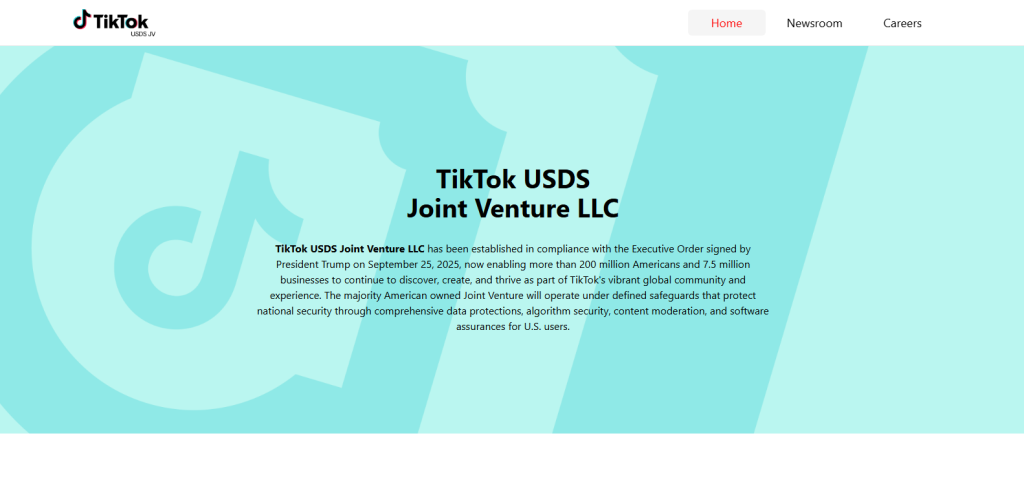
The finalized establishment of the TikTok USDS Joint Venture today represents the end of a years-long battle to keep the app alive in America. While the deal avoids a total ban, it introduces a level of data disclosure that has users hitting the “Delete” button in record numbers.
Why the Update is Triggering a Viral Panic
In the traditional social media landscape, platforms often hide their data collection in vague legalese. TikTok’s new 2026 terms do the opposite, they are startlingly specific.
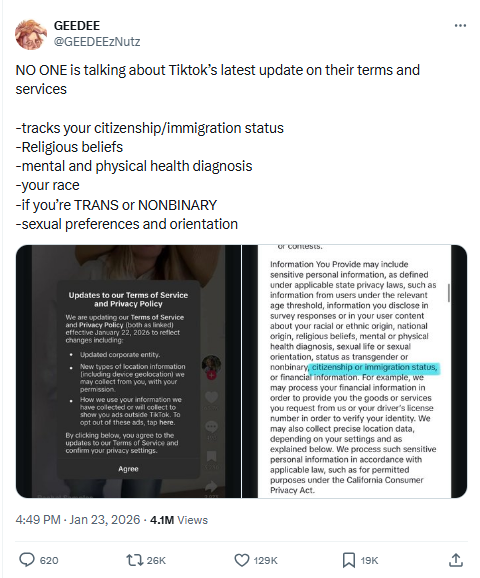
For the first time, the policy explicitly names “citizenship or immigration status” as data the app can “collect, use, and disclose.” Coming at a time of heightened immigration enforcement across the U.S., the “freak out” isn’t just about privacy, it’s about personal safety. Critics argue that by agreeing to these terms, users are essentially handing a digital map of their legal status to a company now overseen by U.S. federal interests.
The “USDS” Architecture: What Has Changed?
The transition to TikTok USDS Joint Venture LLC isn’t just a name change; it’s a total structural pivot. The “Spark” behind this update is a direct result of the September 2025 Executive Order that mandated American control over the algorithm.
- The Joint Venture is currently retraining the recommendation engine on U.S.-only data to satisfy national security requirements.
- While ByteDance retains a 19.9% stake, the 80.1% American/Global ownership as per reuters means the platform must now comply with the California Consumer Privacy Act (CCPA), which mandates the explicit listing of sensitive categories like immigration status.
- Unlike the previous Chinese-owned era, the new entity is an American company. If a federal agency requests data on specific demographics, the USDS board, which includes top U.S. tech executives, is legally bound to comply.
The “Interoperability” Catch
Despite the U.S. takeover, the new terms confirm that TikTok will maintain “global interoperability.” This means that while your data sits in an Oracle cloud in Texas, it still interacts with the global ByteDance ecosystem to ensure you can see content from Tokyo or London.
This “open door” policy is designed to keep the app’s “addictive” quality alive, but it creates a complex legal web. As one privacy advocate put it: “The data is protected from China, but it’s now more exposed to Washington than ever before.”
Now what will happen: Privacy or Presence?
The new 2026 cadence for TikTok mirrors the “radical transparency” seen in other tech giants. The company’s new stance is: “The terms are clear. If you want the FYP, you have to accept the profile we built for you.” As the hashtag #TikTokPrivacy trends with over 1.2 billion views this week, users are left with a stark choice: Accept the new U.S.-led surveillance era, or walk away from the world’s most popular stage.
It’s easy to get caught up in the privacy panic, but for many, the focus remains on results. Balancing these new security terms with a solid content strategy is key, which is why revisiting the fundamentals of TikTok for your brand is more important now than ever.