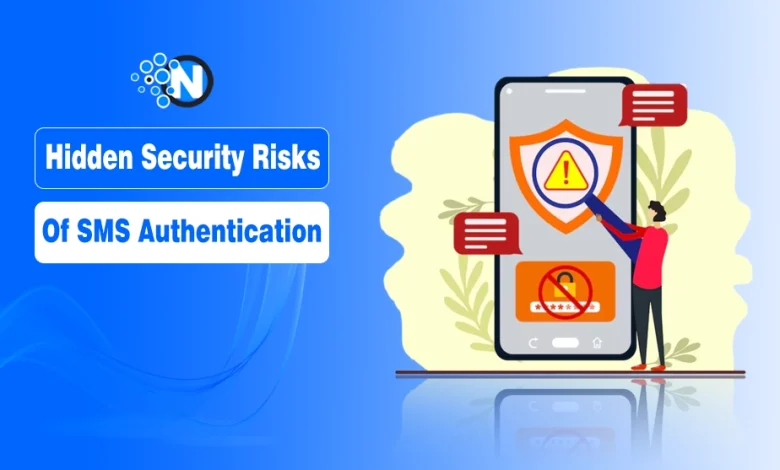
Did you know that SMS authentication, the security method you likely use daily, can be intercepted by hackers without sophisticated tools?
Surprisingly, despite its widespread adoption across banking apps, social media platforms, and email services, SMS authentication contains significant security flaws that most users completely overlook. When you receive that 6-digit code on your phone, you’re actually participating in one of the most vulnerable security systems still in common use today. The National Institute of Standards and Technology (NIST) has actually deprecated SMS as a secure authentication method since 2016.
Unfortunately, many organizations continue implementing SMS verification because of its convenience and familiarity. This creates a dangerous situation where users feel protected while actually remaining exposed to risks like SIM swapping, SMS interception, and sophisticated phishing attacks. In fact, account takeovers through SMS vulnerabilities have increased by 37% in the past year alone.
This article explores how SMS authentication works, reveals its hidden security weaknesses, explains why it persists despite these flaws, and presents more secure alternatives you should consider adopting immediately.
How SMS Authentication Works in Practice?
SMS authentication stands as one of the most frequently implemented forms of two-factor authentication (2FA) across digital platforms. This seemingly straightforward process involves several technical steps behind the scenes, creating a layer of security beyond traditional passwords.
1. SMS OTP Flow: From Login to Code Entry
The SMS One-Time Password (OTP) authentication process follows a specific sequence of events:
- Initial credentials entry – A user begins by entering their username and password on a login screen.
- OTP generation – After validating the initial credentials, the system dynamically generates a unique, temporary code, typically 6-8 digits.
- Delivery via text message – The system sends this code to the user’s registered mobile number through SMS.
- User verification – The user receives and enters the code into the prompted field on the application or website.
- Authentication completion – The system validates the entered code against the generated OTP, granting access upon successful verification.
This OTP remains valid for a limited duration, typically between 2-5 minutes, after which it automatically expires for security purposes. Most systems also limit users to three attempts before requiring a new code request. Furthermore, once a new code is issued, any previous codes become immediately invalid.
The technical implementation often uses specialized libraries like pyotp, which creates hexadecimal-encoded tokens through secure random number generators. A standard 6-character hexadecimal OTP creates approximately 16.8 million possible combinations, providing substantial security while remaining manageable for users.
2. Possession-Based Authentication Explained
SMS authentication belongs to the “possession factor” category of authentication methods. This security principle operates on verifying identity through “something you have” rather than “something you know” (like passwords) or “something you are” (like biometrics).
In essence, possession-based authentication confirms your identity through your ownership of a specific device in this case, the mobile phone associated with your registered number.
Consequently, unauthorized access theoretically requires both stealing your password and physically possessing your phone.
Two main types of OTPs exist within possession-based authentication:
- Time-based OTP (TOTP) – These codes are generated using a secret key combined with the current time, creating codes valid for short durations (typically 30-120 seconds).
- HMAC-based OTP (HOTP) – Developed by the Initiative for Open Authentication (OATH), this method uses a counter that increments with each OTP request, creating a 6-8 digit number through cryptographic hash functions.
Although SMS authentication provides convenience through familiarity and universal accessibility requiring no app installations or special configurations, this accessibility comes with significant security trade-offs that we’ll explore in subsequent sections. Additionally, the implementation simplicity makes SMS authentication particularly attractive for businesses seeking straightforward security solutions.
The Hidden Risks Behind SMS Authentication
Behind SMS authentication’s convenient facade lies a series of critical security vulnerabilities that many users remain unaware of. Unfortunately, the technology was never designed with security as its primary function.
1. Unencrypted SMS Transmission Vulnerabilities
SMS messages travel across networks entirely unencrypted, making them susceptible to interception. Unlike modern messaging apps, standard text messages lack end-to-end encryption, allowing anyone with access to the telecommunications infrastructure to read message contents.
This vulnerability extends to authentication codes sent via text. Even users searching for safer alternatives, such as fast free SMS verification tools, remain at risk if verification still relies on traditional SMS delivery channels.
The telecommunications infrastructure relies on an outdated protocol called Signaling System 7 (SS7), developed in 1988 and last updated in 1993. Hackers can exploit SS7 vulnerabilities to intercept and redirect SMS messages intended for legitimate recipients.
This technique, known as an SS7 attack, allows attackers to capture one-time passwords without the victim’s knowledge. These vulnerabilities prompted a serious warning from both the FBI and the Cybersecurity and Infrastructure Security Agency (CISA) about Chinese state-sponsored hackers exploiting SMS weaknesses in a “broad and significant cyber-espionage campaign” targeting telecommunications networks.
2. SIM Swapping and Number Porting Attacks
SIM swapping represents one of the most dangerous threats to SMS authentication. In this attack, criminals convince mobile carriers to transfer a victim’s phone number to a SIM card under their control. Once successful, they receive all calls and texts, including authentication codes, meant for the victim.
The attackers typically begin by gathering personal information through social media, phishing, or data breaches. Armed with these details, they impersonate the victim to customer service representatives. The FBI’s Internet Crime Complaint Center received 982 complaints specifically about SIM swapping in 2024, with reported losses exceeding $26 million.
Notably, some attackers have even recruited telecom employees as insider threats, sometimes paying up to $3,000 per successful SIM swap.
3. SMS Spoofing and Phishing Risks
SMS spoofing occurs when attackers disguise text messages to appear as though they’re from trusted sources. They accomplish this by altering the sender ID in the SMS header or using compromised equipment. According to the FTC, text message scams and SMS spoofing attacks resulted in reported consumer losses of $330 million in 2022.
Smishing, a combination of “SMS” and “phishing,” has become increasingly prevalent, with 75% of organizations experiencing such attacks in 2023. These attacks are particularly effective because people are more likely to click links in text messages (8.9-14.5% click-through rate) compared to emails (2% average click rate).
Attackers frequently use these techniques to conduct multi-factor authentication (MFA) fraud. After obtaining a victim’s username and password, they attempt to steal the verification code required to access the account, often by posing as a friend needing help with account recovery.
4. Online Account Takeover via Synced Devices
Many wireless providers allow users to view text messages via web portals, creating additional vulnerability points. If these online accounts aren’t properly secured with strong authentication, attackers may monitor them for incoming SMS authentication codes.
Moreover, synchronized devices pose significant risks. When text messages sync across multiple devices (smartphones, tablets, laptops), each becomes a potential access point for attackers. Lost or stolen devices that remain logged into accounts create additional exposure, especially considering how many users keep their devices logged into banking apps and social media accounts.
These combined vulnerabilities explain why the National Institute of Standards and Technology (NIST) removed SMS-based authentication from its recommended authentication methods list back in 2016.
Why SMS 2FA Is Still Widely Used Despite the Risks?
Despite the significant vulnerabilities outlined above, SMS authentication continues to dominate the two-factor authentication landscape. The usage of SMS-based 2FA has even grown 9% in the last two years. This persistence stems from several practical considerations that often outweigh security concerns.
1. Ease of Use and Familiarity for End Users
Convenience drives adoption more powerfully than security considerations for most users. SMS authentication requires no additional apps or hardware, working on any mobile device capable of receiving text messages. Given that 96% of Americans have mobile phones capable of receiving text messages, SMS 2FA offers nearly universal accessibility.
The familiarity factor cannot be underestimated. Most users already understand how to receive and read SMS messages, eliminating any learning curve. Furthermore, users can set up SMS authentication 2.6 times faster than authenticator apps, making it the path of least resistance for adding security.
As such, many users appreciate receiving authentication codes directly via SMS without needing to install specialized apps. Even those who aren’t tech-savvy find the process straightforward:
- Receive the SMS code
- Enter it into the login screen
- Gain immediate access to their account
- Low Barrier to Implementation for Businesses
2. Low Barrier to Implementation for Businesses
For organizations, SMS authentication offers a compelling combination of simplicity, cost-effectiveness, and broad reach. The implementation requires minimal infrastructure changes, making it particularly attractive for smaller businesses with limited resources.
Currently, 56% of businesses rely on SMS-based 2FA for enhanced security, largely because it integrates seamlessly into existing login processes. Businesses value its quick implementation and broad compatibility across different platforms and services.
Additionally, SMS authentication scales effectively as companies grow, with flexible pricing models that accommodate both small-scale and large-scale implementations. This balance between security improvement and operational practicality makes it a logical choice for many decision-makers.
3. Perceived Security vs Actual Risk
Fundamentally, SMS authentication significantly improves security compared to passwords alone. According to Google, SMS 2FA provides 100% protection from automated bots, 96% protection from large-scale phishing attacks, and 76% protection from targeted attacks.
Microsoft claims 2FA in any form is effective at preventing 99.9% of attacks on accounts. Nevertheless, security experts characterize SMS authentication as a middle ground, not the strongest option available, but certainly better than single-factor authentication.
Even NIST, after initially considering deprecating SMS as a 2FA method in 2016, ultimately kept it as a recommendation, acknowledging that “Leveraging SMS to mobile as a second factor today is less effective than some other approaches, but more effective than a single factor”.
This balance between improved security and usability represents the core reason for SMS authentication’s continued popularity. For both users and organizations, the modest security gains often justify the minimal friction added to the login process.
More Secure Alternatives to SMS Authentication
As security threats evolve, several robust alternatives to SMS authentication have emerged that offer significantly higher protection against common attack vectors.
1. FIDO2/WebAuthn for Phishing-Resistant MFA
FIDO2/WebAuthn stands as the gold standard for secure authentication today. Developed by the FIDO Alliance and now published by the World Wide Web Consortium (W3C), this protocol uses advanced cryptography that makes phishing attacks virtually impossible. Unlike SMS, FIDO authentication employs public-key cryptography where the private key never leaves your device, eliminating credential theft risk. This technology works through:
- Your device’s built-in security features like fingerprint or facial recognition
- Hardware security keys (physical tokens connected via USB or NFC)
- Platform authenticators embedded directly in laptops or mobile devices
CISA explicitly identifies FIDO2/WebAuthn as “the only widely available phishing-resistant authentication” method currently available.
2. Authenticator Apps with TOTP (e.g., Google Authenticator)
Time-based One-Time Password (TOTP) apps generate verification codes directly on your device without transmitting them over networks. This approach offers multiple security advantages over SMS:
- First, TOTP codes refresh every 30-60 seconds versus SMS codes that typically remain valid for 10 minutes.
- Second, authenticator apps function entirely offline, eliminating interception risks.
- Third, they’re immune to SIM swapping attacks because they’re tied to the specific device rather than a phone number.
3. Biometric Authentication via Face or Fingerprint
Biometric verification utilizes unique physical characteristics to confirm identity. Modern implementations on smartphones offer substantial security benefits with false acceptance rates typically below 1 in 1,000. Plus, because biometrics require the user’s physical presence, remote account takeovers become significantly more difficult.
4. Push Notification-Based Verification
Push authentication sends verification requests directly to a secure application on your device instead of using SMS channels. Upon receiving the notification, users can view login attempt details (including location and device information) before approving or denying access with a single tap.
Organizations implementing push notification authentication experience 80% fewer successful phishing attacks compared to password-only systems.
5. Encrypted Messaging Apps like WhatsApp OTP
WhatsApp OTP delivers verification codes through end-to-end encrypted channels rather than unencrypted SMS. This approach maintains the familiar code-entry experience while addressing fundamental SMS security flaws. Additionally, WhatsApp authentication typically costs less than standard business SMS while offering greater reliability and security.
When selecting authentication methods, remember that security experts consistently rank these alternatives above SMS authentication, with FIDO2/WebAuthn considered the most secure option overall.
Cost and Compliance Implications of SMS Authentication
Beyond security concerns, businesses implementing SMS authentication must weigh crucial cost and compliance factors that directly impact their bottom line.
1. SMS Delivery Costs at Scale
The affordability of SMS authentication changes dramatically as implementation scales. Twilio, a leading SMS provider, charges $0.05 per successful verification plus $0.01 per SMS for US numbers.
However, these base costs multiply rapidly for international deployments, with rates varying significantly by region. For instance, SMS costs per message in the UK typically hover around €0.03971, whereas in Indonesia, rates range between €0.30000 and €0.34571.
Furthermore, hidden expenses often catch businesses unprepared. These include:
- Ongoing infrastructure maintenance (typically 15-20% of operations budgets)
- Recovery and support overhead costs
- Engineering resources for implementing security features like rate limiting
As messages increase, even small efficiency problems become substantial financial drains. Many organizations underestimate how automated workflows can unexpectedly double outbound messaging overnight.
2. Regulatory Warnings from NIST and CISA
Government security authorities have issued formal advisories against SMS-based authentication. The National Institute of Standards and Technology (NIST) deprecated SMS for secure authentication back in 2016, citing fundamental vulnerabilities.
Likewise, the Cybersecurity and Infrastructure Security Agency (CISA) explicitly directs federal agencies not to use SMS as a second factor, stating plainly: “SMS messages are not encrypted, a threat actor with access to a telecommunication provider’s network who intercepts these messages can read them.”
3. Compliance with GDPR and Industry Standards
Non-compliance with data protection regulations carries substantial penalties. Under GDPR, organizations face fines up to 4% of annual global turnover or €20 million, whichever is greater. Plus, all breaches must be reported within 72 hours.
GDPR compliance requires implementing appropriate technical measures. The European Union Agency for Network and Information Security (ENISA) specifically recommends two-factor authentication for accessing systems that process personal data.
They further advise that “personal data stored at the mobile device should be encrypted,” highlighting additional requirements when SMS authentication involves storing sensitive information on phones.
Final Thoughts
SMS authentication, while convenient and familiar, clearly presents significant security vulnerabilities that users should not overlook. Throughout this article, we’ve examined how SMS-based verification exposes users to risks such as SS7 protocol exploits, SIM swapping attacks, and message interception.
Consequently, anyone relying solely on SMS codes for account security remains vulnerable despite feeling protected. Security experts and government agencies like NIST and CISA have explicitly warned against SMS authentication for years.
Nevertheless, both businesses and consumers continue embracing this method due to its accessibility, simplicity, and low implementation costs. This widespread adoption persists primarily because SMS verification still offers better protection than passwords alone, stopping 96% of large-scale phishing attempts and nearly all automated attacks.