
Imagine: you’re three hours into manually pipetting samples, your hand’s cramping, and you’ve lost count of which well you’re on. Sound familiar?
Labs everywhere are bringing in robotic systems that handle the grunt work while scientists focus on actual science. According to FortuneBusinessInsights, the global laboratory automation market size is projected to grow from USD 10.35 billion in 2025 to USD 44.31 billion by 2032, showing a CAGR of 9.43%.
The change isn’t subtle either. I am talking about accuracy levels that humans simply can’t maintain over long stretches, speeds that turn week-long projects into overnight runs, and consistency that makes reproducibility headaches disappear.
But let’s be clear about something upfront. This isn’t some dystopian takeover where machines replace thinking scientists. Instead, it’s more like getting a tireless assistant who never complains about doing the boring stuff and never makes sloppy mistakes when fatigue sets in.
In this blog post, you will learn how these technologies are boosting accuracy and efficiency, and why they’re becoming indispensable in 2026
The Accuracy Problem in Traditional Lab Work
Here’s an uncomfortable truth: even experienced technicians introduce errors. It’s not about skill or dedication; it’s just biology. After hours of repetitive pipetting, your hand gets tired, your focus drifts, and tiny inconsistencies creep in. Research shows manual pipetting typically varies by 5-10%, sometimes more with really small volumes. Think about what that means for your data. Those warm fingers holding the pipette? They’re changing reagent temperatures. That slight hesitation before dispensing?
It affects how much liquid actually transfers. When you’re working with precious samples or expensive compounds, these little variations add up fast. Different people on your team will handle the same protocol slightly differently, no matter how detailed your SOPs are. A liquid handling robot removes this whole problem by treating every single transfer identically, whether it’s the first sample or the five hundredth.
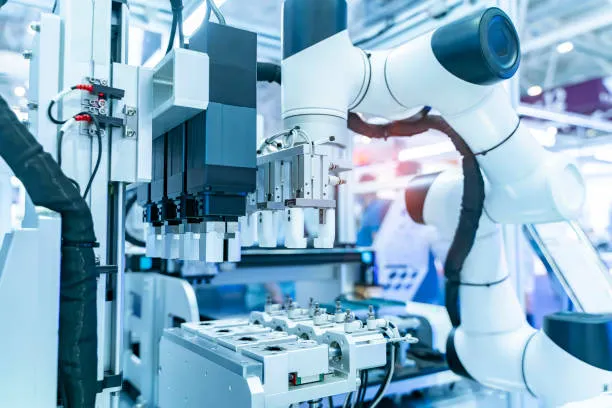
How Smart Robotics Boost Accuracy and Efficiency in Labs
Speed and Throughput Gains
What takes a person maybe two full days of solid work, a robotic system can finish before lunch. That’s not an exaggeration. High-throughput screening projects that once required entire teams working in shifts now run mostly unattended. Think about drug discovery work where you’re testing thousands of compounds. Doing that manually? You’re looking at weeks, maybe months. Automated? Days, sometimes less.
The real kicker, though, isn’t just raw speed. These systems don’t need coffee breaks or sleep. Set up an overnight run and wake up to completed data sets instead of picking up where you left off yesterday. Your lab essentially operates around the clock without adding staff or paying overtime. For competitive research where publishing first matters enormously, that time advantage can be the difference between breakthrough and footnote.
Consistency Across Complex Workflows
Complex assays are where manual methods really struggle. You’ve got multiple reagents, specific timing windows, and temperature requirements, all happening across dozens or hundreds of samples simultaneously. One person might add reagent A at exactly 10 seconds; another waits 15. Someone gets distracted, and an incubation runs 30 seconds long. These tiny deviations compound across steps until your data’s all over the place and you can’t tell if variations are real biology or just protocol drift.
Robots don’t have these problems. They execute each step precisely as programmed, treating sample 1 and sample 500 identically. When you need to reproduce an experiment months later or have colleagues in another lab replicate your work, that consistency becomes invaluable. The system doesn’t suddenly “do it differently” because it’s been a while or because someone new is running it.
Data Integration and Traceability
Modern automation does something manual workflows can’t touch: perfect documentation of everything. Which tip was used where, what exact volume was transferred, when each step happened, and which reagent lot went into each well? All recorded automatically, no notebooks to decipher later. This matters way more than it might seem initially. When reviewers question your methods or you’re tracking down why Wednesday’s batch worked better than Thursday’s, having complete digital records is like having a time machine.
The data flows straight into your LIMS without transcription errors or missing notes. For regulated industries, this audit trail isn’t just nice; it’s required. FDA doesn’t accept “we’re pretty sure we did it right” as documentation. Everything connects too, so you can pull up the entire history of any sample from collection through final analysis without hunting through multiple systems or paper files.
Cost Savings Beyond Labour
Yes, buying a robotic system costs real money upfront. But here’s what happens after that initial bite. Reagent waste drops dramatically because robots dispense exact volumes every time. No more “oops, overfilled that well” or tips that retain expensive compounds. Failed experiments that need repeating? Way less common when execution is consistent. Your precious samples last longer since volumes are optimised.
Some labs report their systems pay for themselves within 18 months just from reagent savings alone. Then there’s the less obvious stuff. Fewer workplace injuries mean lower insurance premiums. Less exposure to hazardous materials reduces safety costs. When you can handle more throughput without expanding staff proportionally, per-sample costs plummet. The math gets pretty compelling once you factor in everything beyond just labour hours.
Flexibility and Scalability
Lab priorities shift constantly. New projects emerge, funding changes direction, and techniques evolve. Good news: modern robotic platforms adapt surprisingly well to this reality. Most use modular designs that reconfigure for different applications without junking the whole system and starting over. Software updates add new capabilities, sometimes overnight. Compare that to retraining staff on completely new procedures, which takes weeks and never quite reaches the same consistency across people.
Need to scale up? Often it’s just programming more runs rather than hiring additional technicians and going through onboarding. Even smaller labs can start with basic automation and expand as needs grow or budgets allow. The flexibility means your investment stays relevant as research directions evolve instead of becoming obsolete when the science moves forward.
Safety Enhancements
Working with nasty chemicals and infectious agents carries risks that automation largely eliminates. Robots don’t inhale toxic fumes or get chemical burns. They handle radioactive materials, volatile solvents, and biohazards without protective gear or exposure monitoring. Most operate inside enclosed spaces that contain potential problems instead of exposing the whole lab. There’s also the stuff people don’t think about much: repetitive strain injuries.
Ask any longtime lab tech about their wrists and elbows after years of manual pipetting. Those problems essentially vanish when robots take over high-volume work. Emergency situations get safer too since automated systems can shut down cleanly if something goes wrong, containing spills or stopping reactions before they escalate. The cumulative effect creates work environments where people can focus on science instead of constantly managing hazard exposure.
Real-World Applications Across Disciplines
This technology isn’t limited to specific fields anymore. Clinical labs process thousands of patient samples daily for diagnostics that directly impact treatment decisions. Genomics facilities preparing samples for DNA sequencing would be completely overwhelmed without automation. Pharmaceutical companies use robotics throughout drug development, from initial compound screening through final formulation testing.
Academic labs, even modestly funded ones, increasingly adopt automation for routine tasks that used to eat up grad student time. Agricultural biotech operations handle plant tissue culture and genetic modification at scales impossible manually. The applications span from massive industrial operations down to benchtop units serving niche applications. Basically, wherever precision and repeatability matter, which is pretty much everywhere in modern science, automation proves itself worth the investment.
Implementation Considerations
Jumping into automation without planning is asking for trouble. Start by figuring out which processes actually benefit from robotics, because not everything does. Some tasks genuinely work better with human judgement and flexibility. Your team needs proper training, not just a quick demo, because even automated systems require operators who understand both the science and the machinery. Integration with existing equipment takes thought.
You don’t want automation islands that can’t talk to your other systems. Maintenance and support arrangements deserve attention before things break, not after. Make sure you’ve got adequate space planned out, remembering that robots need room and humans still need to work around them. Change management matters too because some people will resist workflow changes, and you need buy-in for successful adoption. Organisations that think through these details upfront find that implementation goes smoother and delivers promised benefits faster.
Conclusion
Smart robotics in labs represent something bigger than just another equipment. They’re changing the fundamental nature of how research operates. You get accuracy that exceeds what human hands can maintain, efficiency that multiplies what your team accomplishes, and consistency that makes reproducibility arguments disappear. The technology keeps advancing too, bringing advanced capabilities to more applications at prices that don’t require huge budgets.
Labs adopting automation position themselves competitively for ambitious projects that would be impractical otherwise. But remember what this is really about. It’s not replacing scientists with machines. It’s partnering human creativity with robotic precision. That combination unlocks possibilities neither achieves alone, pushing boundaries of what’s scientifically possible and accelerating discovery across every research domain. The revolution isn’t coming. It’s already here.