Customer feedback plays a major role in purchasing decisions today. Whether you’re running a SaaS startup, an eCommerce store, a local business, or a multi-location brand, your online reputation directly affects customer trust, search visibility, and revenue growth.
Monitoring feedback across Google, social media platforms, business directories, and third-party websites quickly becomes overwhelming as a business scales. That’s why many organizations invest in reputation management software to automate review collection, monitor customer sentiment, and respond to feedback more efficiently.
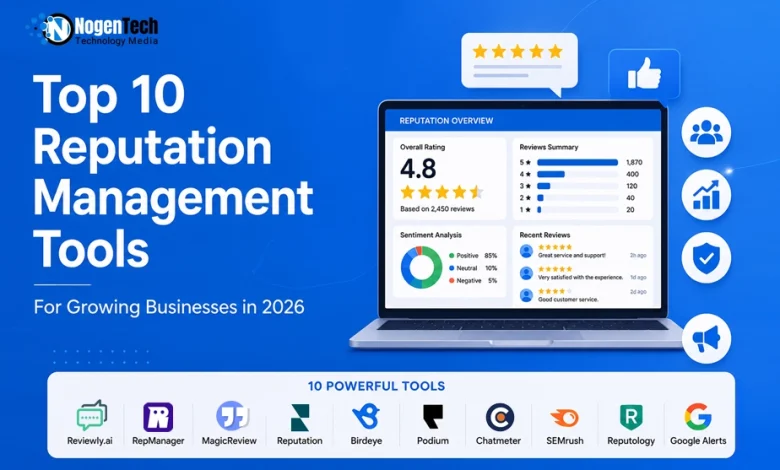
After evaluating platform capabilities, customer feedback, market adoption, and feature sets, here are some of the most notable reputation management solutions businesses should consider in 2026.
What is a Reputation Management Tool?
An online reputation management tool is software that helps businesses monitor, manage, and improve their brand reputation across review sites, search engines, social media platforms, and business directories from a single dashboard.
Instead of manually checking multiple platforms, businesses can use online reputation tools to:
- Monitor customer reviews and brand mentions in real time
- Collect new reviews from satisfied customers
- Respond to feedback across multiple channels from one place
- Track customer sentiment and reputation trends
- Manage listings and business information across directories
- Generate performance reports and reputation insights
- Automate review request campaigns via reputable emails and SMS
- Use AI-powered response suggestions to save time
Best Reputation Management Tools to Improve Your Brand Reputation
Here are some of the best online reputation management tools for businesses to drive value:
- Reviewly.ai – Best for Google Review Automation
- RepManager – Best for Multi-Location Businesses
- MagicReview – Best for Review Collection
- Reputation – Best for Enterprise Reputation Management
- Birdeye – Best for Multi-Location Reputation Management
- Podium – Best for Customer Communication and Reviews
- Chatmeter – Best for Local SEO and Reputation Monitoring
- SEMrush – Best for Brand Monitoring and Online Visibility
- Reputology – Best for Review Monitoring
- Google Alerts – Best Free Reputation Monitoring Tool
1. Reviewly.ai – Best for Google Review Automation
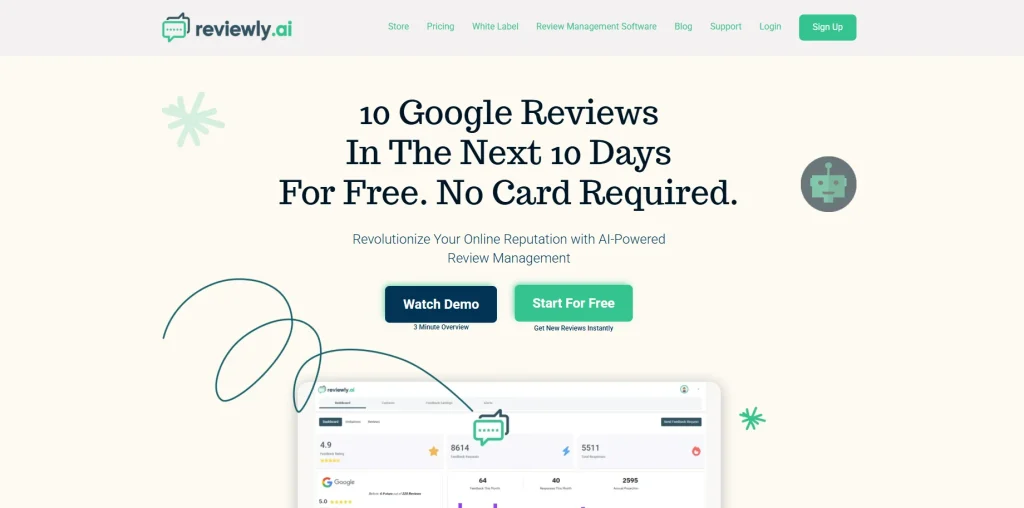
Reviewly.ai focuses on helping businesses generate, monitor, and manage customer reviews at scale.
The platform combines automated review requests with AI-powered response generation, allowing businesses to engage customers without creating additional administrative work. Among its notable features is international SMS review collection, which supports customer outreach across more than 100 countries.
Businesses can also use physical review-generation tools such as QR codes, NFC-enabled cards, and review displays to encourage customer participation.
Best For: Businesses seeking scalable Google review management and customer feedback automation.
Key Features
- Automated review requests
- AI-generated responses
- Sentiment analysis
- SMS review collection
- QR code and NFC review tools
- Multi-location support
2. RepManager – Best for Multi-Location Businesses
Managing reviews across multiple business locations can become difficult without centralized oversight.
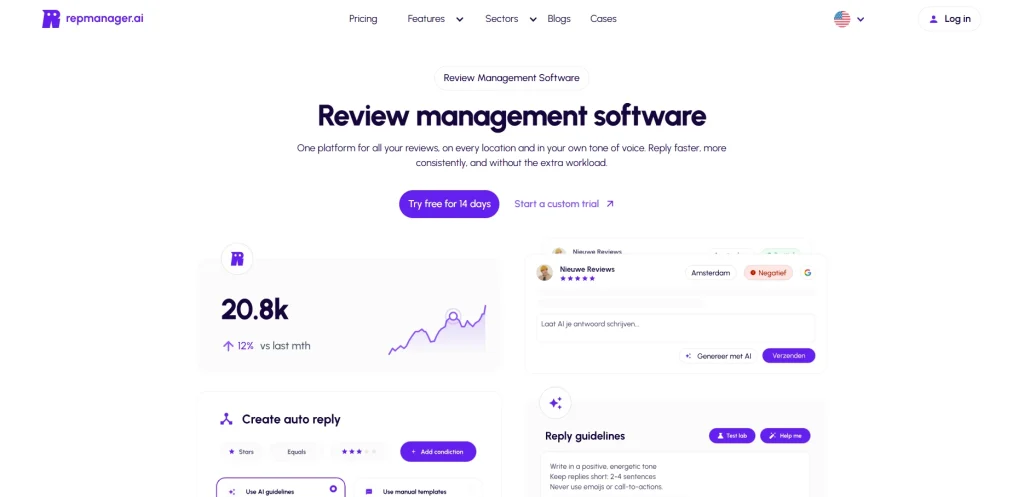
RepManager addresses this challenge by collecting reviews from various locations into a single dashboard. The platform also includes AI-powered sentiment analysis and response recommendations designed to help businesses maintain consistent communication across locations.
Best For: Franchises, retail chains, automotive businesses, and hospitality brands.
Key Features
- Multi-location review management
- Centralized dashboard
- AI response suggestions
- Sentiment tracking
- Location-specific performance monitoring
3. MagicReview – Best for Review Collection
MagicReview focuses on simplifying the review acquisition process.
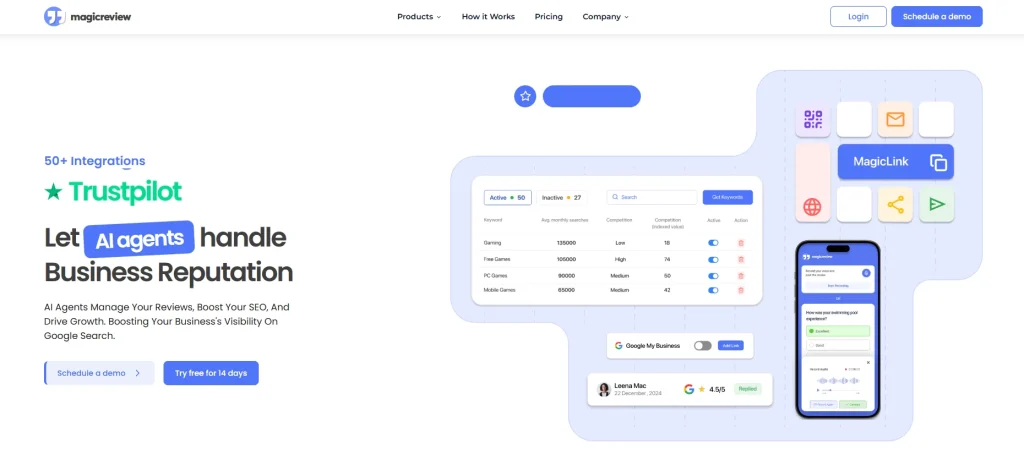
The platform uses QR codes and customer-friendly review workflows to encourage more feedback. One of its most distinctive capabilities is review routing, which allows businesses to direct positive reviews toward public platforms while privately collecting improvement-related feedback.
This approach helps organizations gather insights while encouraging satisfied customers to share their experiences publicly.
Best For: Small and medium-sized businesses focused on increasing review volume.
Key Features
- QR code review collection
- AI-assisted review generation
- Feedback routing system
- Customer experience insights
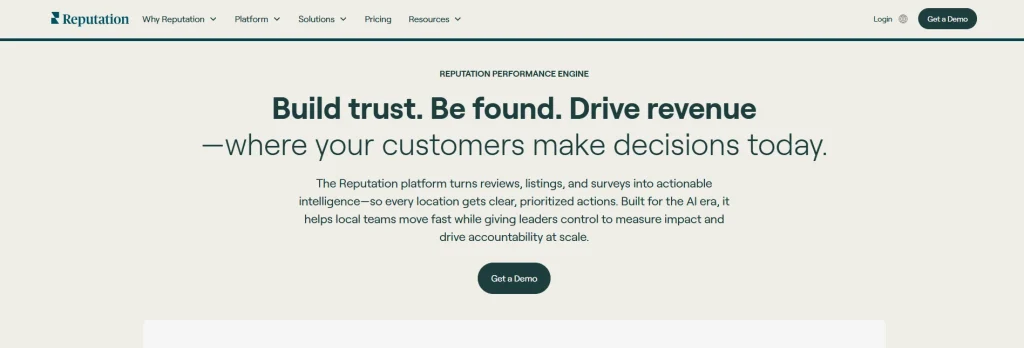
4. Reputation – Best for Enterprise Reputation Management
Reputation is one of the most established online reputation management tools in the industry.
Beyond review management, the platform provides customer experience analytics, social media monitoring, survey management, and sentiment tracking. Its enterprise-focused capabilities make it suitable for organizations managing large-scale customer interactions across multiple channels.
Major global brands use the platform to connect customer feedback with operational improvements and business decision-making.
Best For: Large enterprises and organizations managing customer experience at scale.
Key Features
- Review monitoring
- Customer sentiment analysis
- Survey management
- Social listening
- Enterprise reporting
5. Birdeye – Best for Multi-Location Reputation Management
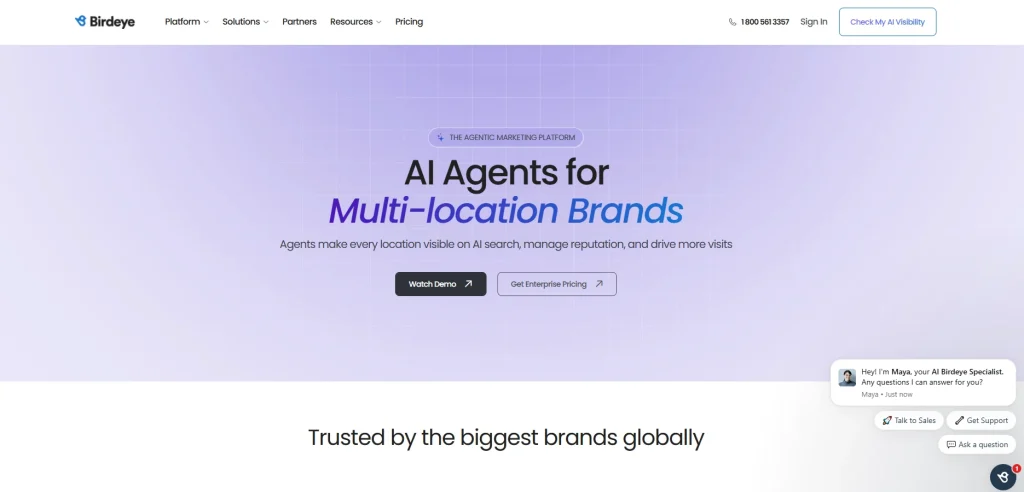
Birdeye helps businesses collect customer reviews, monitor online feedback, manage business listings, and improve customer engagement from a centralized platform.
The software combines review management, messaging, surveys, and customer experience tools, making it easier for organizations to maintain a strong online presence across multiple locations.
One of Birdeye’s biggest strengths is its ability to automate review requests and provide detailed reporting on customer sentiment and engagement trends. Businesses can track feedback across major review platforms while identifying opportunities to improve customer experience and brand perception.
Best For: Multi-location businesses, healthcare providers, retail brands, professional service firms, and organizations focused on customer experience management.
Key Features
- Automated review generation
- Multi-location reputation management
- Customer surveys
- Business listing management
- Messaging and engagement tools
- Reputation analytics and reporting
6. Podium – Best for Customer Communication and Reviews
Podium helps businesses manage customer interactions, collect reviews, and improve their online reputation through a unified communication platform.
The software allows businesses to send review requests through text messaging, making it easier to collect customer feedback and increase review volume. In addition to reputation management, Podium offers messaging, payment collection, and customer engagement tools that help businesses streamline customer communication.
Its focus on convenience and responsiveness makes it a popular choice among businesses looking to strengthen customer relationships while improving review performance.
Best For: Local businesses, service providers, healthcare practices, and organizations focused on customer communication.
Key Features
- SMS review requests
- Customer messaging platform
- Review monitoring
- Payment collection tools
- Customer engagement automation

7. Chatmeter – Best for Local SEO and Reputation Monitoring
Chatmeter is an online reputation management tool designed to help businesses monitor customer feedback, manage reviews, and improve local search visibility.
The platform combines review management, social listening, competitive benchmarking, and local SEO tools within a single dashboard. Businesses can track customer sentiment across multiple channels while identifying trends that may affect their reputation and online performance.
Its location-focused capabilities make it particularly valuable for brands operating in multiple markets.
Best For: Multi-location businesses, franchises, retailers, restaurants, and healthcare organizations.
Key Features
- Review monitoring
- Local SEO management
- Social media monitoring
- Competitive benchmarking
- Sentiment analysis
- Performance reporting

8. SEMrush – Best for Brand Monitoring and Online Visibility
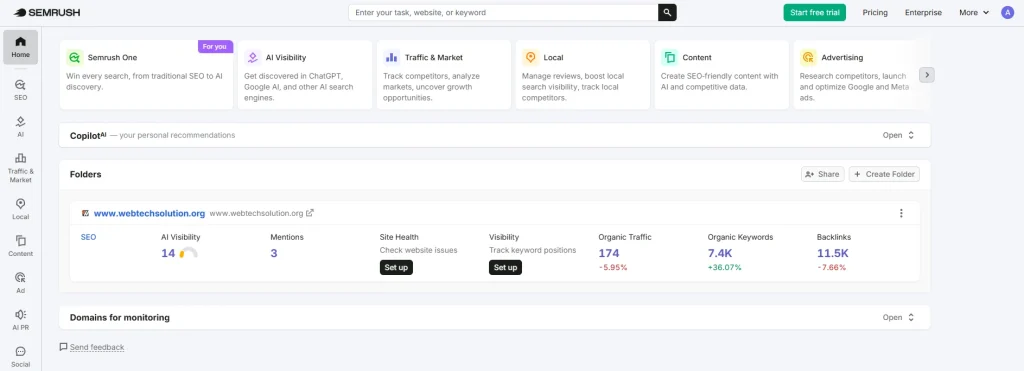
SEMrush is widely known as a digital marketing platform, but it also provides valuable online reputation management capabilities.
Through its brand monitoring features, businesses can track brand mentions, monitor online conversations, and identify reputation-related opportunities across the web. The platform also helps organizations understand how their online visibility influences brand perception and customer trust.
For businesses already using SEMrush for SEO and marketing, its monitoring tools provide additional insight into reputation performance.
Best For: Marketing teams, agencies, SaaS companies, and businesses focused on brand visibility.
Key Features
- Brand mention monitoring
- Competitor tracking
- Online visibility analysis
- Media monitoring
- SEO and reputation insights
- Reporting tools
9. Reputology – Best for Review Monitoring
Reputology specializes in helping businesses monitor and manage customer reviews across multiple review platforms.
The software centralizes customer feedback into a single dashboard, making it easier for businesses to respond to reviews and track reputation trends. It also provides reporting tools that help organizations identify recurring customer concerns and monitor overall review performance.
For businesses comparing online reputation tools, Reputology remains a dedicated solution focused on review management and customer feedback.
Best For: Hospitality businesses, healthcare organizations, retail brands, and customer service-focused companies.
Key Features
- Review monitoring
- Review response management
- Customer feedback tracking
- Reputation reporting
- Multi-location support
- Performance analytics
10. Google Alerts – Best Free Reputation Monitoring Tool
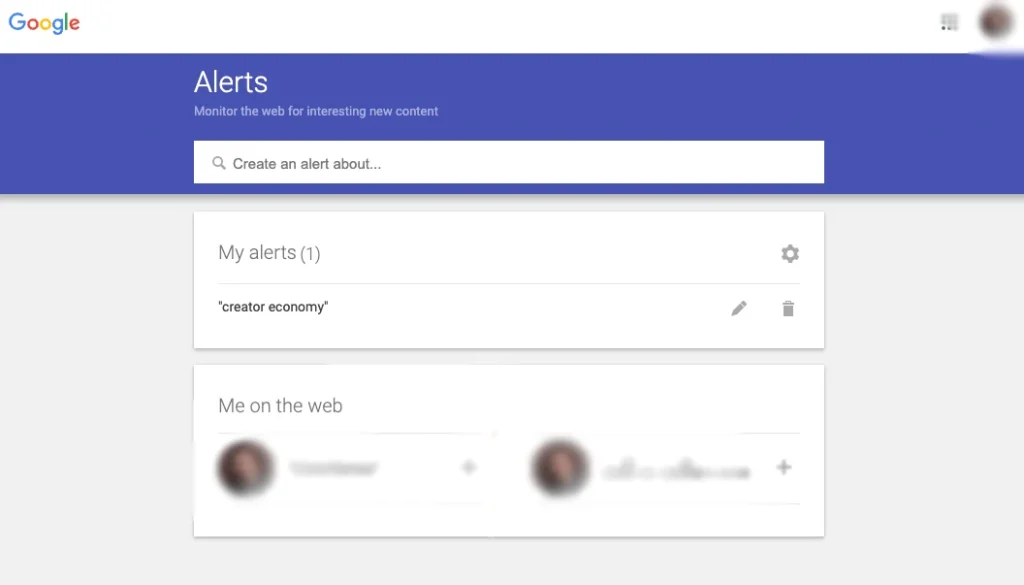
Google Alerts is one of the most widely used free online reputation management tools for monitoring brand mentions across the web.
Users can create alerts for company names, products, executives, or industry-related keywords and receive notifications whenever new content is indexed by Google. While it does not offer advanced reputation management features, it remains a practical option for businesses looking to monitor their online presence without additional software costs.
For startups and small businesses, Google Alerts can serve as an accessible entry point into reputation monitoring.
Best For: Small businesses, startups, entrepreneurs, and organizations looking for free online reputation management tools.
Key Features
- Free brand monitoring
- Keyword tracking
- Email notifications
- Web mention alerts
- Custom alert settings
Why Reputation Management Software Matters?
A business’s online reputation software matters because it directly impacts customer trust, search visibility, and revenue.
Whether you’re using premium or free online reputation management tools, managing customer feedback is essential for long-term growth. A strong reputation can help businesses:
- Increase customer trust
- Improve local search visibility
- Generate more leads and conversions
- Strengthen brand credibility
- Encourage positive reviews
- Identify customer experience issues faster
As businesses grow, monitoring reviews and brand mentions across multiple platforms becomes more challenging. That’s why many organizations use online reputation management tools and online reputation tools to manage feedback from a single dashboard.
Most reputation management online tools include features such as:
- Review monitoring
- Review request automation
- AI-powered response suggestions
- Sentiment analysis
- Reputation reporting
Businesses looking for budget-friendly options can also explore free reputation management tools and online reputation management tools with free plans offered by some providers.
Ultimately, the right online reputation management tool helps businesses protect their brand, improve customer relationships, and maintain a stronger online presence.
People Also Ask About
Reputation management tools monitor customer reviews and brand mentions across platforms like Google and social media. They also help automate review requests and responses to save businesses time.
No, businesses of all sizes use reputation management tools, though the right platform depends on scale and budget. Small businesses often prioritize review generation, while enterprises need deeper analytics.
They help generate more reviews and respond to feedback faster, both of which influence local search rankings. Stronger review profiles also tend to improve click-through and conversion rates.
Many platforms offer AI-generated response suggestions, though most still recommend human review before publishing. This keeps responses accurate while saving time on repetitive replies.
Key factors include supported review platforms, automation features, scalability for multiple locations, and quality of reporting. Compliance with platform policies is also important to avoid review manipulation issues.
Final Thoughts on Reputation Management Tools
Choosing the right reputation management tools depends on your business size, review volume, and growth goals. Small businesses may benefit most from automation-focused platforms like Reviewly.ai or MagicReview, while multi-location brands often need centralized solutions like Repmanager or Birdeye.
Larger enterprises typically require the advanced analytics offered by platforms like Reputation. Investing in the right tool now can strengthen customer trust, improve search visibility, and support long-term business growth.