How Developers Use DevOps and Agile for Faster Software Delivery?
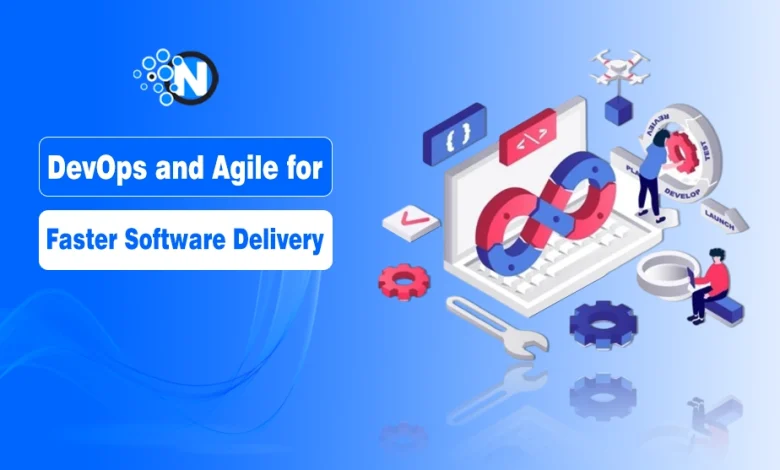
Agile and DevOps are two powerful methodologies reshaping software development. Agile focuses on flexibility, customer collaboration, and iterative progress, while DevOps emphasizes automation, efficiency, and bridging development with operations. Together, they deliver faster, more reliable, and customer-centric software solutions.

When I first started working in software development, I kept hearing two buzzwords everywhere: Agile and DevOps.
At first, they felt like abstract frameworks managers loved to throw around. But over the years, after living through sprint deadlines, broken deployments, and late-night production fixes, I realized these aren’t just theories—they’re survival strategies for software developers.
Here’s how I’ve seen both approaches play out in real projects, and why I think they work best together.
What is DevOps?
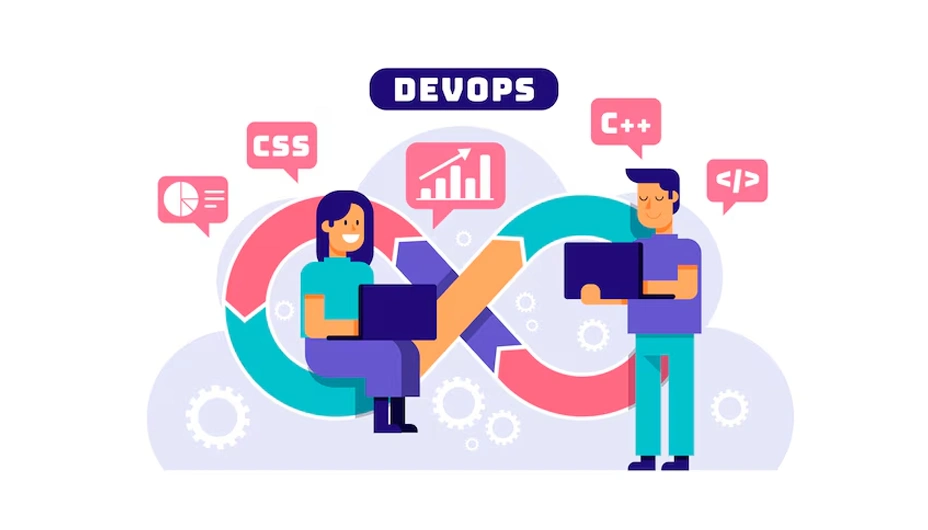
DevOps is a set of practices that integrates development (Dev) and operations (Ops) to improve the software lifecycle from coding to deployment. It emphasizes automation, collaboration, and Continuous Delivery.
Moreover, this approach helps streamline different procedures from code creation to deployment by leveraging high-end tools and software.
DevOps Principles
DevOps guarantees perfect cooperation between development processes and IT operations by bridging the distance. Reducing lead time enables businesses to increase general efficiency and speed software rollout.
In this way, it ensures that both these functionalities go side by side and promote collaboration between them. It automates several labor-intensive activities, allowing businesses to create and market completely working software solutions quickly.
DevOps Practices
DevOps incorporates several key practices, like:
- Infrastructure as Code (IaC): Code-based infrastructure management guarantees scalability and consistency.
- Continuous Integration, Delivery, and Deployment: Ensures smooth updates and faster releases.
- Automation: Utilizes tools like Jenkins, Docker, and Kubernetes to streamline integration and deployment.
Benefits of DevOps
DevOps focuses more on breaking down the barriers between development and operations. Hence, it ensures reliable and faster delivery.
- Breaks down barriers: Removes obstacles between operations and development, guaranteeing dependable and quicker software delivery.
- Reduces errors: Improves process efficiency via automation, therefore lowering human errors.
- Constant feedback: Uses a constant feedback loop to let developers spot and fix problems fast.
- Higher efficiency: Increases general efficiency, hence producing better software and more team cooperation.
What is Agile Methodology?
Agile is a flexible, iterative approach to software development that breaks large projects into smaller, manageable parts. It prioritizes adaptability, customer satisfaction, and collaboration.
Instead of trying to deliver everything at once, teams work in short cycles (called sprints) where they build, test, and refine features step by step.

Principle of Agile
Agile methodology focuses more on flexibility, collaboration, and customer satisfaction.
Additionally, it prioritizes individuals and their interactions. Along with it, it mainly covers the entire working solutions and customer collaboration over different processes and tools.
Practices Used in Agile
Agile methodologies are of various types. However, two of them, Scrum and Kanban, and widely practiced in this modern landscape.
- Scrum: Involves a comprehensive development cycle divided into smaller pieces known as sprints.
- Kanban: Primarily focuses on continuous delivery by visualizing work using a Kanban board.
Benefits of Agile
The agile approache enable the developers concentrate on adaptability and customer-centric development by breaking the intricate software development process into smaller parts.
- Faster time-to-market: Lowers time-to-market, so enabling businesses to rapidly expand their user base.
- Adaptability: Improves adaptability by dissecting difficult development processes into smaller pieces.
- Customer Focus: Encourages customer-centric development by enabling fast answers to evolving needs.
- Better Workflow: Enhances team cooperation and helps to create a more effective workflow.
When DevOps Meets Agile (The Sweet Spot)
Individually, they are great. But when I synchronize DevOps and Agile, the results are incredible. Here is how I see them complementing each other:
1. Collaboration
Agile gets me talking to my fellow developers and the product owner. DevOps extends that conversation to the operations team. This cooperation means we develop, deploy, and maintain the product simultaneously.
2. Continuous Improvement
Both approaches push me to get better:
- Agile pushes for iterative enhancements at the sprint level to adapt to modern demands.
- DevOps uses automation to streamline the process, creating an innovative strategy where we are constantly optimizing our pipeline.
3. Automation
Automation is the backbone of everyday life:
- Agile uses automation for testing and integration (making sure my new code doesn’t break old code).
- DevOps automates the whole delivery process for faster, reliable releases.
Challenges and Considerations
While integrating DevOps and Agile offers immense benefits, businesses often face the following major difficulties:
- Cultural Resistance: Shifting from traditional waterfall methods requires a significant mindset change. Employees may resist new workflows or the increased collaboration required between previously siloed teams.
- Skill Gaps: Implementing these methodologies often requires new tools and skill sets. Finding personnel proficient in both development and operations (for DevOps) or Scrum mastery (for Agile) can be challenging.
- Toolchain Complexity: Managing the wide array of tools required for CI/CD, project management, and automation can become complex and expensive if not planned correctly.
- Scalability: While Agile works well for small teams, scaling it to the enterprise level (using frameworks like SAFe) introduces new layers of complexity.
Why Agile and DevOps Work Better Together
If you ask me whether Agile or DevOps is better, I’d say: don’t choose, use both wisely.
Agile keeps development flexible and customer-focused, while DevOps makes delivery predictable and efficient. Together, they’ve saved me countless headaches and helped teams I’ve worked with ship better software, faster. By leveraging the adaptability of Agile and the operational efficiency of DevOps, organizations can achieve a seamless software development lifecycle that delivers quality products to users faster than ever before.