OpenAI and Oracle Halt Texas AI Data Center Expansion Tied to Stargate Project
Pause in Abilene data center development signals a broader strategic recalibration in AI infrastructure investment, energy demands, and long-term compute expansion plans.

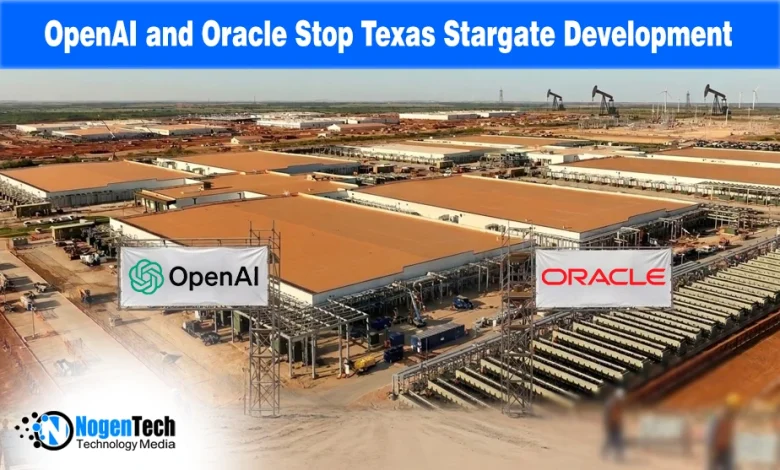
OpenAI and Oracle have paused plans to expand a major AI data center project in Abilene, Texas, a facility connected to the ambitious Stargate initiative. The decision, first reported by Bloomberg and supported by additional reporting, reflects a strategic recalibration in the race to build large-scale AI infrastructure.
The move highlights evolving demand patterns for AI compute capacity and suggests that companies developing generative AI platforms are reassessing how quickly they need to expand hyperscale data centers dedicated to model training and cloud AI workloads.
Pause in Stargate Texas Data Center Expansion
According to reporting from Bloomberg, OpenAI and Oracle have halted the planned expansion of a major AI data center in Abilene, Texas, which had been expected to support the broader Stargate initiative.
Reuters reported that the companies scrapped the expansion plans after negotiations stalled over financing and OpenAI’s evolving infrastructure requirements.
Existing facilities at the site remain operational, while additional capacity will instead be developed at other campuses as part of OpenAI’s wider data center strategy.
The initiative has also been linked to backing from SoftBank Group, which has invested heavily in global AI infrastructure as demand for generative AI systems continues to accelerate.
Why The OpenAI-Oracle Data Center Pause Matters
The pause in the OpenAI Oracle data center expansion highlights a broader shift in how companies approach AI infrastructure investment.
During the early surge of generative AI adoption, companies like Google, Amazon, and Meta moved aggressively to secure compute capacity and build hyperscale AI data centers capable of supporting large training runs.
However, as AI infrastructure spending rises into the tens of billions globally, companies are increasingly reassessing the pace of those investments, a shift noted in reporting by the South China Morning Post.
For OpenAI, the move signals a recalibration of its data center strategy as it balances the need for large-scale AI training infrastructure with more efficient deployment of compute resources.
Cloud providers like Oracle, in partnership with NVIDIA, have been expanding their Oracle Cloud AI infrastructure offerings to capture demand from AI startups and enterprise developers.
These developments underscore the evolving strategies companies adopt to balance AI growth, costs, and scalability.
Industry and OpenAI Leadership Reactions
Public comments from OpenAI staff suggested the decision reflects strategic prioritization rather than a retreat from AI infrastructure expansion.
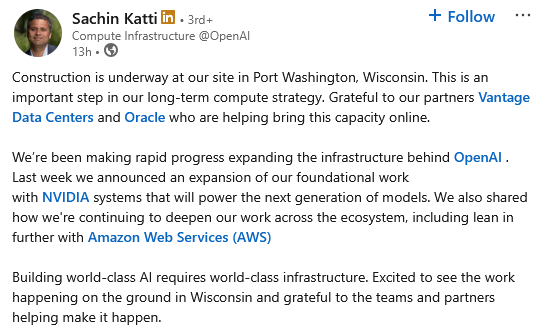
OpenAI executive Sachin Kati took to his official LinkedIn account and said the company remains focused on building scalable AI systems while optimizing how compute resources are deployed. The comment emphasized that OpenAI continues to invest in generative AI infrastructure and long-term capacity planning.
Market analysts quoted by Bloomberg described the move as a “temporary adjustment” tied to infrastructure economics and changing demand patterns for AI training workloads.
Industry observers from PR Newswire have also noted that hyperscale cloud providers are increasingly deploying custom accelerators and efficiency‑focused designs to balance infrastructure growth with cost and performance demands.
Broader Impact of This Decision
The pause in the Texas AI data center Abilene expansion could affect several parts of the AI ecosystem.
For cloud providers, the decision illustrates how hyperscale AI infrastructure projects are becoming more complex and capital-intensive. Building data centers capable of supporting large-scale AI training infrastructure requires enormous energy, cooling capacity, and long-term hardware commitments.
Developers and enterprises relying on Oracle cloud AI infrastructure may not see immediate changes, but the decision reflects ongoing adjustments in how providers allocate AI compute capacity.
The move also underscores the continued importance of supply chains in AI hardware. As reiterated by CNBC, demand for GPUs from Nvidia remains strong as companies build generative AI infrastructure worldwide, while competitors such as Meta Platforms continue investing heavily in their own AI compute clusters.
For investors and policymakers, the situation highlights the scale of capital required to sustain the global AI infrastructure race.
Next Steps for Stargate Project
OpenAI and Oracle are expected to continue evaluating the next phases of the Stargate AI infrastructure project while monitoring demand for AI compute capacity.
Future updates may include revised construction timelines or alternative infrastructure investments as the companies refine their long-term OpenAI data center strategy. Industry analysts will also be watching how hyperscalers adjust AI infrastructure investment as generative AI adoption continues to expand.